

TL;DR:
- Drug-free hair growth uses natural methods like topical botanicals, mechanical stimulation, nutritional support, and light therapy. Combining these approaches over several months offers the best chance to slow early thinning and support healthier hair.
Drug-free hair growth is defined as the use of natural, non-pharmaceutical methods to stimulate hair follicles, slow thinning, and support healthier, thicker hair. The clinical term for this approach is “non-pharmacological hair restoration,” and it covers everything from topical rosemary oil to low-level laser therapy (LLLT). Rosemary oil at 5% concentration shows similar effectiveness to 2% minoxidil over six months in clinical trials. Daily scalp massage and nutritional supplements including biotin, zinc, and pumpkin seed oil round out the evidence-backed options. If you are noticing early thinning, understanding these methods properly is the first step toward doing something about it.
What are the scientifically-backed drug-free hair growth methods?
The strongest evidence for non-pharmacological hair restoration sits across four categories: topical botanicals, mechanical stimulation, nutritional support, and light therapy. Each works through a different biological pathway, which is exactly why combining them produces better results than relying on any single approach.
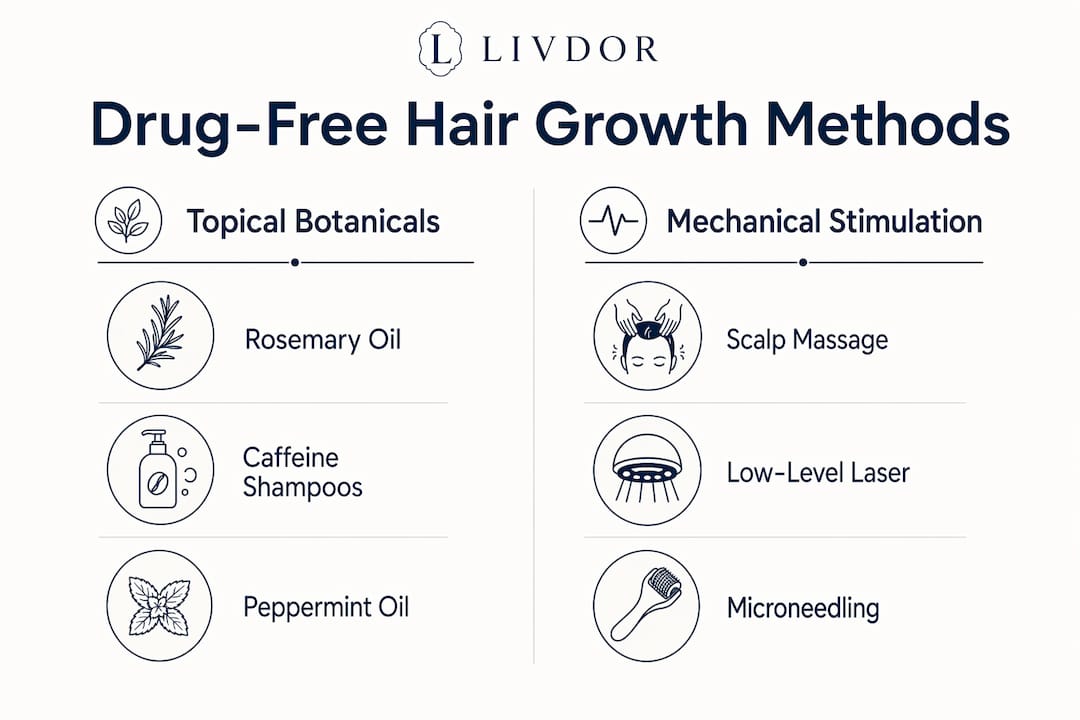
Topical botanicals
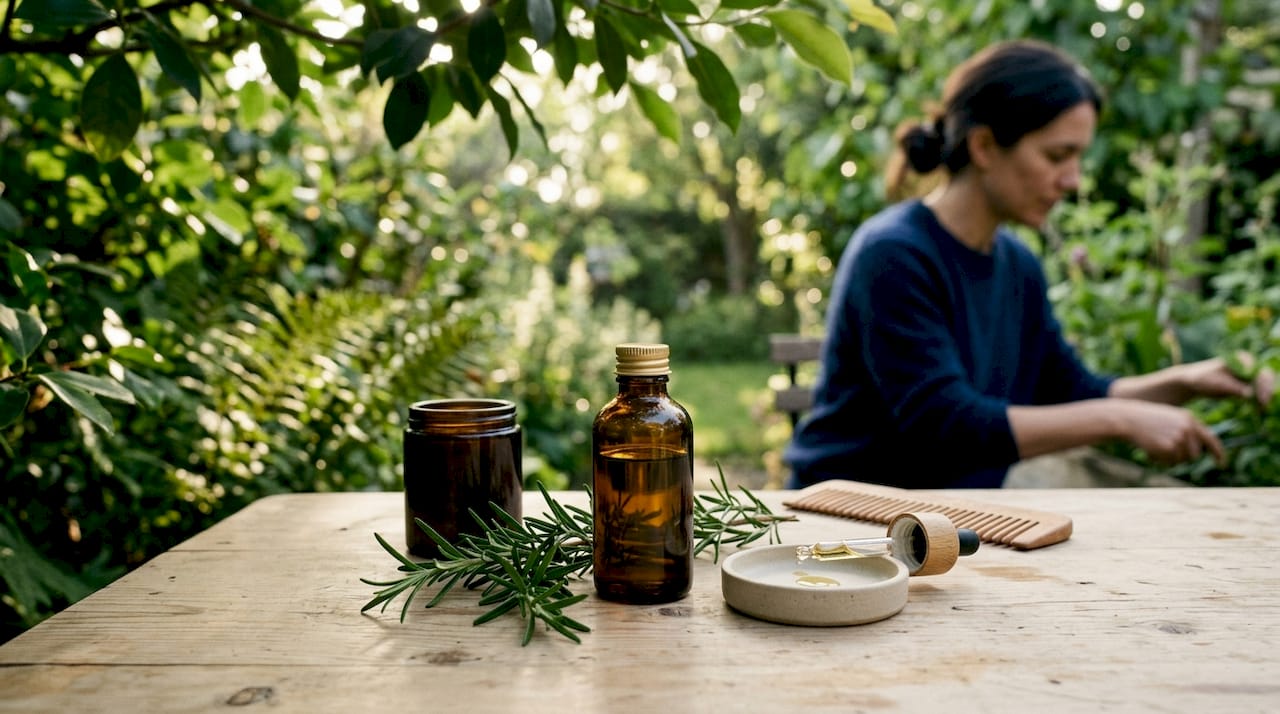
Rosemary oil is the most clinically studied natural topical for hair loss. Participants using a 5% rosemary oil preparation showed hair count improvements comparable to those using 2% minoxidil after six months, with fewer scalp side effects. Livdor’s rosemary oil with saw palmetto combines both botanicals in one clinically informed formula. Saw palmetto adds DHT-blocking potential, which is particularly useful for hormone-related thinning.
Caffeine shampoos work by penetrating the hair follicle and counteracting the suppressive effect of DHT on follicle activity. They are not a standalone cure, but as part of a daily wash routine they support the scalp environment consistently.
Mechanical stimulation
Daily 4-minute scalp massage over 24 weeks produces significant improvements in hair thickness by increasing blood flow to follicles. That is a small daily commitment with a measurable biological payoff. Use fingertips in circular motions, applying light pressure across the entire scalp.
Nutritional supplements
- Biotin supports keratin production, the structural protein hair is made from. Biotin gummies offer a convenient daily dose without the need for tablets.
- Zinc regulates the hair growth cycle and reduces follicle inflammation.
- Pumpkin seed oil (400mg daily) increased hair count by 40% over 24 weeks in men, compared to placebo, through DHT-blocking and fatty acid activity.
- Vitamin C supports collagen synthesis, which strengthens the follicle structure.
- Hair growth vitamins combining these nutrients in one daily supplement simplify the regimen considerably.
Low-level laser therapy
LLLT is a recognised, non-invasive treatment for hair loss, categorised alongside other legitimate drug-free alternatives in clinical summaries. It uses specific wavelengths of light to stimulate cellular activity within the follicle. Livdor’s laser hair growth cap operates at 650nm, the wavelength with the strongest evidence for follicle stimulation.
Pro Tip: Apply rosemary oil directly to the scalp before your 4-minute massage session. The massage drives the oil deeper into the follicle, combining two evidence-backed methods into one efficient step.
How do these natural methods biologically support hair growth?
Understanding the biology behind non-drug hair restoration helps you choose the right combination and stick with it. Each method targets a different part of the follicle’s environment.
-
Increased blood circulation. Scalp massage and peppermint oil both dilate blood vessels near the follicle. Better circulation means more oxygen and nutrients reaching the hair bulb, which directly supports the active growth phase (anagen).
-
Antioxidant and anti-inflammatory action. Rosemary oil contains rosmarinic acid, which reduces scalp inflammation. Chronic low-grade inflammation is a known contributor to follicle miniaturisation. Pumpkin seed oil provides similar anti-inflammatory fatty acids.
-
DHT reduction. Rosemary oil blocks the 5-alpha-reductase enzyme, which converts testosterone into DHT. DHT is the primary driver of androgenetic alopecia. Saw palmetto in topical products shows a comparable DHT-blocking effect, slowing hormone-related follicle shrinkage.
-
Laser light stimulation. LLLT at 650nm penetrates the scalp and is absorbed by mitochondria within follicle cells. This increases ATP (cellular energy) production, which shifts follicles from the resting phase (telogen) back into active growth (anagen). The effect is measurable and repeatable with consistent use.
-
Nutrient-driven keratin production. Biotin, zinc, and vitamin C are each directly involved in keratin synthesis and follicle cell division. Deficiency in any one of them visibly slows hair growth and reduces strand diameter.
| Mechanism | Key agents | Primary benefit |
|---|---|---|
| Blood flow increase | Scalp massage, peppermint oil | More nutrients to follicle bulb |
| DHT blocking | Rosemary oil, saw palmetto | Slows follicle miniaturisation |
| Cellular energy boost | LLLT at 650nm | Shifts follicles into growth phase |
| Keratin synthesis | Biotin, zinc, vitamin C | Stronger, thicker strands |
| Anti-inflammation | Pumpkin seed oil, rosemary | Reduces follicle damage |
What are the realistic expectations for drug-free hair growth?
Natural methods are most effective for early-stage thinning or temporary hair loss. They are not cures for established genetic androgenetic alopecia, but they can meaningfully slow its progression and improve hair density in the early stages. Setting realistic expectations from the start protects you from frustration and keeps you consistent.
Key limitations to understand:
- Genetic hair loss cannot be fully reversed by natural methods alone. Drug-free approaches create a better environment for follicles that still have growth potential. They cannot reactivate follicles that have been dormant for years.
- Results require 3–6 months of consistent use. The hair growth cycle duration means visible improvement simply cannot appear faster. Anyone promising results in weeks is not being honest with you.
- Mechanical damage undoes progress. Heat styling and tight hairstyles damage hair shafts and reduce visible growth even when treatment is working at the follicle level. Reducing heat tool use is not optional if you want to see results.
- Scalp health is foundational. Dandruff, seborrheic dermatitis, or product build-up block follicle function. Addressing scalp health with a good clarifying or medicated shampoo is a prerequisite, not an afterthought.
- Advanced or rapidly progressing hair loss needs professional assessment. If you are losing hair in patches, experiencing sudden shedding, or have a family history of significant baldness, a dermatologist or trichologist should assess you before you invest in a self-managed regimen.
Pro Tip: Photograph your hairline and crown in the same lighting every four weeks. Subjective perception of change is unreliable over months. Photos give you objective evidence of progress and keep you motivated.
How to create an effective drug-free hair growth regimen
The strongest results come from stacking multiple therapies rather than relying on a single product. A well-structured daily and weekly routine removes guesswork and builds the consistency that results depend on.
A practical daily routine
Morning: Wash with a caffeine shampoo or a rosemary and saw palmetto shampoo. Follow with a rosemary conditioner containing saw palmetto to condition without stripping the scalp. Apply a hair growth serum containing biotin, caffeine, and Pro-Vitamin B5 directly to the scalp while damp. Take biotin gummies and hair growth vitamins with breakfast.
Evening: Spend four minutes massaging the scalp with fingertips. On alternate evenings, apply a few drops of rosemary hair oil to the scalp before the massage. Use the LLLT laser cap for the manufacturer-recommended session duration, typically every other day.
Comparing regimen approaches
| Regimen type | Methods included | Expected timeline |
|---|---|---|
| Basic | Scalp massage + nutritional supplements | 4–6 months for early results |
| Intermediate | Above + rosemary oil + caffeine shampoo | 3–5 months with consistent use |
| Full protocol | All above + LLLT laser cap | 3 months for visible improvement |
The full protocol produces the fastest and most noticeable results because it addresses blood flow, DHT, nutrition, and cellular energy simultaneously. The LLLT laser cap is the single highest-impact addition to any natural regimen because it works at the cellular level in a way no topical product can replicate.
Avoid heat styling tools, tight ponytails, and harsh chemical treatments during your regimen. These practices physically damage the hair shaft and counteract the follicle-level work your products are doing. Switching to air-drying and loose styles costs nothing and protects your progress.
Pro Tip: Set a phone reminder for your evening scalp massage. Consistency matters more than perfection. Missing one session is fine. Missing three weeks is not.
Key takeaways
Drug-free hair growth works best when multiple evidence-backed methods are combined consistently over a minimum of three to six months, with LLLT providing the strongest clinical-grade stimulation.
| Point | Details |
|---|---|
| Combine methods, not single remedies | Stacking rosemary oil, scalp massage, supplements, and LLLT produces the strongest results. |
| Rosemary oil rivals minoxidil | Clinical trials show comparable hair count improvement to 2% minoxidil over six months. |
| LLLT stimulates at the cellular level | A 650nm laser cap shifts follicles into the active growth phase in a way topicals cannot replicate. |
| Patience is non-negotiable | The hair growth cycle means visible results require at least three to six months of consistent use. |
| Mechanical damage blocks progress | Reducing heat styling and tight hairstyles is as important as any product you apply. |
What I have learned from watching people approach drug-free hair growth
The most common mistake I see is treating natural hair growth like a shopping exercise. Someone buys a rosemary shampoo, uses it for three weeks, sees nothing, and concludes it does not work. That is not a fair test of the method. It is not even close to the minimum timeframe the biology requires.
The second mistake is the opposite: buying every product available and applying them all at once with no structure. When results are slow, they cannot identify what is working. A structured regimen, introduced one element at a time, gives you real information.
What I have found genuinely moves the needle is the combination of LLLT with good topical support. The laser cap does something that no oil or shampoo can do alone. It works at the mitochondrial level inside the follicle. When you pair that with consistent rosemary oil application, DHT-blocking saw palmetto products, and solid nutritional support through biotin and hair growth vitamins, you are addressing every major pathway simultaneously.
The people who see the best results are not the ones who find the magic product. They are the ones who build a simple, consistent routine and stick with it for six months without expecting miracles at week four. If your hair loss is progressing quickly or you have had significant loss for years, please see a trichologist before investing in a self-managed regimen. Natural methods are powerful support tools. They are not a substitute for professional diagnosis when the situation calls for it.
— Adam Bond
Livdor’s science-backed approach to drug-free hair restoration
Livdor builds its product range around the same evidence-backed methods covered in this article, combining clinical-grade technology with premium natural ingredients.
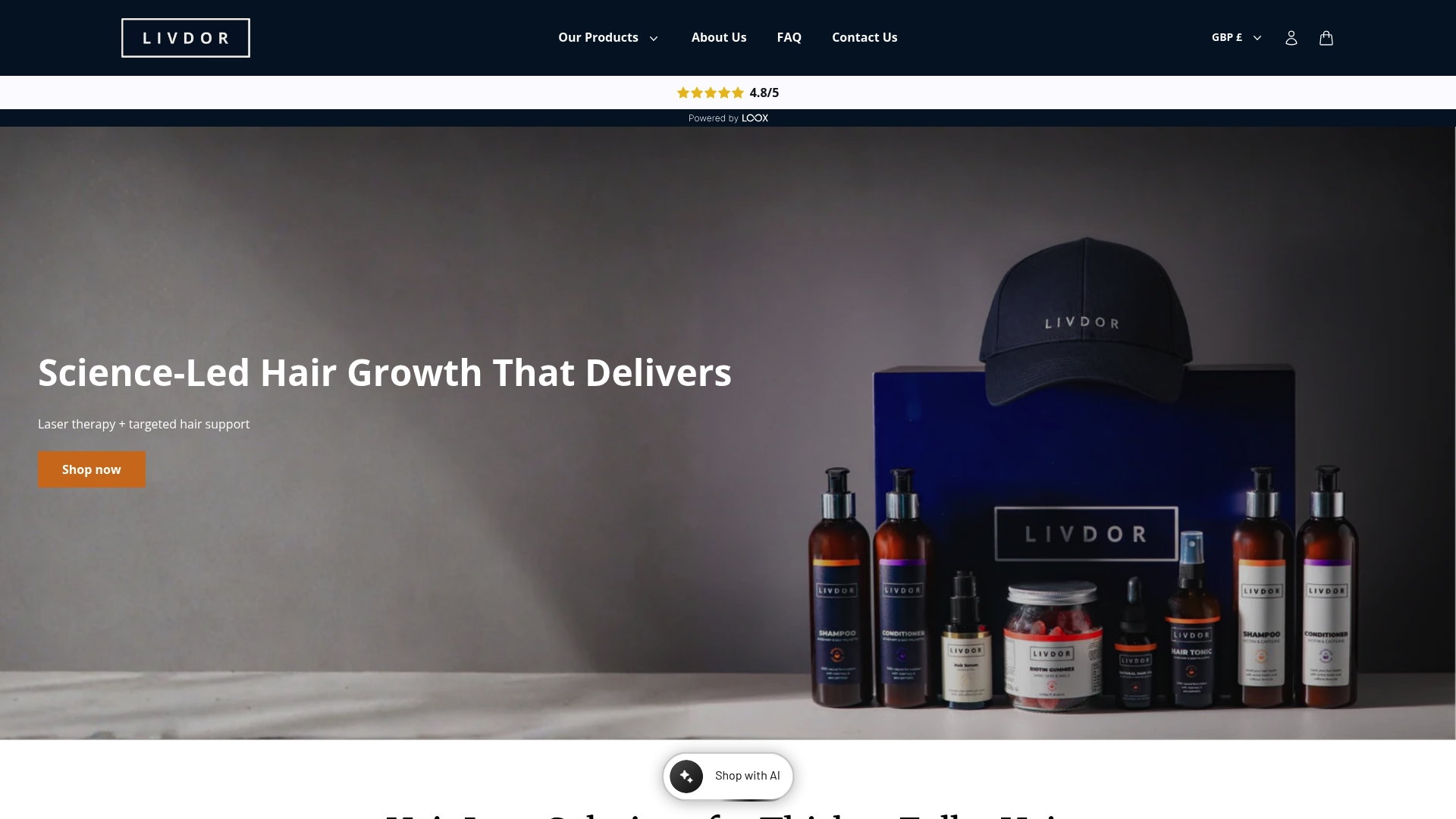
The Livdor Laser Hair Growth Cap features 272 medical-grade lasers operating at 650nm, the wavelength with the strongest clinical evidence for follicle stimulation. Pair it with the hair growth serum containing biotin, caffeine, and Pro-Vitamin B5 for a combined topical and light therapy approach. The rosemary and saw palmetto shampoo and matching conditioner complete the daily wash routine, while biotin gummies and hair growth vitamins support follicle health from within. Livdor’s full laser hair growth range is designed for people who want a complete, structured regimen without pharmaceuticals.
FAQ
What does drug-free hair growth mean?
Drug-free hair growth, also called non-pharmacological hair restoration, uses natural and mechanical methods such as rosemary oil, scalp massage, nutritional supplements, and LLLT to support follicle health without pharmaceuticals.
How long does it take to see results from natural hair growth methods?
Results typically require 3–6 months of consistent use because the hair growth cycle cannot be accelerated beyond its biological timeline.
Can rosemary oil really replace minoxidil?
Clinical trials show that 5% rosemary oil produces hair count improvements comparable to 2% minoxidil over six months, making it a credible alternative for mild hair loss, though it is not a direct replacement for all cases.
Is LLLT safe for home use?
LLLT at 650nm is a recognised, non-invasive treatment for hair loss and is safe for home use when applied using a properly designed device such as a medical-grade laser cap.
Which drug-free methods work best together?
Combining scalp massage, rosemary oil, saw palmetto products, nutritional supplements (biotin, zinc, pumpkin seed oil), and an LLLT laser cap addresses every major biological pathway and produces the strongest results of any drug-free regimen.

Leave a comment
This site is protected by hCaptcha and the hCaptcha Privacy Policy and Terms of Service apply.