
TL;DR:
- Hair restoration involves a multi-month process of follicle stimulation and maturation to achieve thicker hair. Shedding during months two to four indicates follicle activity, not failure, and gradual growth becomes visible after six months. Continued treatment and patience are essential for lasting, full results over 12 to 18 months.
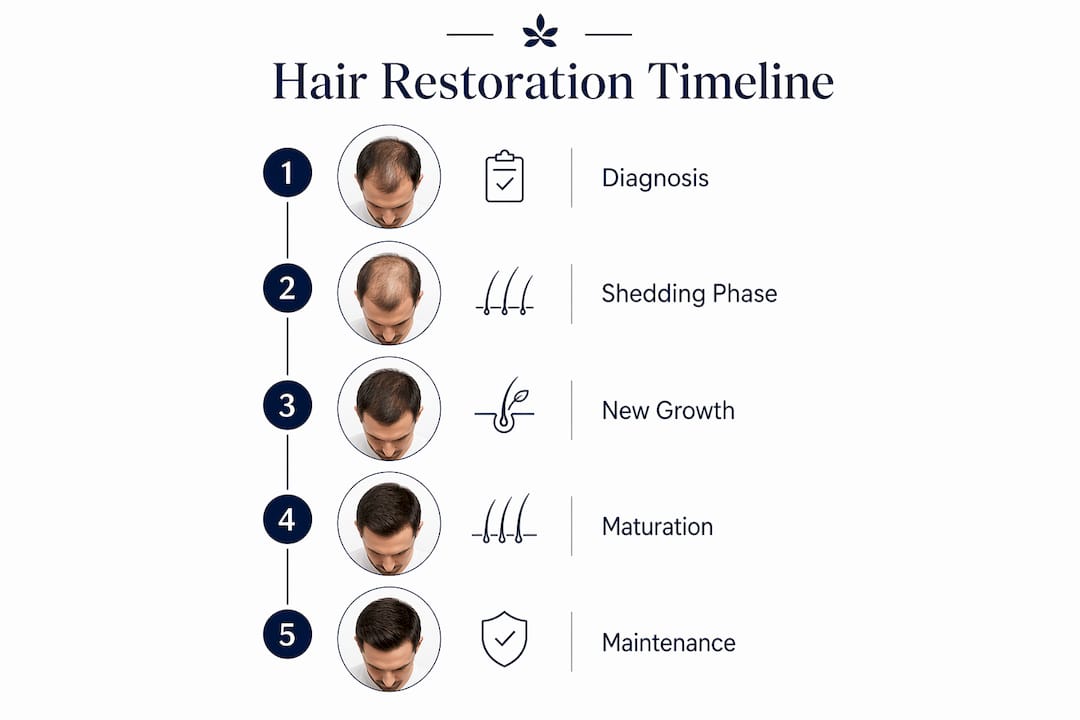
Hair restoration is defined as a progressive, multi-month process in which follicles are stimulated, cycled, and matured to produce thicker, denser hair. The hair restoration treatment timeline explained here covers every phase from initial scalp assessment through to long-term maintenance, whether you are pursuing non-invasive therapies or considering a surgical route. Non-invasive treatments require at least 3–6 months to show visible improvement, while hair transplants need 12–18 months for full maturation. Knowing what to expect at each stage is the single most important factor in staying consistent and achieving real results.
What happens during the first month of hair restoration treatment?
The first month of any hair restoration process is about diagnosis and preparation, not visible growth. The first month is dedicated to treatment initiation and scalp conditioning. Rushing past this phase is one of the most common mistakes people make, and it costs them results later.
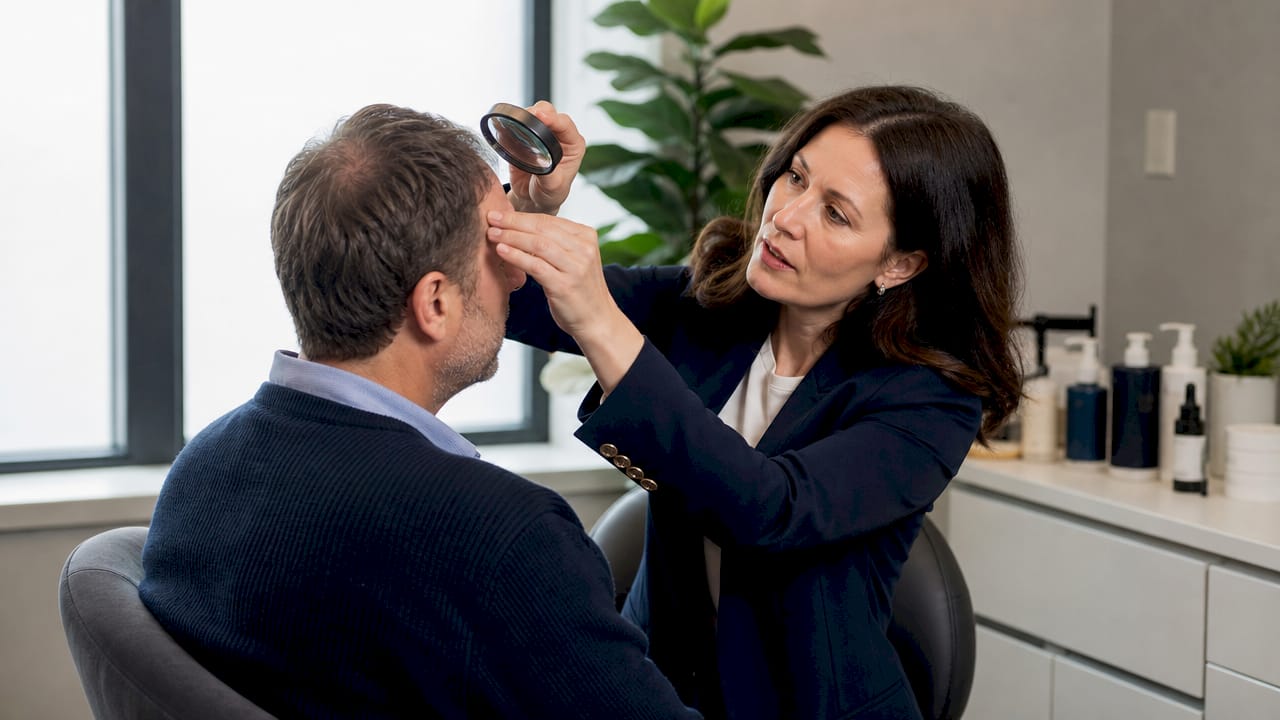
During this period, a trichologist or dermatologist will assess your scalp health, identify the pattern and cause of your hair loss, and establish a baseline. This might involve a scalp analysis, blood tests to rule out nutritional deficiencies, or a review of your medical history. The findings shape every decision that follows.
Treatment initiation in month one typically involves:
- Scalp conditioning: Addressing dryness, sebum build-up, or inflammation that could impair follicle function
- Low-level laser therapy (LLLT): Starting a consistent schedule with a device such as the Livdor Laser Hair Growth Cap, which uses 650nm medical-grade lasers to stimulate blood flow to follicles
- Topical serums: Applying a hair growth serum containing biotin, caffeine, and Pro-Vitamin B5 to nourish the scalp at the follicle level
- Nutritional support: Introducing biotin gummies and hair growth vitamins to address any internal deficiencies affecting hair shaft production
- Shampoo protocol: Switching to a caffeine shampoo or rosemary and saw palmetto shampoo to support scalp circulation and reduce DHT sensitivity
Pharmaceutical options such as minoxidil or finasteride may also be introduced at this stage by a prescribing clinician. Natural alternatives, including saw palmetto and rosemary, work through similar pathways without the side effect profile associated with finasteride. Understanding your hair thinning stages early gives you more treatment options and better outcomes.
Pro Tip: Take dated photographs of your scalp under consistent lighting at the start of month one. These baseline images become your most objective measure of progress over the following months.
What is the shedding phase and why does it occur during months 2 to 4?
Shedding during treatment is not failure. It is biology. The shedding phase typically occurs between the second and third month of treatment and lasts 4–8 weeks, caused by follicles prematurely entering the anagen growth phase. This process is known clinically as telogen effluvium.
Here is what is actually happening: when a treatment such as LLLT or a topical serum stimulates a resting follicle, that follicle exits its dormant telogen phase and begins cycling toward active growth. To do so, it sheds the existing hair shaft first. Shock loss signals effective follicle stimulation rather than treatment failure. The follicle is resetting, not dying.
Common misconceptions during this phase include:
- Believing the treatment is making hair loss worse
- Stopping treatment prematurely, which causes lost gains and resets progress
- Confusing treatment-induced shedding with pattern hair loss progression
- Assuming that more shedding means a worse outcome
Natural options such as rosemary and saw palmetto shampoos, used consistently during this phase, help maintain scalp health without aggravating sensitivity. Saw palmetto works by inhibiting 5-alpha reductase, the enzyme that converts testosterone to DHT, the primary driver of androgenetic alopecia. This makes it a meaningful natural alternative to finasteride for many people. You can read more about non-pharmaceutical hair thinning remedies that support the scalp during this critical window.
Pro Tip: If shedding feels alarming, keep your treatment schedule unchanged and refer back to your month-one photographs. The visual comparison will almost always show that total density has not declined as much as it feels.
When and how does new hair growth become visible between months 3 to 6?
Months 3 to 6 mark the phase where patience begins to pay off. Early signs of growth often appear as fine, pale, and sometimes curly hairs, which normalise in texture and pigmentation as follicle maturation progresses. These early hairs look different from your existing hair, and that is entirely normal.
Recognising progress during this phase requires attention to detail. The changes are gradual and subtle. Here is what to look for, in order of typical appearance:
- Reduced daily shedding: The volume of hair lost during washing and brushing decreases noticeably
- Fine vellus hairs: Short, soft, lightly pigmented hairs appear along the hairline or crown
- Improved scalp coverage: Areas that previously looked sparse begin to show a faint layer of new growth
- Increased hair shaft strength: Existing hairs feel less brittle, supported by biotin and vitamin supplementation
- Visible density improvement: By month 6, the overall appearance of fullness begins to shift meaningfully
Consistency with your treatment protocol drives this progress. Using the Livdor Laser Hair Growth Cap on its recommended schedule, combined with a hair growth serum applied directly to the scalp, creates the conditions for follicles to produce stronger shafts more quickly. The laser therapy increases cellular energy production in follicle cells, while the serum delivers biotin and caffeine directly to the root.
For those who have had a follicular unit excision (FUE) transplant, months 3–6 follow a slightly different pattern. Transplanted grafts enter a shedding phase in weeks 2–4 post-procedure, then remain dormant before new growth emerges around month 3. The hair growth cycle biology is the same; the timeline simply shifts based on the trauma of the procedure.

Photographic tracking remains the most reliable tool for objective progress assessment during this phase. Visible improvement is often subtler than people expect, and photographs taken under the same conditions each month reveal changes that are easy to miss in a daily mirror check.
How do hair density and quality mature from months 6 to 12 and beyond?
Months 6 to 12 represent the most rewarding phase of the hair restoration process duration. Density increases substantially, hair shafts thicken, and pigmentation normalises. By six months, approximately 40–50% of final hair density is visible, increasing to 80–90% by 12 months, with progressive shaft diameter thickening through months 9–12.
| Timeline | Expected density | Key changes |
|---|---|---|
| Month 6 | 40–50% of final result | Fine hairs thickening, pigmentation improving |
| Month 9 | 60–70% of final result | Shaft diameter increases, coverage more uniform |
| Month 12 | 80–90% of final result | Near-mature texture and colour, density stable |
| Month 18 | Full maturation | Crown areas complete, final assessment appropriate |
The crown region consistently matures more slowly than the hairline. Final density assessments may be deferred up to 18 months to account for slower growth in the crown and complete follicle maturation. This is especially relevant for FUE transplant patients, but it also applies to those using non-invasive therapies targeting the vertex.
For people using non-invasive methods exclusively, the 6–12 month window is where the combination approach proves its value. Pairing LLLT with a biotin shampoo, hair growth vitamins, and a caffeine-based serum addresses hair health from multiple angles simultaneously. Laser therapy stimulates the follicle. Biotin supports keratin production. Caffeine extends the anagen growth phase. Saw palmetto and rosemary reduce DHT at the scalp level. No single ingredient does all of this, which is why monotherapy with finasteride or minoxidil frequently underdelivers compared to a well-structured combination protocol.
Pro Tip: Schedule a formal photographic comparison at months 6 and 12 using the same camera position, lighting, and hair parting as your month-one baseline. This gives you a clear, evidence-based picture of your progress and helps you decide whether to continue, adjust, or supplement your current protocol.
What does long-term maintenance involve after initial restoration?
Androgenetic alopecia is a chronic condition. The results you achieve through treatment are not permanent without continued care. Long-term success requires disciplined adherence to combination therapies, and discontinuing too early leads to lost gains.
Maintenance after the initial restoration phase involves:
- Continued LLLT sessions: Using a laser cap on a maintenance schedule, typically three to four sessions per week, to sustain follicle stimulation
- Ongoing topical application: Applying a hair growth serum with biotin, caffeine, and Pro-Vitamin B5 to keep follicles nourished
- Shampoo and conditioner routine: Using a rosemary and saw palmetto shampoo alongside a biotin conditioner to maintain scalp health and DHT management
- Nutritional supplementation: Taking biotin gummies and hair growth vitamins daily to support keratin production from within
- Scalp health monitoring: Checking for signs of inflammation, seborrheic dermatitis, or renewed thinning that might signal a need for protocol adjustment
Lifestyle factors also play a role. Chronic stress elevates cortisol, which disrupts the hair growth cycle. Poor sleep, nutritional deficiencies, and crash dieting all contribute to increased shedding. Addressing these factors alongside your treatment protocol produces better and more stable results.
For those who have had a transplant, maintaining results after hair restoration means protecting existing native hair from further loss. Transplanted follicles are genetically resistant to DHT, but the surrounding native hair is not. Without ongoing DHT management through natural or pharmaceutical means, the overall appearance can deteriorate even when grafts thrive.
Key takeaways
Consistent, multi-modal treatment over 12–18 months is the most reliable path to visible, lasting hair restoration results.
| Point | Details |
|---|---|
| Timeline varies by method | Non-invasive therapies show results in 3–6 months; transplants reach full maturation at 12–18 months. |
| Shedding is a positive sign | Telogen effluvium in months 2–4 signals follicle activation, not treatment failure. |
| Combination protocols outperform monotherapy | Pairing LLLT with serums, vitamins, and DHT-reducing shampoos delivers stronger results than any single treatment. |
| Density matures progressively | Expect 40–50% density at month 6, rising to 80–90% by month 12, with crown areas completing by month 18. |
| Maintenance is non-negotiable | Androgenetic alopecia is chronic; stopping treatment leads to lost gains regardless of the method used. |
Why patience is the most underrated part of this process
I have spoken with a great many people who quit their treatment protocol somewhere between weeks six and ten. They saw shedding, felt discouraged, and assumed the treatment was not working. Almost every single one of them had actually been on the right track. The shedding was the proof.
The hardest part of any hair restoration timeline is the gap between what is happening biologically and what you can see in the mirror. Follicles can be actively cycling and producing new shafts for weeks before those shafts are long enough to be visible. That invisible progress is real progress. Stopping treatment during this window is the equivalent of pulling a plant out of the ground to check whether the roots are growing.
What I have found works best is a structured combination approach. The Livdor Laser Hair Growth Cap provides the foundational follicle stimulation through LLLT. Biotin gummies and hair growth vitamins address the nutritional side. A caffeine shampoo and rosemary and saw palmetto shampoo manage the scalp environment. A targeted serum delivers active ingredients directly to the root. Each element supports the others, and the results over 12 months are consistently stronger than anything a single product can achieve alone.
The people who see the best outcomes are not necessarily those with the mildest hair loss. They are the ones who commit to the process, track their progress objectively, and resist the urge to change everything the moment results feel slow. Patience, combined with the right protocol, is what separates a good outcome from a great one.
— Adam Bond
Livdor’s approach to science-backed hair restoration
If you are ready to move from understanding the timeline to acting on it, Livdor’s range of premium, drug-free hair restoration products is built around exactly the combination protocol described throughout this article.

The Livdor Laser Hair Growth Cap uses 272 medical-grade lasers at the clinically proven 650nm wavelength to stimulate follicles at the cellular level. Paired with Livdor’s hair growth serum containing biotin, caffeine, and Pro-Vitamin B5, plus biotin gummies, hair growth vitamins, and DHT-targeting shampoos with rosemary and saw palmetto, you have a complete maintenance and restoration protocol in one place. These natural solutions avoid the hormonal side effects associated with finasteride and the scalp irritation common with high-strength minoxidil. Explore the full laser hair growth range to find the right starting point for your stage of hair loss.
FAQ
How long does hair restoration treatment take to show results?
Non-invasive treatments show early results in 3–6 months, while hair transplants reach 80–90% of their final density by 12 months and full maturation by 18 months.
Is shedding during hair restoration treatment normal?
Yes. The shedding phase in months 2–4 is a sign that follicles are being activated and cycling into the growth phase. It lasts 4–8 weeks and is a positive indicator of treatment progress.
What is the difference between LLLT and a hair transplant timeline?
LLLT and other non-invasive therapies produce gradual improvement over 3–12 months without downtime. Hair transplants involve a recovery period and a longer maturation timeline of 12–18 months before final results are assessable.
Do I need to continue treatment after my hair grows back?
Androgenetic alopecia is a chronic condition, and discontinuing treatment leads to lost gains. Ongoing maintenance with laser therapy, serums, and DHT-reducing supplements is necessary to sustain results.
Why do new hairs look different at first?
Initial growth appears fine, pale, and sometimes curly because follicles are still maturing. Texture and pigmentation normalise progressively over the following months as the hair shaft matures fully.



Leave a comment
This site is protected by hCaptcha and the hCaptcha Privacy Policy and Terms of Service apply.