
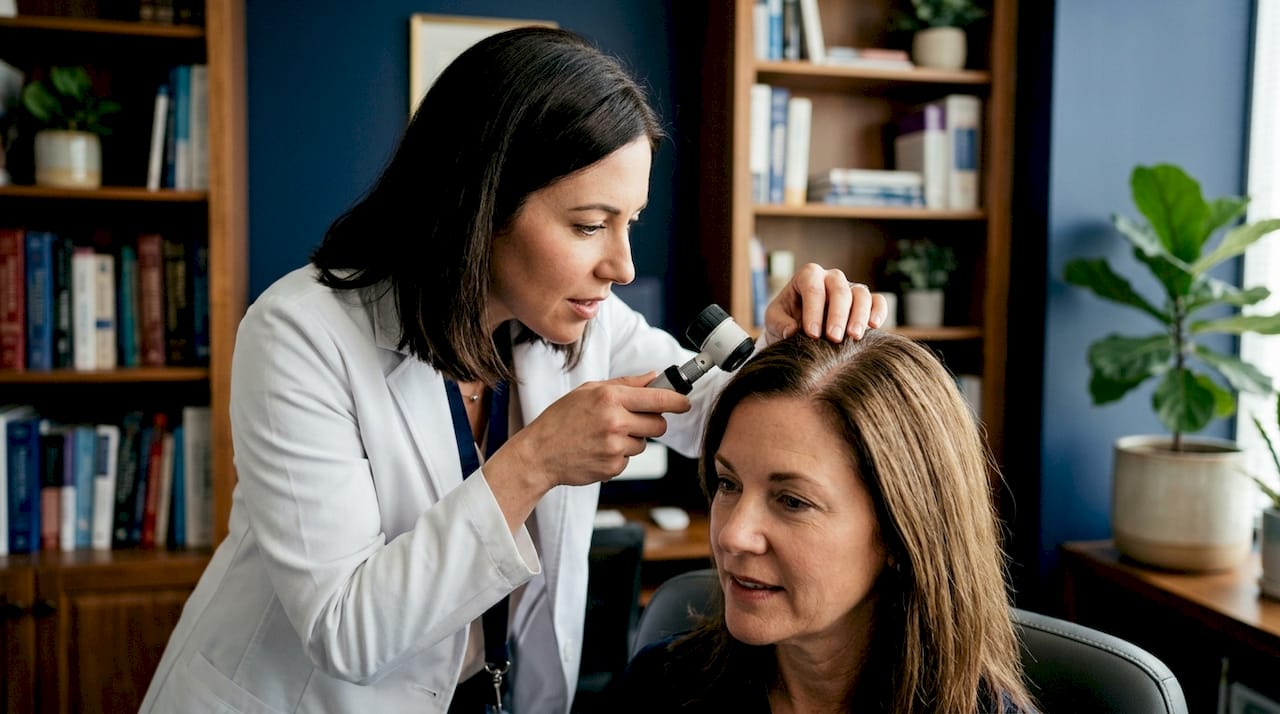
The most accurate way to assess hair loss severity in women combines objective clinical tests with validated visual grading scales. The two key clinical examinations are the pull test and the tug test, which measure active shedding and follicle strength. These are paired with established severity scales: the Savin scale, the Ludwig scale, and the Female Pattern Hair Loss Severity Index (FPHL-SI). Together, they move assessment beyond subjective perception into measurable, trackable data.
Normal hair shedding sits at 50–100 hairs daily; losses consistently above 100–125 hairs per day signal a pattern that warrants professional evaluation. The gap between what feels like excessive shedding and what is clinically significant is often wider than women expect. Objective measurement closes that gap.
Key methods at a glance:
- Pull test and tug test: assess active shedding and follicle integrity
- Trichoscopy and trichometry: measure follicular miniaturisation and hair density
- Savin scale: eight-stage visual grading of crown thinning
- Ludwig scale: three-grade classification of female pattern thinning
- FPHL-SI: multi-component index combining clinical, trichoscopic, and photographic data
- Hair Shedding Visual Scale: validated office tool distinguishing normal from excessive shedding
- Blood tests: identify reversible nutritional or hormonal causes
How do clinicians diagnose and examine female hair loss?
Androgenetic alopecia affects nearly 50% of women across their lifetime, making it the most common cause of chronic female hair loss. Diagnosis relies on a structured sequence of clinical examinations, not a single test.
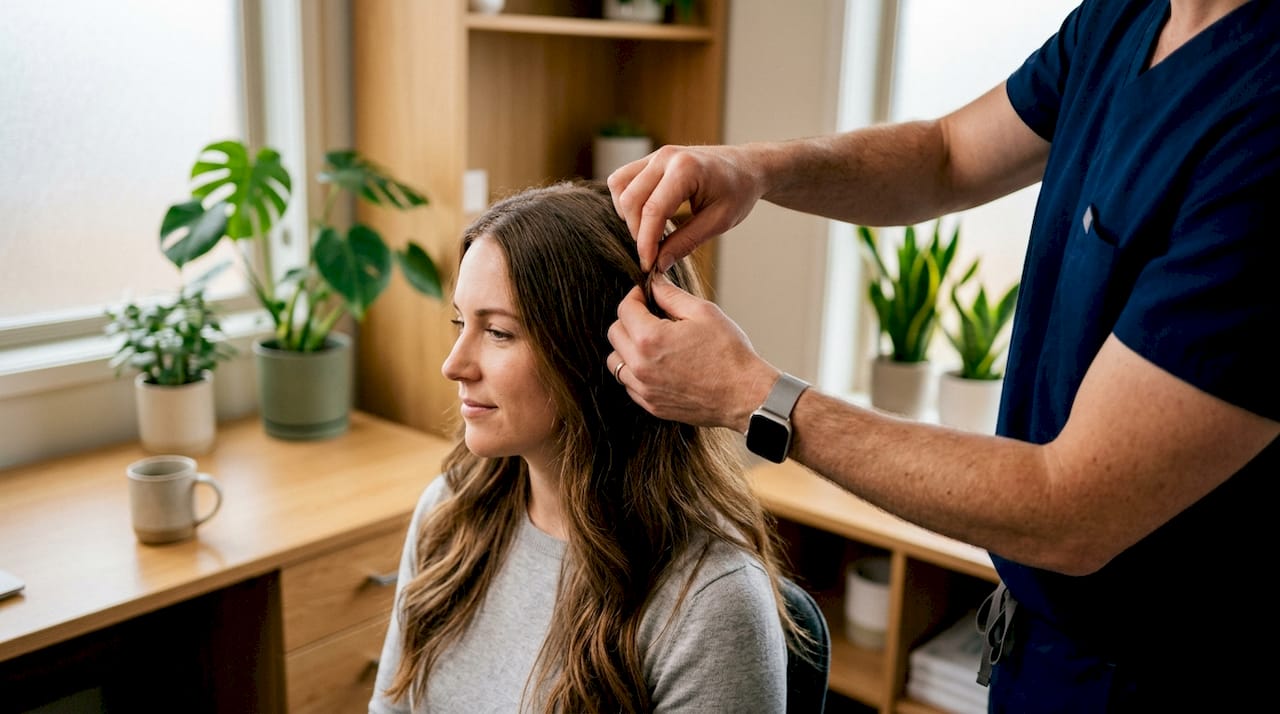
The pull test is the most widely used starting point. A clinician grasps 40–60 hairs between thumb and forefinger, applies gentle traction, and counts the hairs that detach. More than six hairs suggests active shedding. The tug test assesses individual strand strength by gripping a single hair near the root and pulling; a hair that snaps easily indicates structural weakness. You can read a detailed breakdown of pull and tug test protocols for further clinical context.
Trichoscopy uses a handheld dermoscope to examine the scalp at 20x–40x magnification. Clinicians look for two validated markers of female pattern hair loss: more than 20% variability in hair shaft diameter, and more than seven short regrowing hairs in the frontal scalp. Trichometry goes further, measuring hair density and average shaft diameter across defined scalp zones to quantify follicular miniaturisation numerically.
| Test | Purpose | Procedure | Diagnostic value |
|---|---|---|---|
| Pull test | Active shedding | Gentle traction on 40–60 hairs | >5 hairs = positive |
| Tug test | Follicle strength | Single hair pulled from root | Easy snap = structural weakness |
| Trichoscopy | Follicular miniaturisation | Dermoscope at 20x–40x | Shaft variability, vellus hairs |
| Trichometry | Hair density | Scalp zone measurements | Quantifies density loss |
| Scalp biopsy | Scarring vs non-scarring | Tissue sample from active patch | Confirms diagnosis type |
Scalp biopsy is reserved for cases where the diagnosis remains uncertain after clinical and dermoscopic examination. It distinguishes scarring alopecias, where follicles are permanently destroyed, from non-scarring types where regrowth remains possible.
Which scales grade female pattern hair loss severity?
Three validated scales are used clinically to grade female hair loss, each with a distinct focus and application.
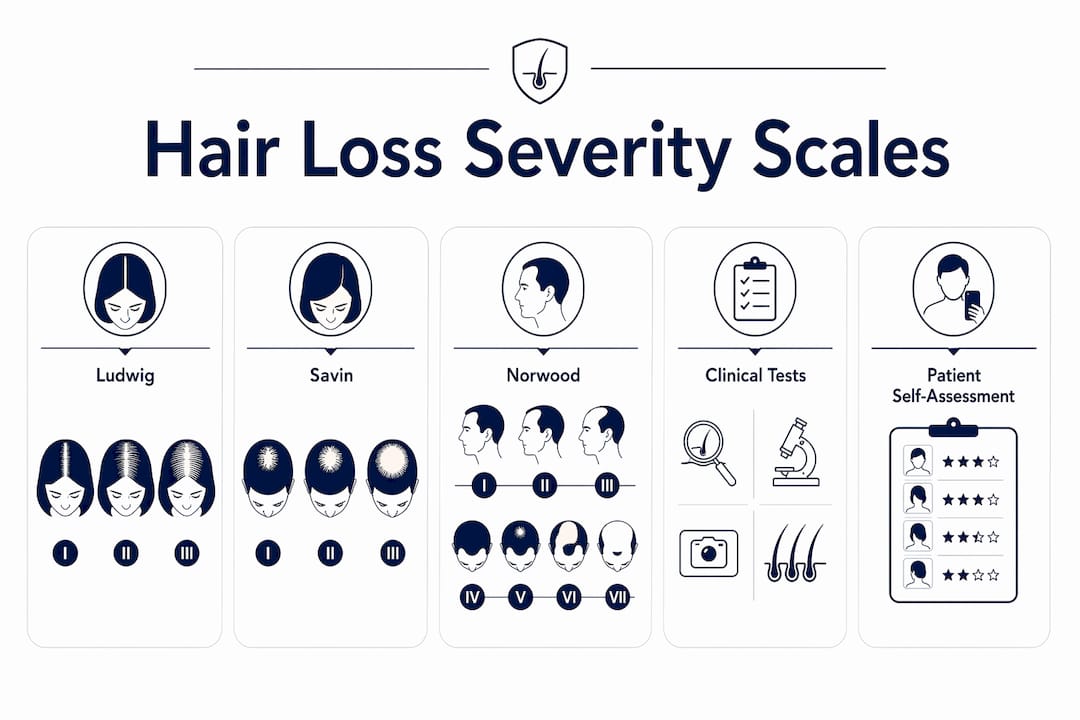
The Savin scale comprises eight images depicting crown thinning stages, from minimal parting-line widening at stage I-1 through to advanced crown exposure, plus a ninth image showing frontal hairline recession. It is particularly useful for tracking progression at the crown over time, and its photographic format makes it accessible for both clinician and patient use.
The Ludwig scale classifies female pattern thinning into three grades. Grade I shows mild thinning at the crown with a preserved frontal hairline. Grade II reflects a noticeable reduction in volume across the top of the scalp. Grade III presents as near-complete loss at the crown. Ludwig remains widely used in clinical practice because of its simplicity, though it does not capture frontal recession or diffuse thinning patterns as well as the Savin scale does.
The FPHL-SI (Female Pattern Hair Loss Severity Index) is the most comprehensive of the three. It integrates clinical examination, trichoscopic findings, and photographic assessment into a single composite score, giving clinicians a fuller picture of severity than any single-axis scale can provide.
| Scale | Focus | Stages | Best used for |
|---|---|---|---|
| Savin | Crown thinning + frontal recession | I-1 to III + frontal image | Visual tracking, patient communication |
| Ludwig | Crown volume loss | Grades I–III | Quick clinical grading |
| FPHL-SI | Multi-component composite | Composite score | Research, comprehensive clinical assessment |
- Savin and Ludwig are practical for office use and patient self-monitoring with photographic reference cards.
- FPHL-SI requires trichoscopic data, so it is better suited to specialist settings.
- No single scale captures every pattern of female hair loss; combining Savin or Ludwig with trichoscopy gives the most complete picture.
How do you tell the difference between hair thinning and shedding?
Hair thinning and hair shedding are not the same thing, and confusing them leads to the wrong treatment approach. Hair thinning is a progressive reduction in shaft diameter and follicular density, driven by follicular miniaturisation in androgenetic alopecia. It does not resolve on its own. Shedding, by contrast, is episodic: telogen effluvium causes a sudden increase in hairs entering the resting phase, typically triggered by stress, illness, surgery, or hormonal shifts, and it usually self-resolves once the trigger is removed.
The clinical distinction matters because the two conditions require different management strategies. Thinning needs consistent, long-term treatment to slow miniaturisation. Shedding needs identification and removal of the underlying cause, after which the hair cycle often normalises within three to six months.
Pro Tip: Take a photograph of your parting line under the same lighting, at the same angle, every four weeks. This simple habit removes subjective perception from the equation and gives you a reliable visual record of whether thinning is progressing or stabilising.
Signs that warrant a dermatologist or trichologist appointment:
- Parting line visibly wider than six months ago
- Scalp visible through hair at the crown in normal lighting
- More than a handful of hairs shed daily, consistently
- Patchy, coin-sized bald patches (which may indicate alopecia areata)
- Hair loss accompanied by fatigue, weight changes, or skin changes
Alopecia areata in women is a separate autoimmune condition where the immune system attacks hair follicles, causing sudden patchy loss. It is distinct from androgenetic alopecia and requires specialist diagnosis and management.
What blood tests support a hair loss evaluation?
Blood tests do not diagnose hair loss patterns directly, but they identify reversible underlying causes that may be driving or worsening shedding. Thyroid function and micronutrient levels are the most clinically relevant markers to check. Correcting a deficiency can meaningfully reduce shedding without any topical treatment at all.
A standard hair loss blood panel typically covers:
- Thyroid hormones (TSH, T3, T4): both hypothyroidism and hyperthyroidism cause diffuse shedding
- Ferritin and serum iron: low iron stores are one of the most common and correctable causes of hair loss in women
- Vitamin D: deficiency is linked to disrupted hair cycling
- Vitamin B12: low levels affect follicle cell turnover
- Zinc: deficiency impairs hair shaft structure
- Hormonal profile (DHEA-S, testosterone, prolactin): elevated androgens can accelerate follicular miniaturisation
Dermoscopy and scalp biopsy complement blood results when the clinical picture remains unclear. Integrating lab findings with trichoscopic data and a validated severity scale gives the most complete diagnostic picture. For more on how nutritional deficiencies affect hair loss, the relationship between ferritin and shedding is particularly well documented.
Why early detection and the right tools make all the difference
The Hair Shedding Visual Scale is one of the most practical tools available for distinguishing normal from excessive shedding. Women with female pattern hair loss scored mean shedding scores of 7.0–7.25 on the scale, compared to 2.35–2.50 in women without the condition. That gap is large enough to be clinically meaningful, and the scale takes under two minutes to complete in a clinical setting. Crucially, women often overestimate their shedding severity; using an objective scale reduces anxiety and helps set realistic treatment expectations.
Early treatment improves prognosis significantly. Follicles that are miniaturising but still active respond far better to intervention than follicles that have been dormant for years. The window for effective non-invasive treatment is widest in the early stages, which is exactly why combining a validated assessment with prompt action matters so much.
Once severity is established, a layered approach to treatment produces the best outcomes:
- LLLT laser cap (650nm wavelength): low-level laser therapy stimulates follicle activity at the cellular level; Livdor’s medical-grade laser cap uses 272 lasers at the clinically validated 650nm wavelength
- Hair Growth Serum with biotin, caffeine, and Pro-Vitamin B5: supports scalp circulation and follicle nourishment topically
- Rosemary Conditioner with Saw Palmetto: a natural DHT-moderating conditioner that conditions without harsh chemicals
- Caffeine shampoo: stimulates the scalp and supports a healthy follicle environment with each wash
- Biotin Gummies and hair growth vitamins: address nutritional gaps from the inside, supporting keratin production
Pro Tip: Consistency is the single biggest factor in treatment outcomes. Hair follicles respond to sustained stimulation over months, not weeks. Pairing daily LLLT cap use with a targeted supplement routine gives each follicle the best possible environment to recover.
Integrating natural supplements such as biotin and caffeine with LLLT laser therapy enhances outcomes in female hair loss cases. Livdor’s full range of hair growth solutions is built around this combined approach, with products formulated to work together rather than in isolation.
How does hair loss affect psychological wellbeing?
Hair loss carries a psychological weight that clinical scales do not capture on their own. Women tend to experience greater emotional distress from hair loss than men do, with studies consistently linking visible thinning to reduced self-esteem, social anxiety, and lower quality of life. The distress is not proportional to the clinical severity; a woman at Ludwig Grade I may feel as affected as someone at Grade III, depending on her baseline hair density and personal significance of her hair.
Validated tools such as the Dermatology Life Quality Index (DLQI) and the Hair-Specific Skindex-29 are used in clinical settings to measure this impact alongside physical severity scores. Psychological assessment is now considered part of a complete hair loss evaluation, not an optional add-on. Knowing that your distress is recognised and measurable can itself be reassuring, and it helps clinicians tailor support alongside physical treatment.
How to do a self-assessment at home before seeing a specialist
A structured self-assessment gives you useful baseline data before a clinical appointment. It will not replace a trichoscopy or a blood panel, but it tells you what to report and helps you track changes over time.
Start with the parting-line width test: part your hair down the centre under good lighting and photograph it. A parting that has visibly widened over six months is a reliable early sign of crown thinning. Next, run the at-home pull test: gather about 40 hairs between your fingers, apply gentle tension, and count what comes away. More than six hairs is worth noting. Check your shower drain and hairbrush weekly; a consistent count above what feels normal for you is more informative than a single observation.
Use the Hair Shedding Visual Scale reference images, which are available through dermatology resources, to score your daily shedding against the nine-point photographic guide. Women with female pattern hair loss typically score 7.0–7.25 on this scale, compared to 2.35–2.50 in unaffected women; scores in this higher range warrant a clinical conversation. For a broader picture of early warning signs, tracking multiple indicators together is more reliable than relying on any single one.
How to photograph your hair loss progression accurately
Standardised photography is one of the most underused tools in female hair loss monitoring. Consistent photographic tracking removes subjective perception bias and gives both you and your clinician a reliable record of progression or treatment response.
Three angles cover the key areas: top-down crown view, central parting shot, and a frontal hairline image. Use the same light source each time, ideally natural daylight from the same window, at the same time of day. Hold the camera at the same height and distance, and part the hair in the same place. A simple phone stand or a marked position on a shelf removes the guesswork.
Take photographs every four weeks and store them in a dated folder. When you attend a clinical appointment, these images give your dermatologist or trichologist a longitudinal record that no single-visit examination can replicate. Clinical scales like the Savin and FPHL-SI are most informative when paired with photographic records taken under consistent conditions.

If you are ready to act on your assessment, Livdor’s laser hair growth cap and complete hair growth range are built around the same science that underpins clinical treatment protocols. Non-invasive, drug-free, and designed for consistent daily use at home.
Key takeaways
Accurately assessing female hair loss requires combining validated clinical scales with objective tests, blood work, and standardised photography to build a complete picture of severity and cause.
| Point | Details |
|---|---|
| Normal vs excessive shedding | Shedding above normal daily amounts consistently warrants clinical evaluation. |
| Validated severity scales | Savin, Ludwig, and FPHL-SI each grade female pattern hair loss from different angles; combining them gives the fullest picture. |
| Hair Shedding Visual Scale | Women with female pattern hair loss score 7.0–7.25 on this scale versus 2.35–2.50 in unaffected women. |
| Blood tests identify root causes | Thyroid, ferritin, vitamin D, B12, zinc, and hormonal panels reveal reversible causes driving shedding. |
| Early treatment improves outcomes | Starting LLLT and targeted supplements at first signs of thinning gives follicles the best chance of recovery. |
FAQ
How do I identify what stage of hair loss I am at?
Use the Ludwig or Savin scale as a visual reference, comparing your crown and parting-line width to the photographic stages. A dermatologist can confirm the grade using trichoscopy and the FPHL-SI composite score.
How can I tell if my hair loss is caused by stress?
Stress-related shedding (telogen effluvium) typically appears two to three months after a significant stressor and presents as diffuse, all-over shedding rather than patterned crown thinning. If shedding resolves within six months of removing the trigger, stress is the likely cause.
Does blocking DHT stop hair loss in women?
Reducing DHT activity can slow androgenetic alopecia in women, but it rarely stops it entirely on its own. Combining DHT-moderating ingredients such as saw palmetto with LLLT therapy and nutritional support produces better results than any single approach.
How can women regrow thinning hair?
Early intervention with LLLT at 650nm wavelength, alongside biotin, caffeine-based shampoo, and a rosemary and saw palmetto conditioner, supports follicle recovery. Consistent daily use over a minimum of three months is needed before visible regrowth typically appears.



Leave a comment
This site is protected by hCaptcha and the hCaptcha Privacy Policy and Terms of Service apply.