
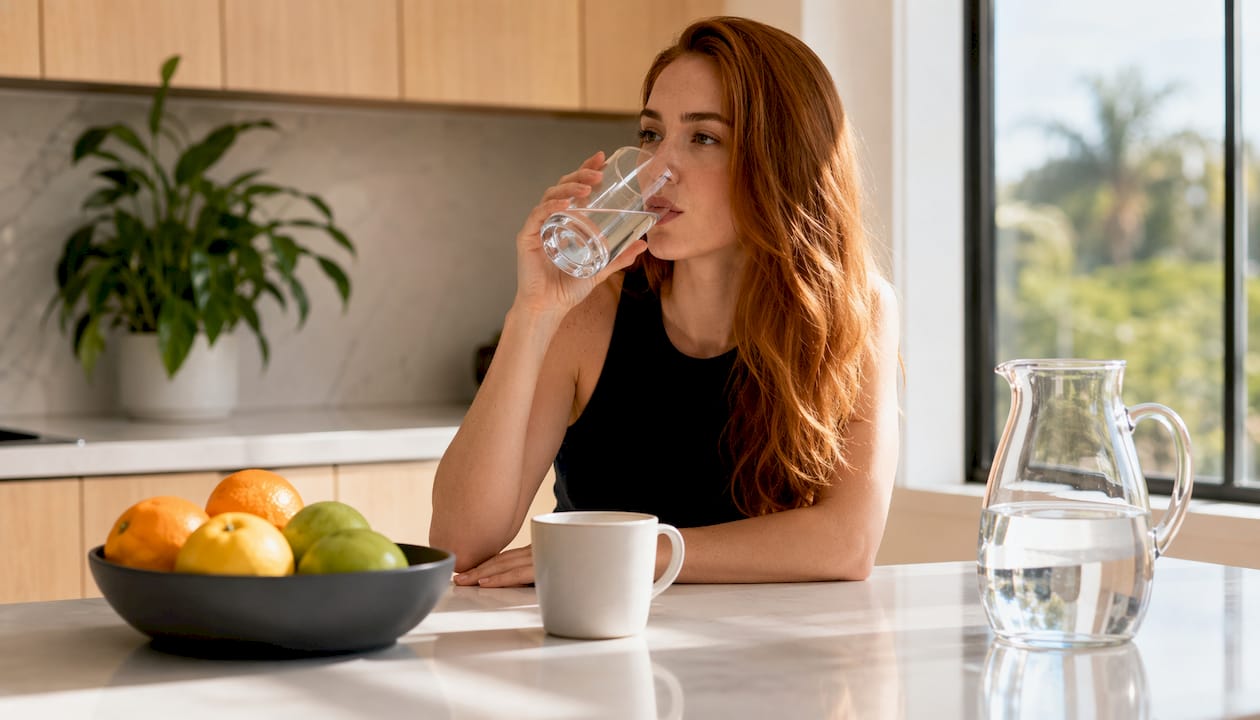
Hydration and hair follicle health are directly linked through your body’s circulatory system. Blood plasma is approximately 92% water, and that fluid carries the oxygen, iron, zinc, and biotin your follicles need to produce hair. Hair shafts themselves contain around 25% water, which gives each strand its elasticity and resistance to breakage. When your hydration drops, nutrient delivery to the scalp slows, keratin production falters, and shedding increases. Understanding this connection is the first step toward doing something about it.
How does internal hydration affect hair follicle health?
Internal hydration is the foundation of healthy follicle function. Your scalp’s blood supply depends on adequate plasma volume, and plasma is almost entirely water. When you are well hydrated, circulation to the scalp remains strong, delivering the nutrients that follicles convert into hair.
Dehydration reduces keratin synthesis by slowing the biochemical reactions inside follicle cells. Keratin is the structural protein that makes up each hair strand, so when its production slows, new hair grows more slowly and existing strands become weaker. The effect is not always immediate. Hair growth cycles mean the consequences of poor hydration often appear weeks or months later.
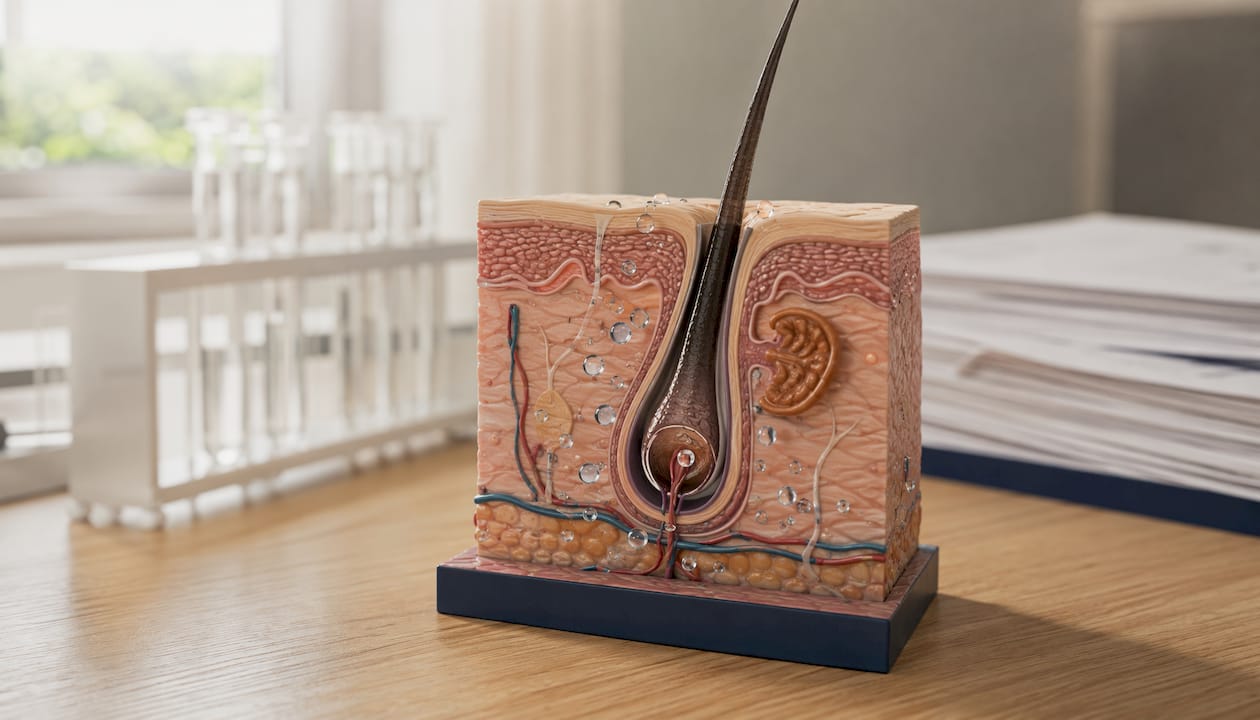
Chronic mild dehydration links to telogen effluvium, a condition where follicles shift prematurely into the resting phase, causing noticeable shedding roughly 2–3 months after the stressor. Many people experiencing sudden hair loss overlook dehydration as a cause because the timing feels disconnected. Tracking your water intake alongside any changes in shedding can reveal patterns that are otherwise easy to miss.
The table below gives a practical starting point for daily water intake based on body weight and activity level.
| Body weight | Sedentary (litres/day) | Moderately active (litres/day) | Very active (litres/day) |
|---|---|---|---|
| Under 60 kg | 1.6 | 2.0 | 2.4 |
| 60–80 kg | 2.0 | 2.4 | 2.8 |
| 80–100 kg | 2.4 | 2.8 | 3.2 |
| Over 100 kg | 2.8 | 3.2 | 3.8 |
These figures are general guidelines. Hot climates, illness, and high-protein diets all increase your requirements. Spreading intake evenly through the day supports steadier scalp circulation than drinking large amounts infrequently.
Pro Tip: Start each morning with a large glass of water before coffee or tea. Caffeine is mildly diuretic, so front-loading your hydration helps offset any fluid loss before it affects scalp circulation.
What is the difference between hair hydration and moisture?
The terms “hydration” and “moisture” are used interchangeably in haircare marketing, but they describe different things. Hydration refers to the water content within the hair shaft and scalp, which is governed largely by your internal health and environment. Moisture, in the haircare sense, describes the conditioning of the hair’s outer cuticle layer to reduce friction and protect the strand.
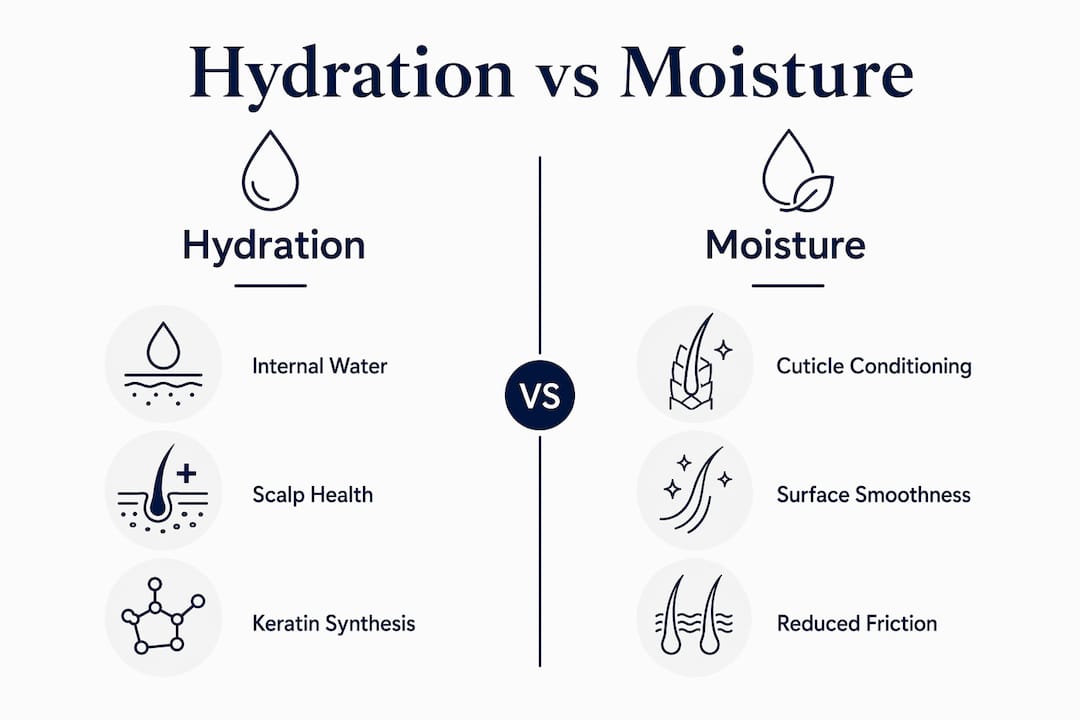
Conditioning agents flatten the cuticle and reduce friction, which is why conditioned hair feels smooth and manageable. That sensation is real and beneficial, but it does not mean the strand contains more water. True hair hydration is primarily internal. External products condition and protect; they do not permanently add water to the hair shaft.
Consumers feel “moisturised” hair because a flat cuticle surface reflects light and reduces tangling, not because the strand retains more water. This distinction matters because it changes how you approach your haircare routine. Chasing “hydration” through topical products alone will not address the root cause of dry, brittle hair if your systemic water intake is low.
The table below clarifies which ingredients address hydration versus conditioning.
| Ingredient type | Examples | Primary effect |
|---|---|---|
| Humectants | Hyaluronic acid, glycerin, aloe vera | Attract water to the hair surface from the environment |
| Conditioning agents | Cetyl alcohol, behentrimonium chloride | Smooth and flatten the cuticle layer |
| Protein treatments | Hydrolysed keratin, silk amino acids | Temporarily fill gaps in damaged cuticle |
| Lipid sealants | Argan oil, shea butter, jojoba oil | Lock in moisture and reduce water loss |
Key points to keep in mind:
- Humectants work best in humid conditions. In very dry air, they can draw moisture out of the hair shaft rather than into it.
- Oils applied to dry hair without a water-based product underneath cannot add moisture. They can only seal what is already there.
- Over-washing strips the scalp’s natural sebum, which acts as a built-in conditioner and barrier against moisture loss.
- Scalp hydration supports follicle health by maintaining the environment in which follicles function, not just the appearance of the hair above the surface.
Practical hair hydration tips for improving hair moisture
Getting the sequence right makes a significant difference to how well your hair retains moisture. Applying oils before water-based products creates a barrier that locks water out rather than in. The correct order is always: water-based hydrator first, then a lipid sealant to seal it in place.
Follow these steps to build an effective routine:
- Cleanse gently. Use a sulphate-free shampoo or a caffeine-enriched formula no more than 2–3 times per week. Frequent washing removes the scalp’s natural oils, leaving both the scalp and strands more vulnerable to dryness.
- Apply a humectant product. Hyaluronic acid holds up to 1,000 times its weight in water and delivers intense hydration without greasiness. Apply it to damp hair while the cuticle is still slightly open.
- Follow with a conditioning agent. A rosemary conditioner with saw palmetto, for example, smooths the cuticle and adds targeted scalp support. Leave it on for 2–3 minutes before rinsing.
- Seal with a light lipid product. A small amount of argan or jojoba oil applied to the lengths locks in the moisture from the previous steps. Avoid applying oil directly to the scalp, as this can clog follicles.
- Rinse with cool water. A cool final rinse closes the cuticle, improving shine and reducing frizz. Hot water keeps the cuticle open, allowing moisture to escape more readily.
Pro Tip: Apply a leave-in conditioner containing Pro-Vitamin B5 (panthenol) to towel-dried hair. Panthenol penetrates the cuticle and binds water within the strand, giving longer-lasting softness than surface conditioners alone.
Dietary support is equally important. Omega-3 fatty acids, vitamins A and C, and biotin all support scalp health and natural sebum production. Sebum keeps the scalp supple and reduces transepidermal water loss from the skin surrounding each follicle. Addressing nutritional deficiencies alongside topical routines produces noticeably better results than either approach alone.
Moisture does not accelerate genetic hair growth rate, but it prevents premature breakage, which allows hair to retain length over time. For those experiencing thinning, this distinction is encouraging. You may not be able to grow hair faster, but you can protect what is growing.
How does hydration interact with hair thinning treatments?
Hydration creates the biological environment in which hair growth treatments work. A well-hydrated scalp maintains good circulation, which means that nutrients and therapeutic agents reach follicles more effectively. Dehydrated tissue is less receptive to any form of stimulation, whether dietary or clinical.
Hair growth vitamins including biotin and zinc work through the same circulatory pathways that hydration supports. Taking supplements without adequate water intake reduces their bioavailability. Biotin gummies, for example, are water-soluble, meaning the body absorbs and transports them via plasma. Staying hydrated directly supports how well these supplements reach the follicle.
Livdor’s LLLT Laser Hair Growth Cap uses 650nm wavelength light to stimulate follicle cells at the mitochondrial level, encouraging them to re-enter the active growth phase. Low-level laser therapy (LLLT) works by increasing cellular energy production within the follicle. A hydrated scalp with healthy circulation amplifies this effect because the follicle cells are already in a better metabolic state.
Combining hydration habits with targeted treatments produces the most consistent results. The following approach addresses hair thinning from multiple angles:
- Drink adequate water daily to maintain scalp circulation and nutrient delivery.
- Use a biotin and caffeine shampoo to cleanse without stripping, while stimulating the scalp.
- Apply a hair growth serum containing biotin, caffeine, and Pro-Vitamin B5 to support follicle activity between laser sessions.
- Take biotin gummies daily to address any nutritional gaps that affect keratin production.
- Use the Livdor LLLT laser cap consistently, as results from laser therapy build progressively over 3–6 months.
The science of the hair growth cycle shows that follicles respond to sustained, consistent input rather than short-term interventions. Hydration is not a quick fix. It is a daily habit that keeps the foundation strong enough for other treatments to work.
Key takeaways
Hydration supports hair follicle health primarily through scalp circulation, which delivers the nutrients that drive keratin production and protect against premature shedding.
| Point | Details |
|---|---|
| Internal hydration drives follicle health | Blood plasma carries nutrients to follicles; dehydration slows keratin synthesis and increases shedding. |
| Hydration and moisture are different | Systemic water intake governs true hydration; topical products condition the cuticle rather than permanently hydrating the strand. |
| Product sequence matters | Apply water-based humectants before lipid sealants to lock in moisture effectively. |
| Diet amplifies hydration | Biotin, omega-3s, and vitamins A and C support sebum production and follicle health alongside water intake. |
| Combine hydration with targeted therapy | LLLT laser treatment and hair growth serums work best when scalp circulation is supported by consistent hydration. |
What I have learned about hydration and hair health
Hydration is one of those topics where the advice sounds simple but the reality is more layered. I have spoken with many people who are drinking plenty of water yet still struggling with dry, brittle hair. Almost always, the issue is not their water intake but their product routine. They are applying oils to dry hair, skipping conditioner, or washing daily with a harsh shampoo that strips everything the scalp works hard to produce.
The distinction between hydration and moisture is genuinely useful once you understand it. Chasing “hydration” through expensive topical products is often a distraction from the two things that actually move the needle: consistent water intake and a sensible conditioning routine. Once those are in place, the scalp is in a far better state to respond to targeted treatments.
What I find most encouraging is how well hydration supports other therapies. People who combine good hydration habits with LLLT laser therapy and quality supplements tend to see more consistent progress than those relying on any single approach. The follicle is a living structure. It responds to the whole environment you create for it, not just one input.
My honest recommendation is to treat hydration as infrastructure, not a treatment. Get it right, keep it consistent, and then layer your targeted solutions on top. That is where the real results come from.
— Adam Bond
Supporting your hair with Livdor’s science-backed solutions
Good hydration sets the stage. Livdor’s range of premium, drug-free treatments builds on that foundation to deliver visible results.
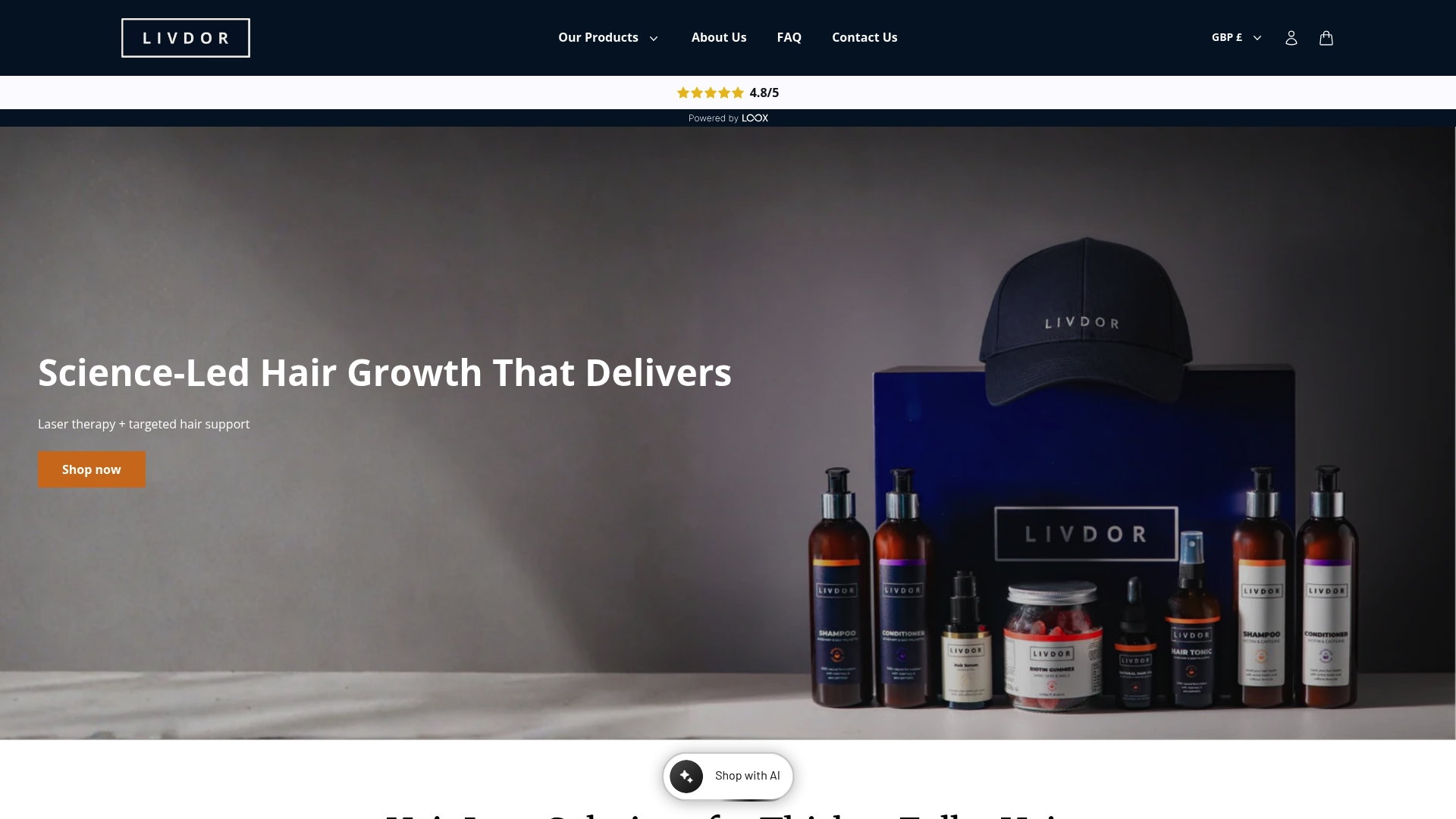
Livdor’s LLLT Laser Hair Growth Cap uses 650nm medical-grade laser wavelengths to stimulate follicle cells directly, with visible results typically appearing within three months of consistent use. Pair it with Livdor’s hair growth serum containing biotin, caffeine, and Pro-Vitamin B5 to support follicle activity between sessions. The rosemary conditioner with saw palmetto conditions the scalp while targeting DHT sensitivity, and biotin gummies address the nutritional gaps that dehydration and poor diet leave behind. Explore Livdor’s full range of laser hair growth products to find the combination that fits your routine.
FAQ
Does drinking more water help hair grow faster?
Adequate water intake supports scalp circulation and nutrient delivery to follicles, which maintains healthy hair growth. It does not accelerate the genetic rate of growth, but it prevents the shedding and breakage associated with dehydration.
What causes dehydrated hair to break more easily?
Dehydrated hair breaks at lower stress thresholds than hydrated hair because reduced water content lowers elasticity and tensile strength. Keeping hair strands adequately conditioned and maintaining systemic hydration both reduce breakage risk.
How often should I wash my hair to protect scalp hydration?
Washing 2–3 times per week with a gentle, sulphate-free shampoo preserves the scalp’s natural sebum without allowing product build-up. Daily washing strips protective oils and disrupts the scalp’s moisture balance.
Can LLLT laser therapy work alongside a hydration routine?
Yes. A well-hydrated scalp supports the cellular environment that LLLT targets. Livdor’s 650nm laser cap stimulates follicle mitochondria, and good scalp circulation, maintained by adequate hydration, helps follicle cells respond more effectively to that stimulation.
What is the best humectant for dry, thinning hair?
Hyaluronic acid is the most effective humectant for thinning hair because it attracts significant moisture without adding weight or greasiness. Apply it to damp hair before sealing with a light conditioning product for best results.

Leave a comment
This site is protected by hCaptcha and the hCaptcha Privacy Policy and Terms of Service apply.