
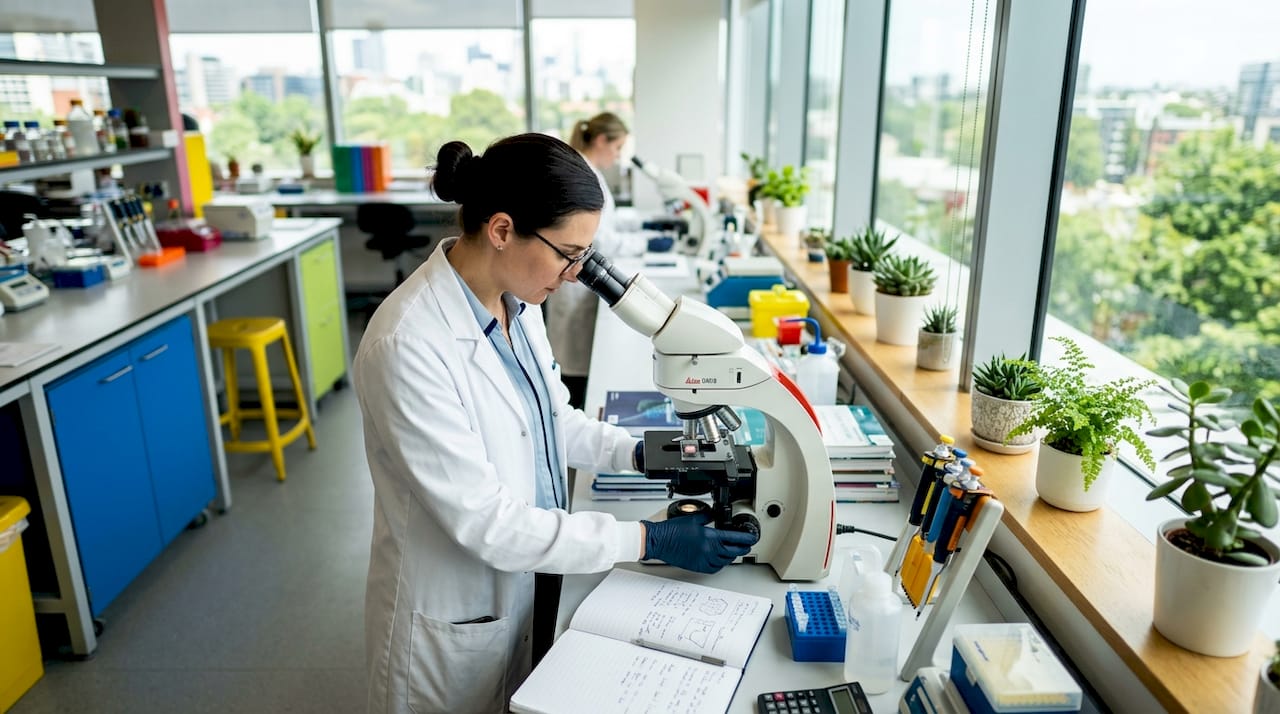
Hair follicle biology refers to the study of complex mini-organs embedded in the skin that produce, cycle, and regenerate hair. Working through a hair follicle biology basics checklist gives you a structured way to understand why hair grows, why it sheds, and what you can do to support it. Each follicle is a living, dynamic structure with its own blood supply, nerve connections, stem cells, and hormonal sensitivity. That complexity explains why surface-level hair care alone rarely delivers lasting results.
1. What are hair follicles?
Hair follicles are complex mini-organs found in the skin across almost the entire body. The only areas completely free of follicles are the palms of the hands and the soles of the feet. Each follicle is a self-contained unit capable of producing a hair shaft, cycling through growth and rest phases, and regenerating itself over a lifetime.
The follicle sits within the dermis and extends into the subcutaneous layer. It is not a passive tube. It actively responds to hormones, nutrients, nerve signals, and immune activity. Understanding this responsiveness is the foundation of every effective hair health strategy.
2. Hair follicle anatomy: the three main segments
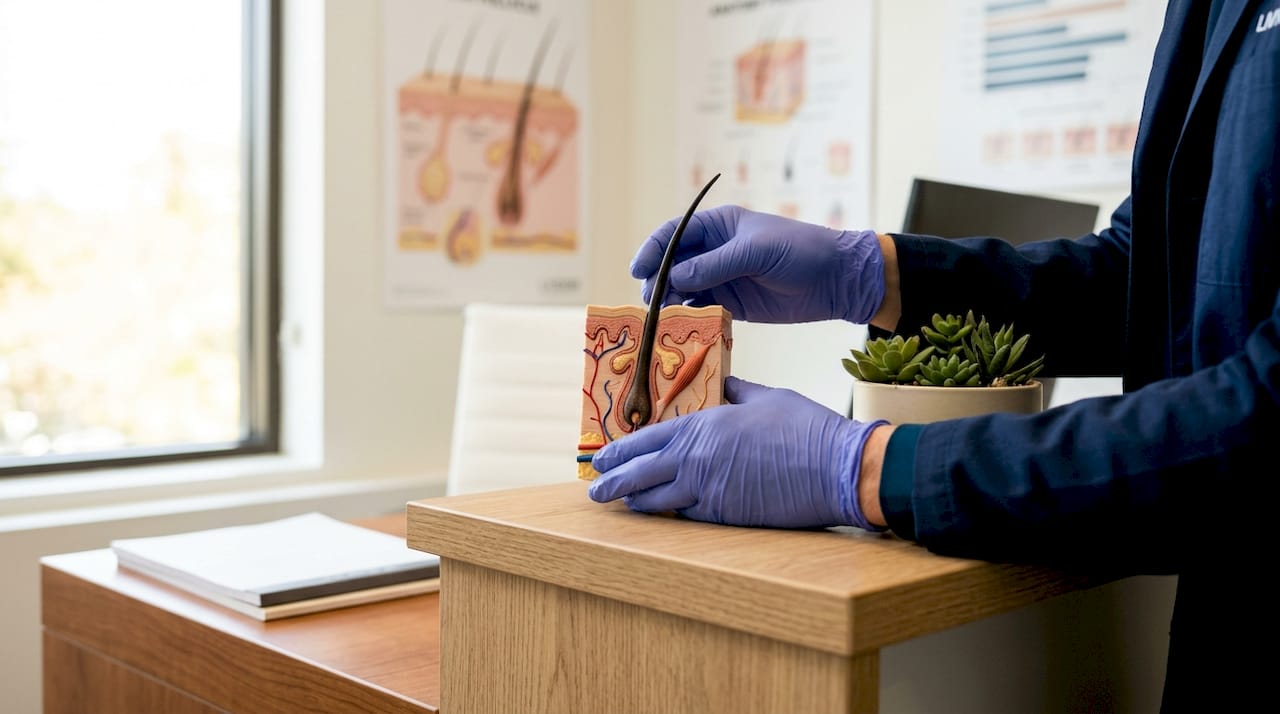
The follicle divides into three segments: the infundibulum, the isthmus, and the lower segment. Each has a distinct role.
- Infundibulum: The uppermost portion, extending from the skin surface to the sebaceous gland opening. It channels sebum onto the hair shaft.
- Isthmus: The middle segment, connecting the infundibulum to the lower follicle. The arrector pili muscle attaches here, causing hair to stand upright when stimulated.
- Lower segment: The deepest portion, containing the hair bulb and the dermal papilla.
The dermal papilla is the follicle’s control centre. It is a cluster of specialised mesenchymal cells that directs matrix cell division and hair shaft formation. Dysfunction in the dermal papilla impairs growth regardless of what you apply to the scalp surface.
| Structure | Function |
|---|---|
| Infundibulum | Channels sebum; uppermost follicle segment |
| Isthmus | Connects segments; arrector pili attachment point |
| Hair bulb | Site of active cell division producing the hair shaft |
| Dermal papilla | Mesenchymal control centre initiating hair growth |
| Bulge region | Epithelial stem cell reservoir for follicle renewal |
Pro Tip: The sebaceous gland attached to each follicle produces sebum, which conditions the scalp naturally. Harsh shampoos that strip sebum can disrupt this balance and affect follicle health over time.
3. The hair growth cycle: four phases you need to know
The hair growth cycle consists of four distinct phases. Each phase has a defined duration and a specific biological purpose.
- Anagen (active growth): Lasts 2–7 years for scalp hair. The dermal papilla drives rapid matrix cell division, pushing the hair shaft upward. Anagen duration determines maximum hair length.
- Catagen (regression): Lasts approximately 2–3 weeks. The follicle shrinks, the dermal papilla detaches, and cell division stops. Around 1–2% of scalp hairs are in this phase at any time.
- Telogen (resting): Lasts 2–4 months. The hair shaft is retained as a “club hair” while the follicle rests. 85–90% of scalp hairs are in anagen at any given time, meaning a smaller proportion are resting.
- Exogen (shedding): An active, enzymatic phase distinct from telogen. The club hair is released from the follicle through enzymatic action. Normal shedding is defined as 50–100 hairs per day.
Scalp follicles cycle asynchronously. This means not all follicles shed at the same time, which is why healthy hair maintains consistent density. When large numbers of follicles shift into telogen simultaneously, a condition called telogen effluvium results in noticeable thinning.
A key clinical point: exogen is an active process, not simply passive loss. This explains why follicle stimulation therapies sometimes cause a brief increase in visible shedding before improvement. The follicle is clearing old hairs to make way for new growth.
4. Signalling pathways and stem cells that regulate follicle cycling
Follicle cycling is governed by a network of molecular signals. The primary pathways work in opposing directions, either promoting growth or triggering regression.
- Wnt/β-catenin signalling: Initiates anagen. Activating this pathway promotes the transition from resting to active growth.
- Sonic Hedgehog (Shh) and Fibroblast Growth Factors (FGFs): Support anagen progression and matrix cell proliferation.
- Bone Morphogenetic Protein (BMP) and TGF-β: Act as inhibitors. They promote catagen and suppress premature re-entry into anagen.
- Notch signalling: Maintains the stem cell population in the bulge region, preventing premature differentiation.
The bulge region of the outer root sheath is the primary reservoir of epithelial stem cells. These cells are responsible for follicle regeneration after each cycle and contribute to wound healing in the surrounding skin. Damage to the bulge, whether from aggressive chemical treatments or physical trauma, disrupts the entire renewal process.
Each follicle cycles 10–20 times in a lifetime. That finite capacity underlines why protecting follicle integrity from an early stage matters far more than attempting to reverse advanced damage later.
Pro Tip: Treatments that damage the bulge region can inhibit rather than promote growth. Always prioritise gentle, science-backed approaches that work with the follicle’s biology rather than against it.
5. Internal and external factors that influence follicle health
Hair follicle function is sensitive to a wide range of systemic and environmental inputs. Understanding these factors is central to any practical hair follicle health checklist.
Systemic factors:
- Hormones: Androgens, oestrogens, and thyroid hormones all influence follicle cycling. Androgens shorten anagen in genetically susceptible follicles, driving androgenetic alopecia. Thyroid imbalances can cause diffuse shedding.
- Nutrition: Deficiencies in iron, zinc, biotin, and protein impair matrix cell division and weaken the hair shaft.
- Age: Follicles gradually miniaturise with age, producing finer, shorter hairs over successive cycles.
External and environmental factors:
- Stress: Psychological and physiological stress prematurely shifts follicles into the resting phase, triggering telogen effluvium weeks to months after the stressful event.
- Neuroinflammation: Hair follicles act as sensory organs with their own nerve supply. Systemic stress and neuroinflammation can push follicles into catagen regardless of what topical products you use.
- Scalp conditions: Seborrhoeic dermatitis, psoriasis, and chronic inflammation create a hostile environment for follicle cycling.
- Vascular supply: Adequate blood flow delivers oxygen and nutrients to the dermal papilla. Poor circulation directly limits follicle performance.
The practical implication is clear. Scalp health is tied to overall systemic conditions, not just what you apply topically. A follicle stimulation guide for men and women alike must account for diet, stress management, and hormonal balance alongside topical care.
6. How follicle biology informs effective hair restoration
Understanding hair follicle anatomy and cycling directly shapes which treatments work and why. The most effective approaches target the follicle at a biological level rather than simply coating the hair shaft.
- Low-Level Laser Therapy (LLLT): LLLT laser caps at 650nm wavelength deliver photobiomodulation directly to the dermal papilla and surrounding tissue. This stimulates cellular energy production, increases blood flow to the follicle, and supports the transition from telogen back into anagen. Livdor’s laser hair growth cap uses 272 medical-grade lasers to deliver this therapy at home, without drugs or invasive procedures.
- Biotin: A B-vitamin that supports keratin production. Biotin deficiency is directly linked to hair thinning and brittle shafts. Supplementing with biotin gummies provides a convenient, consistent daily dose.
- Caffeine shampoo: Caffeine penetrates the scalp and counteracts the inhibitory effect of DHT on follicle cycling. A caffeine-based shampoo used regularly supports anagen duration at the follicle level.
- Rosemary conditioner with saw palmetto: Rosemary extract promotes circulation to the scalp. Saw palmetto acts as a natural DHT blocker, reducing androgen-driven follicle miniaturisation.
- Hair growth serum with biotin, caffeine, and Pro-Vitamin B5: Pro-Vitamin B5 (panthenol) strengthens the hair shaft and supports scalp moisture. Combined with biotin and caffeine, a hair growth serum delivers targeted follicle support with each application.
- Hair growth vitamins: Comprehensive vitamin formulations address nutritional gaps that impair follicle cycling, including iron, zinc, and vitamin D.
Pro Tip: Using LLLT therapy alongside biotin, a caffeine shampoo, and a targeted serum creates a multi-pathway approach. Each product targets a different aspect of follicle biology, making the combined regimen more effective than any single treatment alone.
Key takeaways
Healthy hair growth depends on the follicle’s biology, its cycling phases, stem cell integrity, and systemic environment, not on surface-level care alone.
| Point | Details |
|---|---|
| Follicle anatomy matters | The dermal papilla controls growth; dysfunction here limits results regardless of topical products. |
| Four cycle phases | Anagen, catagen, telogen, and exogen each play a distinct role; disruption causes visible thinning. |
| Stem cells are finite | The bulge region cycles 10–20 times per lifetime; protecting it is a long-term priority. |
| Systemic factors drive loss | Hormones, stress, and nutrition alter follicle cycling as powerfully as any external condition. |
| Combined therapy works best | LLLT at 650nm paired with biotin, caffeine, and botanical serums addresses multiple follicle pathways simultaneously. |
Why I think most people misread their hair loss
Most people I speak with focus almost entirely on the hair shaft. They switch shampoos, try oils, and assess results by how their hair looks and feels. The follicle, buried in the dermis and invisible to the naked eye, rarely enters the conversation.
What years of working in this field have taught me is that the follicle is a dynamic, living structure comparable in complexity to a small organ. It has its own immune privilege, its own stem cell niche, and its own hormonal sensitivity. When you treat hair loss purely as a surface problem, you are addressing the symptom rather than the source.
The biology also reveals something counterintuitive. A brief increase in shedding after starting a new treatment is not always a bad sign. It can indicate that follicles are clearing old club hairs and re-entering anagen. Stopping treatment at that point is one of the most common mistakes I see.
My honest view is that the most durable results come from people who understand the basics, commit to a multi-pathway approach, and give it time. LLLT therapy, quality nutrition, and targeted topical support are not quick fixes. They work with the follicle’s own biology, and that biology operates on a timescale of months, not days.
— Adam Bond
Livdor’s science-backed approach to follicle health
Understanding follicle biology is the first step. Acting on it with the right tools is what produces results.

Livdor’s laser hair growth cap uses 272 medical-grade lasers at the clinically supported 650nm wavelength to deliver LLLT directly to the scalp. It is drug-free, non-invasive, and designed for consistent home use. Paired with Livdor’s premium hair growth products, including biotin gummies, caffeine shampoo, rosemary conditioner with saw palmetto, and Pro-Vitamin B5 serums, you get a complete regimen that targets follicle health from multiple biological angles. Visible results typically begin within three months of consistent use. Explore the full range at Livdor and find the combination that fits your needs.
FAQ
What are hair follicles?
Hair follicles are mini-organs embedded in the skin that produce and cycle hair shafts. They are present across almost the entire body, with the exception of the palms and soles.
How long does the anagen phase last?
The anagen phase lasts 2–7 years for scalp hair and determines maximum hair length. Around 85–90% of scalp hairs are in anagen at any given time.
What is the bulge region of the hair follicle?
The bulge is a section of the outer root sheath that houses epithelial stem cells essential for follicle regeneration and wound healing. Damage to this area disrupts the hair cycle and can permanently impair renewal.
Why does shedding sometimes increase at the start of treatment?
Exogen is an active, enzymatic shedding phase. When follicle stimulation therapies accelerate the transition back into anagen, old club hairs are released first, causing a temporary increase in visible shedding before new growth appears.
Which factors most commonly disrupt the hair growth cycle?
Androgens, thyroid imbalances, nutritional deficiencies, psychological stress, and chronic scalp inflammation are the most common disruptors. Each can prematurely shift follicles into the resting phase, reducing hair density over time.


Leave a comment
This site is protected by hCaptcha and the hCaptcha Privacy Policy and Terms of Service apply.