
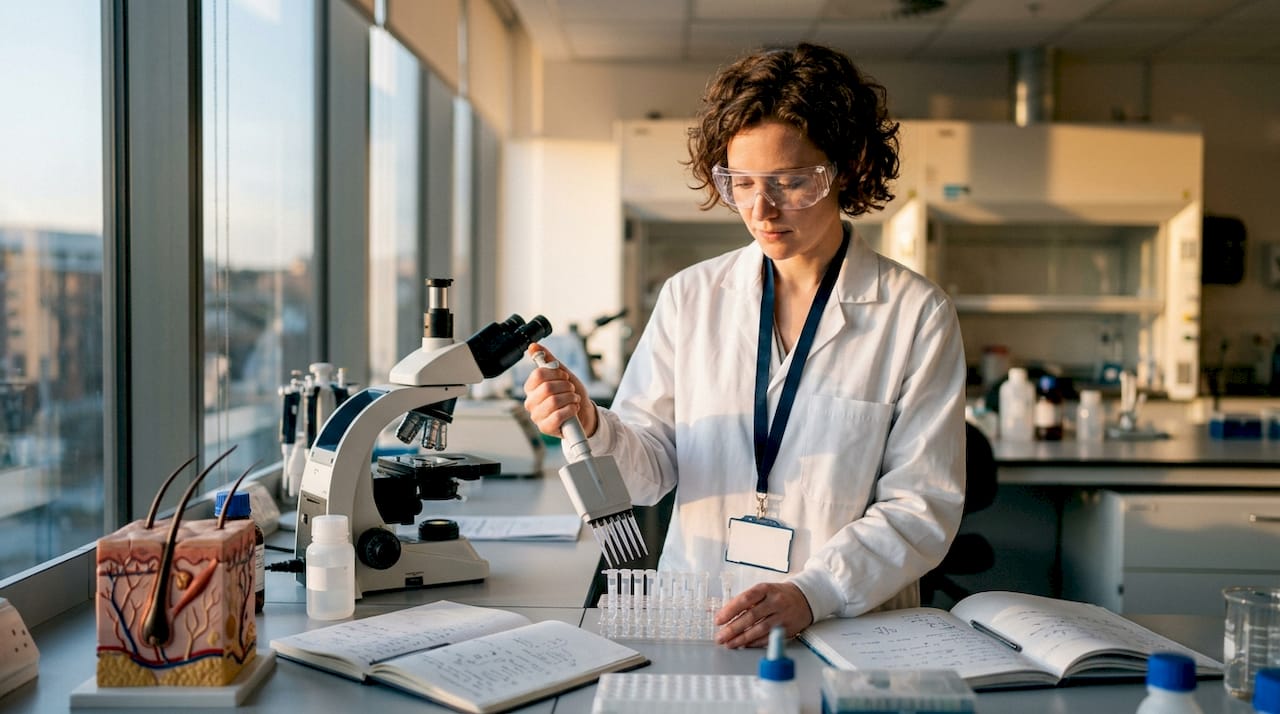
Interpreting hair follicle research findings means analysing cellular activity, molecular signals, and clinical data to understand how hair grows and why it stops. The field formally calls this process “hair follicle study interpretation,” and it sits at the heart of every credible restoration approach, from pharmaceutical trials to natural, drug-free therapies. Key entities you will encounter repeatedly include androgenetic alopecia (AGA), dihydrotestosterone (DHT), Wnt/β-catenin signalling, and low-level laser therapy (LLLT). Understanding what these terms mean in context separates useful science from noise, and it helps you make genuinely informed decisions about your own hair health.
What do hair follicle research findings reveal about hair growth biology?
Hair growth is not simply a matter of cells dividing and pushing a strand upward. 3D time-lapse microscopy reveals a biological motor inside the outer root sheath, where coordinated cell movement actively pulls the hair shaft upward. This discovery overturns the textbook model that dominated hair biology for decades.
The mechanism relies on actin, a structural protein found in virtually every human cell. Disrupting actin reduces hair growth by over 80%, whereas blocking cell division alone does not halt growth at all. That single finding reframes how researchers assess the effectiveness of any topical or light-based therapy: the target is cellular mechanics, not just proliferation rates.
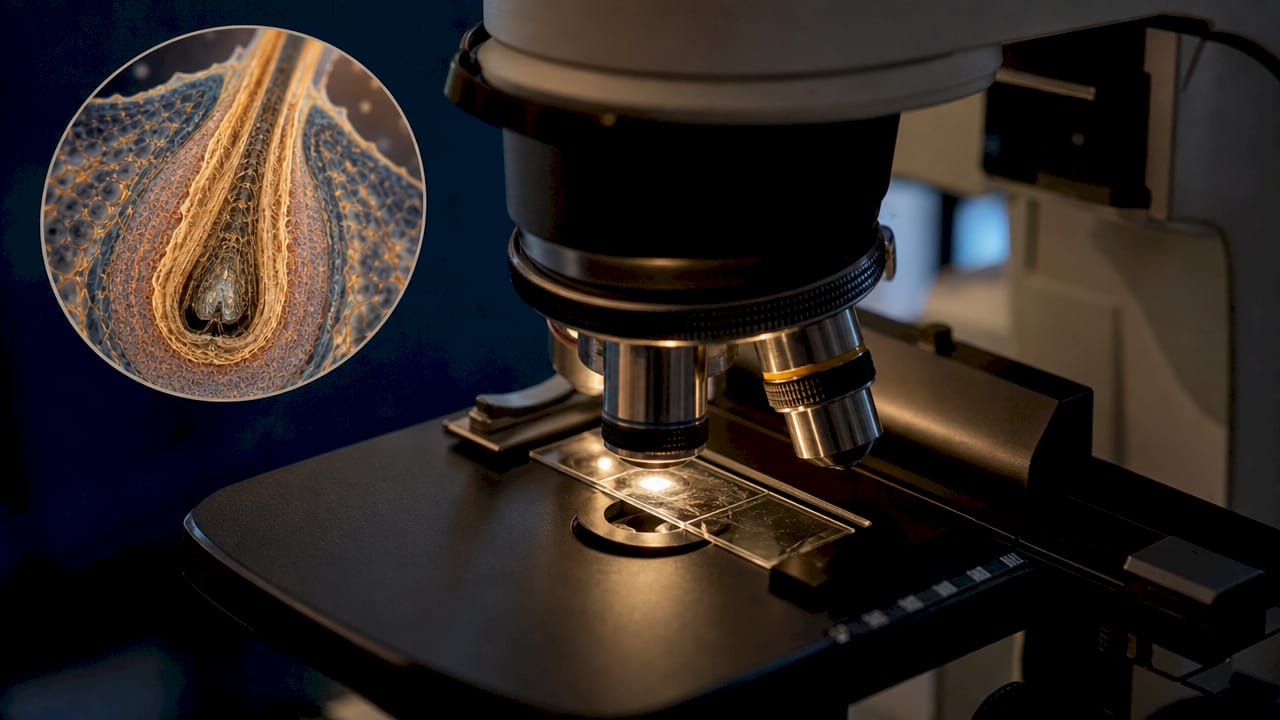
DHT remains the central villain in androgenetic alopecia. Research shows that DHT at 5 x 10^-6 mol/L reduces hair matrix cell proliferation by 24% and increases apoptosis (programmed cell death) by 31% within three days in frontal follicles. Occipital follicles remain unaffected, which mirrors the clinical pattern seen in male and female pattern baldness.
Two signalling pathways govern whether a follicle grows or regresses:
- Wnt/β-catenin signalling promotes follicle entry into the anagen (growth) phase. Research into the DKK3-CKAP4 axis shows that targeting this pathway partially restores hair regeneration by reversing fibroimmune remodelling and rebuilding dermal papilla cell populations.
- TGF-β signalling drives the catagen (regression) phase. Elevated TGF-β activity shortens the growth window and accelerates follicle miniaturisation in AGA.
- Cellular regeneration is more complex than a single marker. CD200-negative bulge cells show higher regenerative capability than CD200-positive cells, producing thicker follicles in regeneration assays. This tells us that follicle biology involves a broader cellular ecosystem, not one dominant stem cell type.
Pro Tip: When you read a hair growth study, check which follicle region was tested. Frontal and occipital follicles respond very differently to DHT, so a result from one region does not automatically apply to the other.
Understanding the science of hair growth at this cellular level helps you judge whether a product or treatment targets the right mechanism.
How to interpret experimental hair follicle models and organoid research
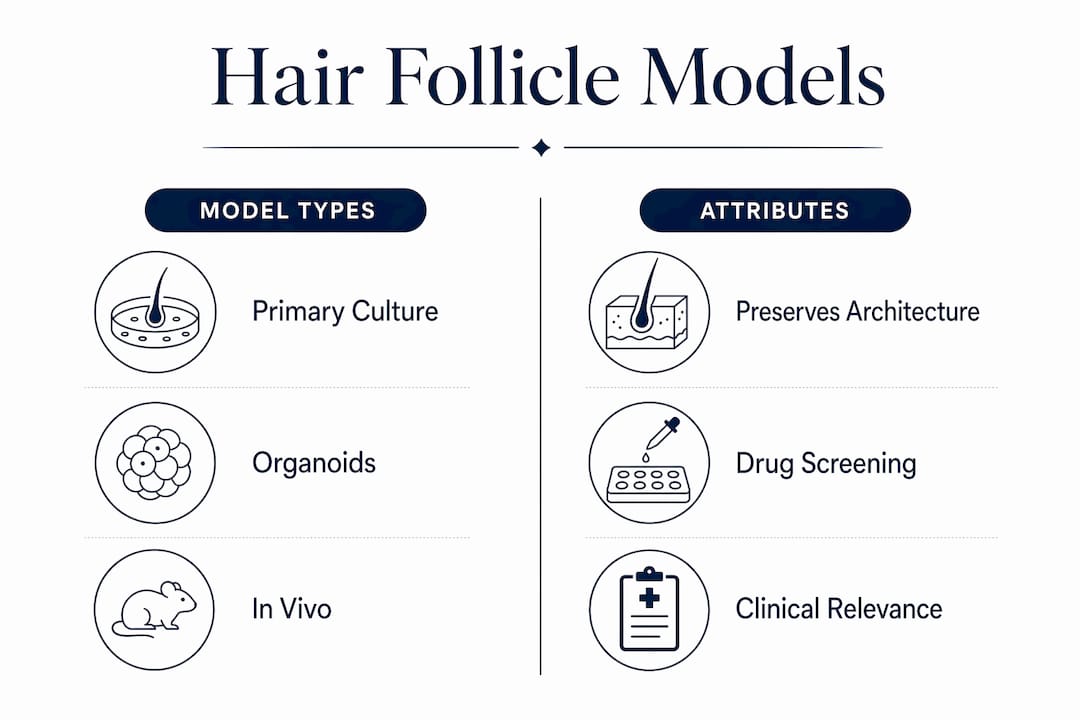
Hair follicle organoids (HFOs) are three-dimensional cell structures grown in a laboratory to mimic the architecture and function of a real follicle. They represent one of the most promising platforms for testing new therapies without using human subjects. However, understanding their limitations is just as important as appreciating their potential.
When you analyse hair follicle studies that use HFOs, look for these four factors:
- Cell sourcing. HFOs built from induced pluripotent stem cells (iPSCs) offer greater scalability than those derived from primary tissue, but iPSC-based models still struggle to replicate the full signalling environment of a mature follicle.
- Culture protocol. HFOs are limited by maturity, vascularisation, and a lack of standardised culture protocols. Studies using different protocols produce results that are difficult to compare directly.
- Translational relevance. HFOs remain at the preclinical stage. A positive drug-screening result in an organoid does not guarantee clinical efficacy in a living scalp with its full immune, vascular, and hormonal environment.
- Reproducibility. Variability between laboratories is a known bottleneck. When a study reports a promising result, check whether an independent group has replicated it under similar conditions.
| Model type | Strengths | Current limitations |
|---|---|---|
| Primary tissue organ culture | Preserves native architecture | Limited supply, short viability window |
| iPSC-derived HFOs | Scalable, patient-specific | Immature signalling, no standardised protocol |
| Co-culture systems | Models cell-to-cell interaction | Complex to reproduce across labs |
Hair follicle organoids offer a promising platform for drug screening and regenerative medicine, yet the absence of standardisation limits cross-study comparisons. This means a single organoid study should inform your understanding, not define it.
Pro Tip: Treat organoid research as directional evidence. If multiple independent studies using different model types point to the same mechanism, that convergence is far more meaningful than one impressive result from a single lab.
Reviewing types of hair loss clinical studies alongside organoid findings gives you a fuller picture of where the science currently stands.
What are the clinical implications of interpreting hair follicle research for restoration outcomes?
Research findings translate directly into how you should evaluate your own restoration progress. The most common mistake is judging results too early, and the science explains exactly why that happens.
Synchronised peak hair growth at 12 months post-transplant is temporary. True mature density only becomes visible after 18 months, once follicles desynchronise from their initial growth burst and settle into natural, independent cycles. Evaluating results at 12 months is genuinely misleading, and responsible clinics focus on long-term outcomes rather than peak-moment photographs.
The biology behind this matters. When follicles are transplanted or stimulated simultaneously, they enter anagen together, creating an artificially dense appearance. As they desynchronise, some enter telogen (resting phase) while others grow, which temporarily reduces visible density before the true settled result emerges.
Several research-backed factors determine whether restoration succeeds long-term:
- Structural niche integrity. Stem cells may remain intact in alopecia, but fibrotic remodelling of the extracellular collagen network disrupts the follicular niche, preventing effective regeneration. A treatment that ignores the structural environment will underperform even when stem cells are present.
- Signalling environment. Therapeutic success depends on restoring the correct molecular signals, not just delivering cells or nutrients to the scalp.
- Inflammation management. Styling tension and post-procedure inflammation can mask settled density, making results appear worse than they are during the assessment window.
- Realistic timelines. Non-invasive treatments like LLLT typically require consistent use over three to six months before meaningful results are visible. Research supports this timeline because follicle cycling is inherently slow.
Understanding the hair restoration treatment timeline in light of these biological realities helps you set expectations that are both honest and encouraging.
What practical steps can individuals take to apply hair follicle research insights?
Research consistently points to one principle: combining approaches that target different mechanisms produces better outcomes than relying on a single treatment. The following evidence-informed tools each address a distinct biological target.
LLLT laser therapy: the cellular energy driver
Low-level laser therapy at 650nm wavelength stimulates the mitochondria inside follicle cells, increasing ATP production and promoting anagen re-entry. Livdor’s LLLT laser hair growth cap uses 272 medical-grade lasers at this clinically studied wavelength, delivering consistent photobiomodulation across the entire scalp. Visible results typically begin within three months of regular use.
Topical and nutritional support: the synergy layer
| Product | Key active | Biological target |
|---|---|---|
| Caffeine shampoo with biotin | Caffeine, biotin | Counteracts DHT at follicle level, supports keratin |
| Rosemary conditioner with saw palmetto | Rosemary extract, saw palmetto | Inhibits 5-alpha reductase, reduces DHT conversion |
| Hair growth serum | Biotin, caffeine, pro-vitamin B5 | Scalp circulation, follicle nourishment, moisture retention |
| Biotin gummies | Biotin | Systemic keratin and hair protein synthesis |
Saw palmetto works by inhibiting 5-alpha reductase, the enzyme that converts testosterone into DHT. This directly addresses the mechanism identified in AGA research. Pro-vitamin B5 (panthenol) supports scalp moisture and follicle structural integrity, which matters given the research showing that the structural niche is as important as the stem cells within it.
Pro Tip: Use your LLLT cap on clean, dry hair before applying serum. Photobiomodulation penetrates more effectively when the scalp surface is clear, and the serum then works on a freshly stimulated follicle environment.
Livdor’s hair growth serum range combines biotin, caffeine, and pro-vitamin B5 in one formula, making the topical layer straightforward to maintain alongside laser therapy. For a drug-free approach to hair growth, this combination targets the biology at multiple levels without pharmaceuticals.
Key takeaways
Interpreting hair follicle research findings accurately requires understanding both the cellular mechanisms driving growth and the structural environment that determines whether those mechanisms succeed.
| Point | Details |
|---|---|
| Actin drives hair growth | Outer root sheath contraction, not cell division alone, pulls hair upward. |
| DHT damages frontal follicles | DHT reduces matrix cell proliferation by 24% and raises apoptosis by 31% in frontal follicles. |
| Organoid results are directional | HFOs lack standardised protocols, so treat single-study findings as early-stage evidence only. |
| Mature density takes 18 months | Follicle desynchronisation after restoration means true results are not visible until 18 months. |
| Combine LLLT with topical support | Laser therapy plus biotin, caffeine, and saw palmetto targets multiple biological mechanisms simultaneously. |
What I have learned from years of reading hair follicle research
The single biggest misinterpretation I see is treating a promising laboratory result as a confirmed treatment. People read a headline about organoids or a new signalling pathway and assume a product based on that mechanism will work for them within weeks. The gap between a cell culture finding and a clinical outcome is enormous, and the research is honest about that gap even when the headlines are not.
What the science does confirm, clearly and consistently, is that hair restoration is a long game. The follicular niche research showing that stem cells can be present yet inactive because of fibrotic remodelling is one of the most important findings of the past few years. It tells you that feeding your scalp the right signals and maintaining a healthy structural environment matters as much as any single active ingredient.
My honest view is that the people who get the best results are those who combine a clinically grounded device like an LLLT cap with consistent nutritional and topical support, and then give it genuine time. They do not chase the 12-month peak. They do not switch products every six weeks. They read the research, understand what it actually says, and build a routine around the mechanisms it identifies. That patience, grounded in real biological understanding, is what separates lasting results from temporary ones.
— Adam Bond
Science-backed hair growth solutions from Livdor
Understanding the biology is the first step. Putting it into practice is the next.
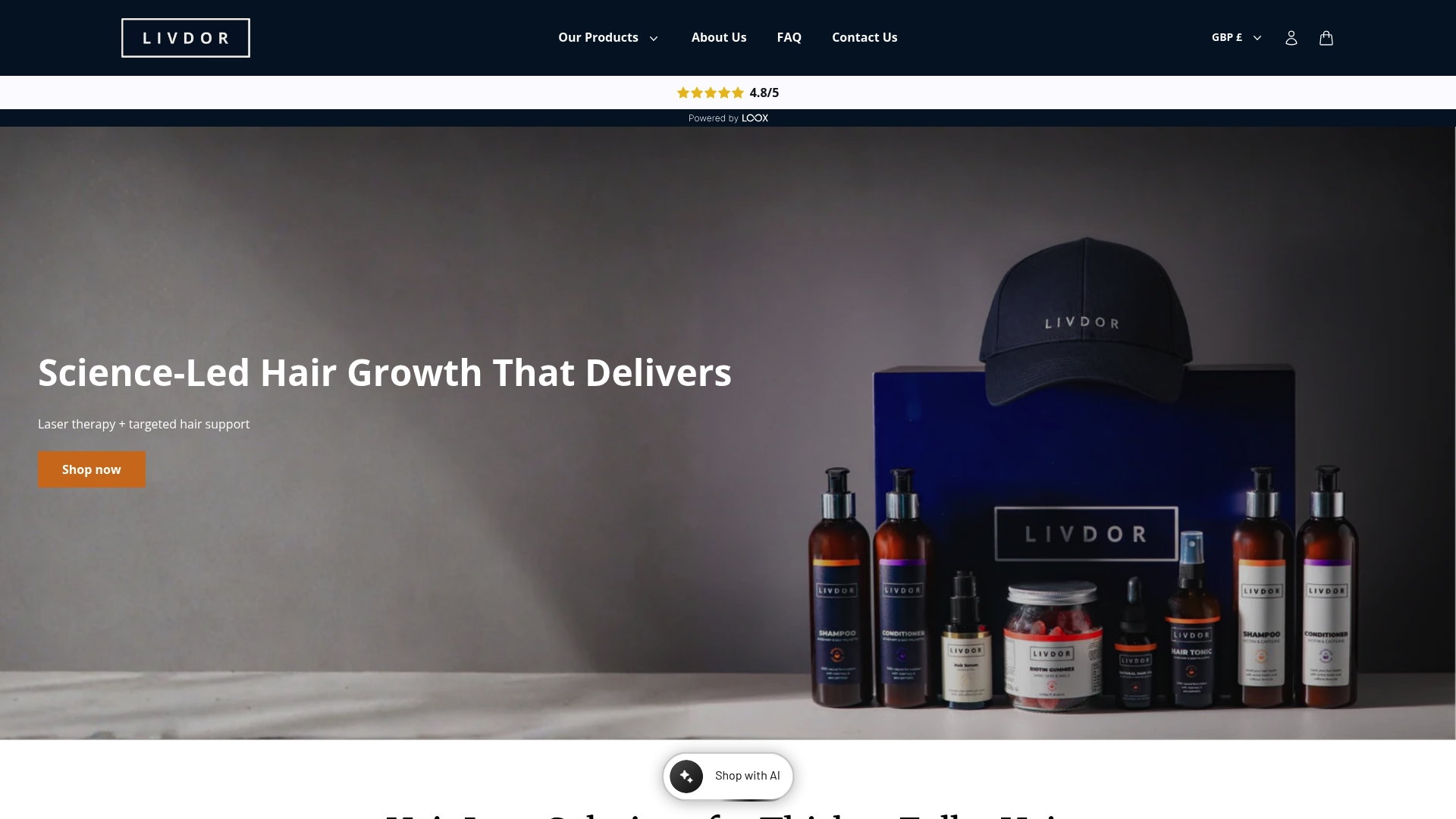
Livdor’s laser hair growth products are built around the same mechanisms this article covers: photobiomodulation at 650nm to stimulate follicle activity, combined with topical serums containing biotin, caffeine, and pro-vitamin B5 to support the structural and nutritional environment. The biotin gummies add systemic nutritional support, and the caffeine shampoo and rosemary conditioner with saw palmetto address DHT at the scalp level. Used together, these products target hair biology from multiple angles, which is exactly what the research supports.
FAQ
What does it mean to interpret hair follicle research findings?
Interpreting hair follicle research findings means reading cellular, molecular, and clinical data to understand how hair grows, why it thins, and which treatments address the correct biological mechanisms.
How does DHT cause hair loss according to research?
DHT reduces hair matrix cell proliferation by 24% and increases cell death by 31% in frontal follicles within three days, directly causing the miniaturisation seen in androgenetic alopecia.
Are hair follicle organoid studies reliable for predicting treatments?
HFOs are useful for early-stage drug screening but lack standardised protocols and vascularisation, so their results are directional rather than definitive proof of clinical efficacy.
When should I assess hair restoration results?
True mature density appears after 18 months, once follicles desynchronise from their initial synchronised growth burst. Evaluating results at 12 months is misleading because peak growth is temporary.
Does LLLT have a scientific basis for hair growth?
Yes. LLLT at 650nm stimulates mitochondrial activity in follicle cells, increasing energy production and promoting re-entry into the anagen growth phase, a mechanism supported by multiple independent studies.


Leave a comment
This site is protected by hCaptcha and the hCaptcha Privacy Policy and Terms of Service apply.