
Let's be honest. Most "natural hair loss" content online is fluff dressed up as advice. Coconut oil myths. Vague "try biotin!" throwaway lines. Nothing you can actually build a routine around.
Here's what's different: non-pharmaceutical hair thinning remedies that work aren't a mystery anymore. We have actual randomised trials now. Real data. A randomised trial found that 2% rosemary oil matched 2% minoxidil for hair count increases at six months, with less scalp itching to boot. That single result changed how a lot of clinicians think about drug-free hair growth solutions. Whether you've noticed a wider parting, more strands on the pillow, or you're just done with prescription side effects, there's a real evidence base to work from before you touch a prescription pad.
What are the most effective natural topical remedies for hair thinning?
Topicals are the easiest entry point. And the evidence behind a couple of them is stronger than most people assume.
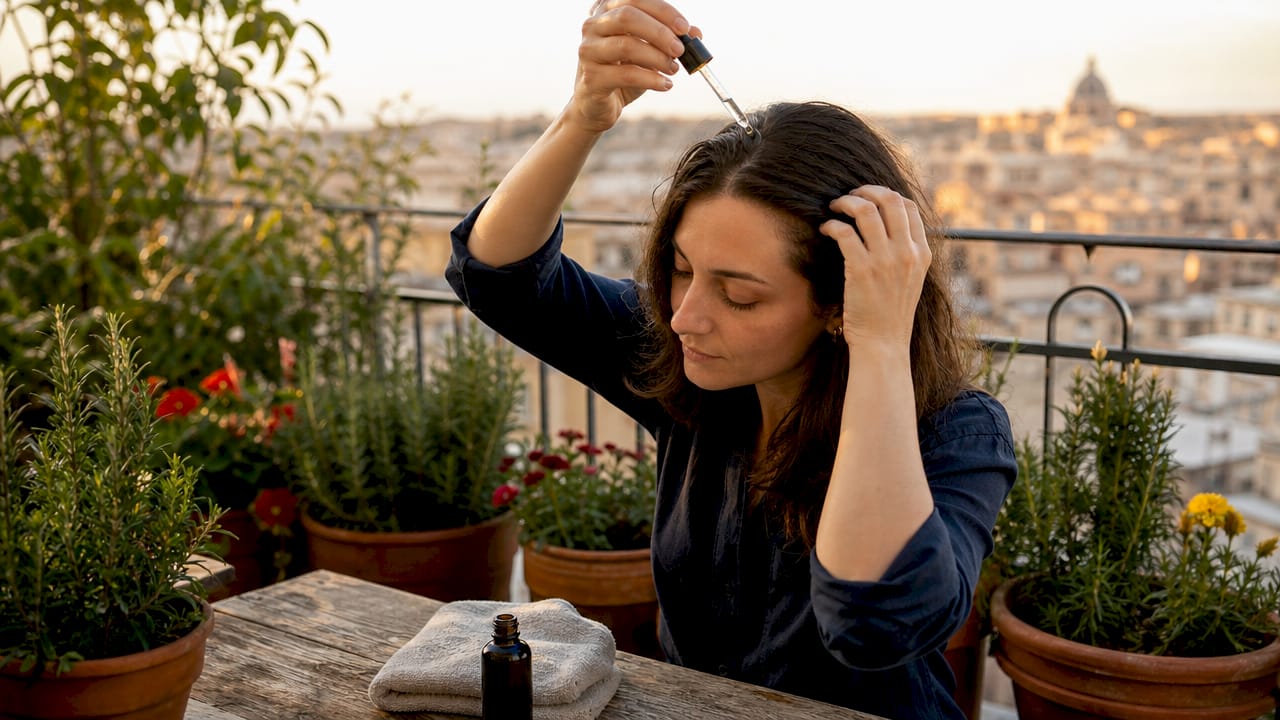
Rosemary oil is the headline act here. Twice-daily application went head-to-head with minoxidil and came out even on hair count, with far less irritation. That matters more than people give it credit for. Irritation is the reason people quit conventional treatments halfway through. We built our rosemary hair oil with saw palmetto around this exact mechanism, pairing rosemary with saw palmetto to hit the same DHT pathway responsible for androgenetic alopecia.
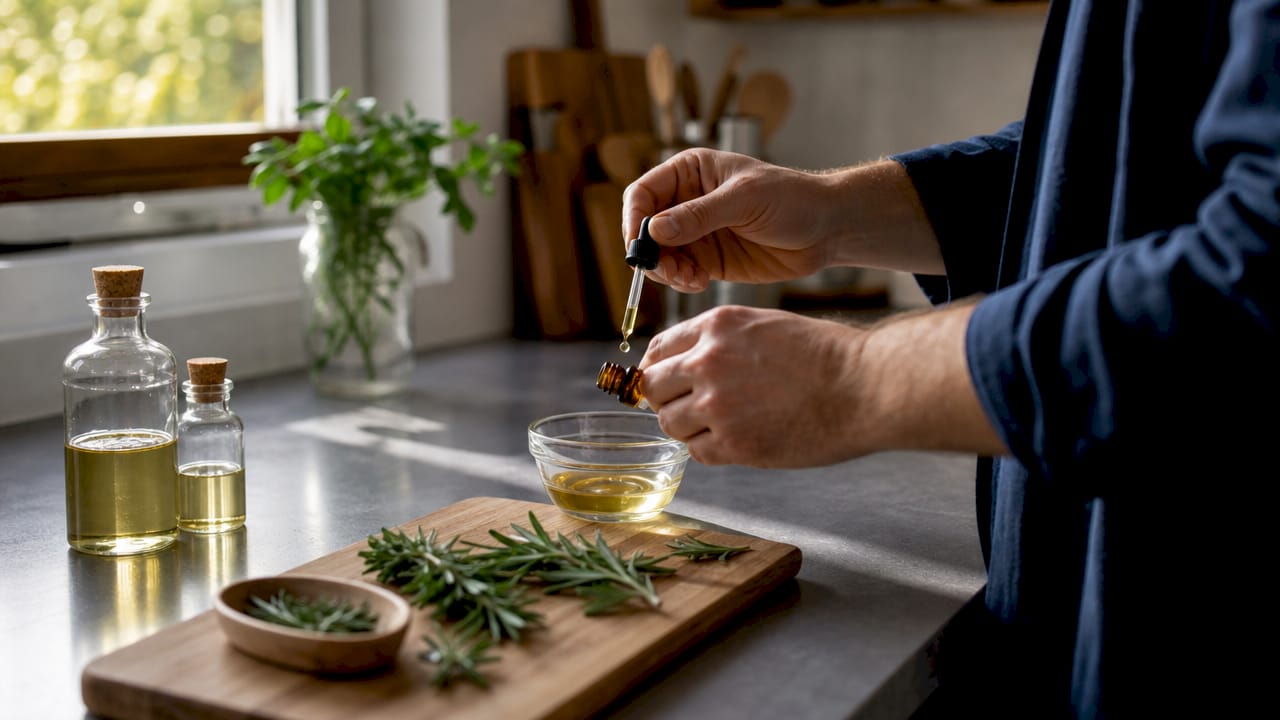
Kukui nut oil is the quieter story. Less famous, more interesting in some ways. Research published in Scientific Reports shows it promotes hair growth by activating prostaglandin F2α pathways and boosting cell proliferation in human follicle cultures. Prostaglandins run the hair growth cycle. Activate that pathway, and you're directly supporting the follicle's ability to push out new strands.
A few ground rules before you start slathering oils on your scalp:
- Dilute. Always. A 2% rosemary concentration is roughly 12 drops per 30ml of carrier oil. Undiluted essential oil on skin is asking for trouble.
- Patch test first. Small area. Skip this and you risk contact dermatitis that makes shedding worse, not better.
- Sixteen weeks. Minimum. The hair cycle is slow and unforgiving of impatience.
- One product at a time. Layer three untested oils and get a reaction? Good luck figuring out which one did it.
The mistake I see most often isn't dosage, it's timing. People apply rosemary oil straight after a shower, hair still damp, and wonder why it feels like it's just sitting on top rather than sinking in. Diluted rosemary oil wants a dry scalp. Water in the hair shaft blocks absorption and the oil ends up sliding around rather than penetrating where it needs to. We had a customer get in touch a few weeks into using the rosemary oil, frustrated that it "wasn't doing anything," and once we talked through her routine, that was exactly it, straight out of the shower, hair soaking. Switched to applying on dry hair, massaging it in properly for a good few minutes rather than a quick rub, and she noticed less shedding in the shower within about a month. It's a small habit change, but it's the difference between the oil actually reaching the follicle and it just evaporating off wet hair.
How can dietary and nutritional approaches support hair regrowth naturally?
Nutrition affects hair thinning more than people expect. But the mechanism is narrow. Deficiencies cause shedding. Fix the deficiency, shedding stops. Take supplements you don't need, and nothing happens. Simple as that.
Addressing iron, protein, and vitamin D deficiencies is the real foundation here, not the trendy hair vitamin of the month. Iron deficiency shows up constantly in women with diffuse shedding, and fixing it can cut hair loss within three to six months. Protein is even more basic. It's the literal building material of the hair shaft. Not enough protein, the shaft can't grow properly. Full stop.
Biotin gets marketed harder than almost any other "hair vitamin," and that's a problem, because the evidence doesn't support high-dose use unless you're actually deficient. Load up on biotin without a deficiency and you'll get little benefit, plus a genuine risk: it can throw off thyroid and cardiac lab results. That's not a minor footnote if you're being investigated for something else. Get a blood test first.
The priorities, in order:
- Iron and ferritin. Below 30 ng/mL and you're in shedding territory for a lot of women. Ask specifically for ferritin, not just a general haemoglobin check.
- Protein. Roughly 0.8g per kilogram of bodyweight, daily. Keratin is protein. No protein, no keratin, no hair.
- Vitamin D. Chronically low across the UK population, and linked to telogen effluvium. Correct a confirmed deficiency and follicle cycling improves.
- Zinc. Even mild deficiency correlates with hair loss. Pumpkin seeds, lentils, and meat cover this easily through diet.
We don't run blood panels and we're not going to pretend otherwise, that's a conversation for a GP. What we do see, consistently, is people trying to fix thinning with one product in isolation and getting frustrated when it doesn't move fast enough. The cap does the heavy lifting at the follicle level, that's what it's built for, but we always tell people it works better paired with the hair growth serum or the rosemary and saw palmetto oil, shampoo and conditioner, rather than used on its own. That combination is exactly why we built the range the way we did.
Our hair growth vitamins, made here in the UK, are formulated around sensible levels of key micronutrients including biotin. They're a complement to a decent diet. Not a replacement for one. Never has been, never will be.
What advanced non-pharmaceutical device therapies are available?
This is where things get genuinely clinical. Two technologies matter here: low-level laser therapy and electrotrichogenesis.
Low-level laser therapy (LLLT)
LLLT uses red light at 630 to 670nm to stimulate follicles at a cellular level. This isn't fringe stuff. The ISHRS confirms LLLT is FDA-cleared for androgenetic alopecia in both men and women. It works by ramping up mitochondrial activity in follicle cells, which extends the anagen, or growth, phase. Our laser hair growth cap runs 272 medical-grade lasers at the clinically studied 650nm wavelength, covering the whole scalp evenly. Not a patch here and there. The whole scalp.
Electrotrichogenesis devices
A 24-week randomised controlled trial of a wearable electrotrichogenic device produced real, measured results: total hair density up 24.40 hairs/cm² versus sham, terminal hair density up 17.06 hairs/cm². Thirty minutes daily, 81 men with androgenetic alopecia. That's not a testimonial. That's scalp photography confirming objective gains.
Here's the honest comparison, therapy by therapy. LLLT at 650nm works through photobiomodulation of follicle mitochondria, it's FDA-cleared with multiple RCTs behind it, and needs 30 minutes, 3 times a week. Electrotrichogenesis stimulates follicle cell activity electrically, backed so far by a single large 2026 RCT, and needs 30 minutes daily. Rosemary oil at 2% supports prostaglandin activity and scalp circulation, tested head-to-head against minoxidil, applied topically twice a day.
| Therapy | Mechanism | Evidence level | Daily use required |
|---|---|---|---|
| LLLT (650nm) | Photobiomodulation of follicle mitochondria | FDA-cleared, multiple RCTs | 30 minutes, 3x a week |
| Electrotrichogenesis | Electrical stimulation of follicle cell activity | Single large RCT (2026) | 30 minutes |
| Rosemary oil (2%) | Prostaglandin and circulation support | RCT vs minoxidil | Twice daily topical |
Device quality is not a footnote. It's the whole game. Consumer LED panels marketed as "laser" caps deliver a different wavelength at lower energy density than the diodes used in trials. Medical-grade laser caps are built to trial specifications. That's not marketing spin. That's physics.
Adherence matters just as much. Participants who completed the full 24-week protocol saw the strongest gains. Sporadic use? Barely moves the needle, because the hair cycle needs sustained stimulation to shift out of telogen and back into anagen.
People ask why we didn't just go with LEDs. Cheaper, easier to source, and most customers wouldn't know the difference just looking at the cap. Here's the problem. LED light is dispersed, it scatters out in a wide, unfocused beam. A laser diode is targeted, a tight, concentrated beam hitting the follicle directly at a specific wavelength. That's not a minor technical footnote, it's the actual mechanism the clinical studies are built on. Every trial showing real results for LLLT used laser diodes, not LED panels, because the follicle needs that concentrated, precise wavelength to trigger the mitochondrial response, not a broad wash of light passing over the scalp. We built the cap around that from day one. It would have been the easier, cheaper route to go LED. We didn't, because the studies never did either.
What practical hair care habits support non-pharmaceutical remedies?
You can do everything above perfectly and still sabotage it with bad daily habits. Gentle hair care isn't a nice-to-have. It's a prerequisite.
- Cut back on heat styling. Above 180°C, you're degrading the protein structure in the shaft and potentially damaging the follicle opening over time. Air-dry when you can, or use a diffuser on low.
- Scalp massage, four minutes a day. Shown to increase hair thickness by stretching follicle cells. Fingertips, small circles. Not nails.
- Manage stress like it matters, because it does. Telogen effluvium, the most common stress-triggered hair loss, pushes follicles into resting phase en masse. Sleep, exercise, and actual stress reduction directly affect the cycle.
- Get UV exposure under control. Prolonged sun exposure degrades hair protein and can inflame the scalp. Hat, or a UV-protective product, in summer.
- Pick your shampoo carefully. Sulphate-heavy formulas strip natural oils and irritate sensitive follicles. Our caffeine shampoo delivers caffeine straight to the follicle, where it's been shown to counteract DHT at the cellular level. Add a rosemary conditioner with saw palmetto and you've got DHT-blocking support at every single wash.
Our hair growth serum, formulated with biotin, caffeine, and Pro-Vitamin B5, works well as a leave-in between washes. Panthenol penetrates the shaft, improves moisture retention, cuts breakage, and makes thinning hair look fuller while the follicle does the slower work of recovering.
Key takeaways
The most effective approach to stopping hair thinning naturally combines LLLT device therapy with evidence-based topical ingredients, corrected nutritional deficiencies, and consistent gentle hair care.
| Point | Details |
|---|---|
| Rosemary oil matches minoxidil | Twice-daily 2% rosemary oil produced equivalent hair counts at six months with fewer side effects. |
| Test before supplementing | Blood tests for ferritin, vitamin D, and zinc prevent wasted supplementation and protect lab accuracy. |
| LLLT requires weekly commitment | FDA-cleared laser therapy at 650nm needs 30 minutes, 3 times a week for at least 16–24 weeks to show results. |
| Combine approaches for best results | Pairing LLLT with topical actives and nutritional support addresses multiple causes of hair thinning simultaneously. |
| Device quality determines outcome | Medical-grade laser diodes deliver the wavelength and energy density used in clinical trials; LED panels do not. |
What I have learned about combining these remedies
I've spoken with more people than I can count who tried one thing, waited three months, saw nothing, and gave up. That pattern, more than any single ineffective product, is the reason natural and device-based treatments get written off as useless.
Hair thinning almost never has one cause. Androgenetic alopecia is genetics, DHT sensitivity, and follicle miniaturisation working together. Telogen effluvium is stress, nutrition, and hormones working together. Treat one factor while the others keep working against you, and you're bailing water out of a boat with the tap still running.
What actually produces results, consistently, is layered. Blood test first, to rule out deficiencies. A quality LLLT cap, used every single day, no exceptions. A rosemary-based topical, twice daily. Switch to a caffeine shampoo and a saw palmetto conditioner. A well-formulated biotin supplement, if and only if your levels are genuinely low. None of these steps is complicated on its own. The difficulty is doing all of them, consistently, for six months straight.
One more thing worth saying plainly, because nobody else will. Not all devices are equal. I've watched people spend real money on LED panels marketed as laser therapy and then wonder why absolutely nothing changed. The 650nm wavelength used in the actual clinical trials requires true laser diodes. Not LEDs. That's not a marketing distinction. It's physics, and physics doesn't care about your budget.
If you're unsure what type of hair loss you're dealing with, see a trichologist or dermatologist before committing to any protocol. Matching the remedy to the actual cause is what separates results from wasted effort and wasted money.
I'll be straight about something. When we started building LIVDOR, the hardest part wasn't the science, it was watching people give up too early. Six months sounds like nothing until you're the one waiting for it. I've had to learn to say that plainly to people, even when it's not what they want to hear before they buy. A laser cap won't beat a deadline. It runs on consistency. That's the only thing I've found that actually holds up over enough time to matter.
— Adam Bond
Livdor’s science-backed hair growth range
We built LIVDOR around the non-pharmaceutical tools that actually have evidence behind them, in one place. That's the 272-laser hair growth cap running at the FDA-cleared 650nm wavelength, rosemary and saw palmetto topicals, caffeine shampoo, biotin gummies, and a Pro-Vitamin B5 serum.
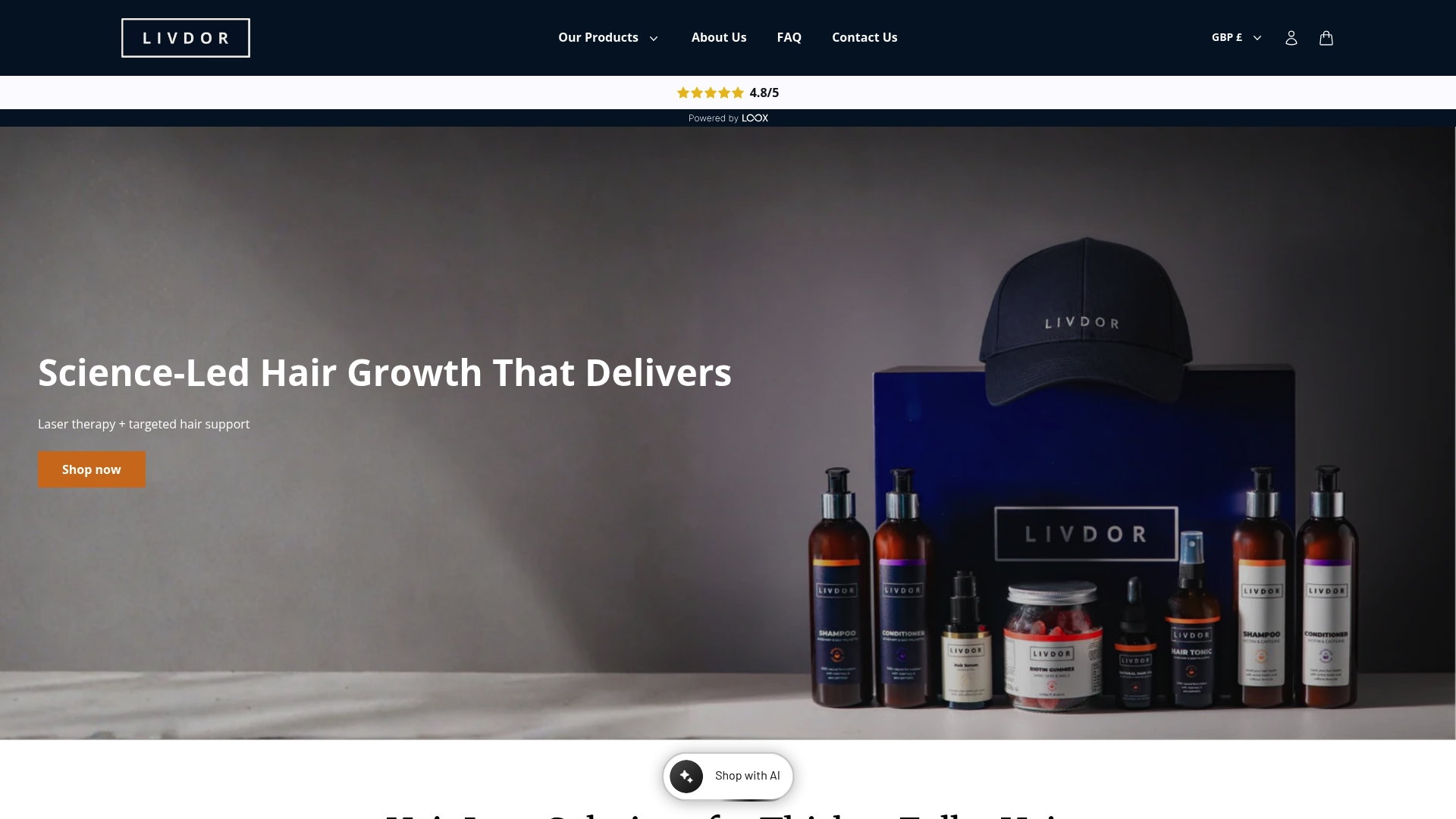
Every product in the LIVDOR laser hair growth range is designed to work as part of a combined protocol, not as a lone fix that magically solves everything on its own. Most people see the first visible changes within three months of consistent daily use. Our products are trusted by clinics and backed by a comprehensive warranty, so you can commit to the process with some confidence behind you. Have a look through the full hair growth solutions range to find the combination that actually fits what you're dealing with.
FAQ
Does rosemary oil actually work for hair thinning?
Yes. A randomised trial found 2% rosemary oil applied twice daily matched 2% minoxidil for hair count increases at six months, with less scalp itching reported by participants.
How long does LLLT take to show results?
Most clinical trials run for 24 weeks, with measurable improvements in hair density typically visible from around 16 weeks of consistent daily use at the correct wavelength.
Is biotin worth taking for hair loss?
Biotin supplementation helps only if you have a confirmed deficiency. High-dose biotin without a deficit shows limited benefit and can interfere with thyroid and cardiac lab tests.
Can I combine LLLT with natural topical remedies?
Yes, and it's genuinely recommended. LLLT stimulates follicles at the cellular level while topical actives such as rosemary oil and caffeine tackle DHT sensitivity and scalp circulation at the same time.
What is the difference between LLLT and LED hair devices?
LLLT uses true laser diodes at a specific wavelength, typically 650nm, the exact frequency studied in clinical trials. LED panels emit broader, lower-energy light and simply haven't shown the same clinical outcomes.

Leave a comment
This site is protected by hCaptcha and the hCaptcha Privacy Policy and Terms of Service apply.