

Let's get one thing straight. The surgery is the easy bit.
If you want to know how to maintain results after hair restoration, the honest answer is that it comes down to three things: medication or a solid drug-free alternative, disciplined early aftercare, and daily habits that protect the hair you were born with. Not the grafts. The hair around them. Experts confirm the transplant only builds the foundation. Your native hair keeps thinning whether you like it or not, and if you ignore it, those expensive grafts end up looking like an island in the middle of a retreating shoreline.
I've watched it happen. More than once.
The good news? Lasting density is completely achievable. But only if you treat maintenance as seriously as you treated the procedure itself.
LIVDOR started with my own hairline. When my hair began thinning, I took it seriously and went to a clinic: laser hair growth treatment, supporting products, regular appointments. The treatment itself was excellent. Fitting it into my life was not. Between work and everything else, dragging myself to a clinic week after week was the part of the routine that kept failing, and consistency is the one thing hair treatment cannot survive without. I wanted the same clinic-grade laser therapy on my own sofa, on my own schedule. It didn't really exist in the form I wanted. So we built it.
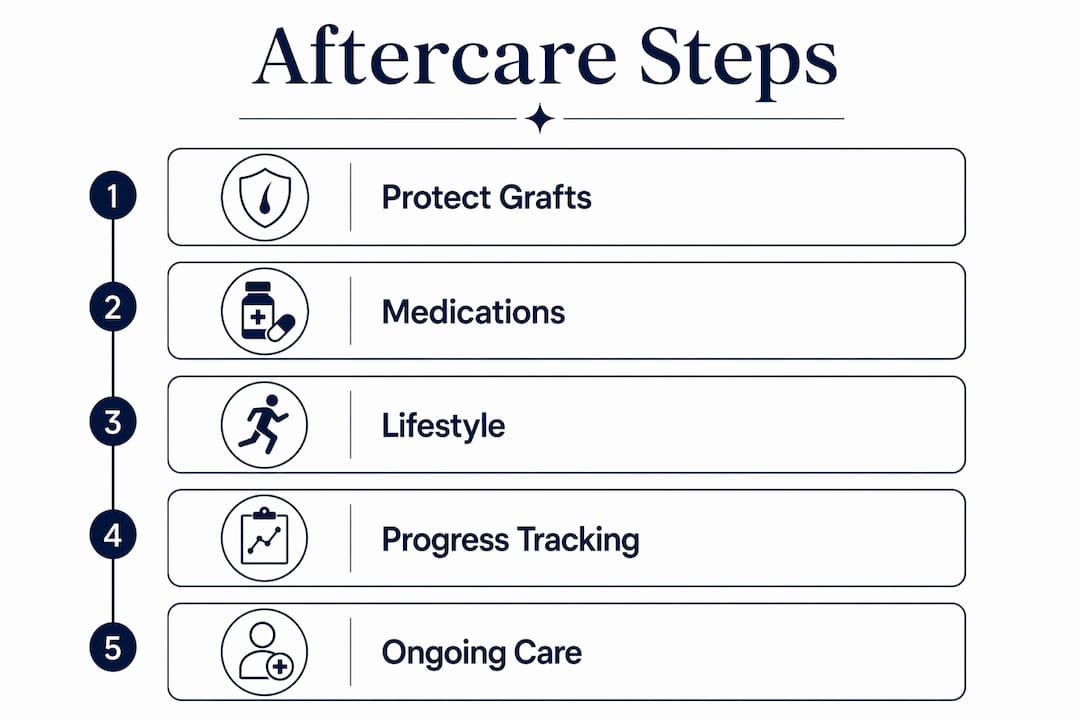
The First 14 Days: Protect the Grafts or Lose Them
This is not the phase to improvise.
For roughly two weeks, your grafts are not anchored. They're sitting there, hoping you don't ruin things. Mechanical protection is the single biggest factor in this window. Friction, sweat, an absent-minded scratch, any of it can displace a graft before it takes hold.
What actually matters in weeks one and two:
- Sleep at 45 degrees. A travel pillow or wedge pillow holds the position overnight and keeps fluid pressure off the new hairline.
- Hands off the scalp. Scabs form over each graft site. Pick one off and the graft often comes with it. What a waste.
- Wash only when your clinician says so. Usually day 3 or 4, diluted mild shampoo, applied by hand. Never a shower jet aimed straight at the recipient area.
- No gym for 4 to 6 weeks. Light walking from day 2 or 3 is fine. Running, lifting, anything that makes you sweat properly? Wait until week six. Period.
- Protect the donor area too. The back and sides gave up those grafts. They need gentle handling and sun protection while they heal.
One small trick that sounds silly but works: set a phone reminder each evening to check your sleeping position. Rolling onto your transplant in your sleep is one of the most common early mistakes there is.
We talk to clinics a lot at LIVDOR, and when you ask them where good transplants go wrong, the answer is boringly consistent. It's almost never the surgery. It's week two. Patients feel fine, so they act fine. Back in the gym. Back on the football pitch. Sleeping flat because the wedge pillow is annoying. One surgeon put it to me plainly: he can place grafts perfectly, but he can't follow patients home. The fortnight after the procedure is where his best work gets undone, and there's nothing he can do about it from the clinic.
Medication: The Backbone of Post-Restoration Maintenance
Here's the biology nobody explains properly at the consultation.
Transplanted hair is genetically resistant to DHT, the hormone behind most male and female pattern loss. Your native hair isn't. So while the grafts sit pretty, everything around them keeps miniaturising. Skip treatment and you get that patchy, unnatural look by year three.
The two heavyweights:
- Finasteride blocks DHT production. Oral is the most studied form. Topical finasteride at 0.1% holds onto roughly 84% of the density oral doses achieve, with lower systemic risk. Stop taking it, and native hair loss resumes within 6 to 12 months.
- Minoxidil widens scalp blood vessels and stretches the growth phase. Works for men and women, solution or foam. Stop it, and shedding restarts within 3 to 6 months.
Now the part most blogs bury.
These drugs have genuinely different side effect profiles. Topical minoxidil mostly causes scalp irritation, flaking, and a temporary shedding phase early on. The oral version can go further: dizziness, fluid retention, elevated heart rate. Finasteride works on your hormones, and roughly 1% to 2% of users report sexual side effects like reduced libido or erectile dysfunction. It can also cause mood changes, breast tenderness, and it lowers PSA readings by about 50%, which matters for prostate screening. Talk to a doctor before starting either. Not after.
Look, let's be honest, that side effect list is exactly why so many people go looking for drug-free routes. And they're not wrong to.
Low-level laser therapy stimulates follicle activity and blood flow using light energy, completely bypassing the bloodstream. Rosemary oil and caffeine shampoos mimic minoxidil's circulation benefits with mild anti-DHT properties and none of the flaking. Supplements with biotin work from the inside by supporting keratin production, while multi-ingredient serums feed the scalp environment with peptides and plant extracts. Zero risk of sexual side effects. Zero dizziness. No brutal shedding phase.
One customer sticks in my mind. He flatly refused finasteride after his transplant. Didn't fancy the side effects. Can't say I blame him. He swapped it for the laser cap and our serum and stuck at it properly. Six months later his native hair around his grafts was holding steady. Nothing on the side effect front either. One customer, not a clinical trial. But it's exactly what the LLLT research says should happen when someone actually stays consistent.
Adherence tip: pair your treatment with a habit you already have. Brush teeth, apply serum. Done. Compliance falls off a cliff the moment treatment feels like an extra chore.
Two boosters worth layering on top:
- PRP. Your own plasma, concentrated with growth factors, injected into the scalp. PRP combined with medication shows stronger preservation than medication alone. One or two sessions a year is the standard.
- Microneedling. A dermaroller creates micro-channels that improve absorption of topicals and stimulates collagen around follicles.
Neither replaces your core treatment. They're boosters. Treat them as such.
Lifestyle: The Environment Your Follicles Live In
Treatments do the heavy lifting. Your daily habits decide how hard they have to work.
- Eat for follicle health. Omega-3s (oily fish, walnuts, flaxseed) and polyphenols (berries, green tea, olive oil) reduce scalp inflammation. Biotin, zinc, and iron support the growth cycle. If your diet is inconsistent, and whose isn't, a quality hair growth vitamin formulated for scalp health fills the gaps.
- Sleep properly. Follicle repair happens during slow-wave sleep. Chronic sleep debt raises cortisol, and cortisol wrecks the growth cycle. Aim for 7 to 9 hours.
- Stop smoking. It restricts blood flow to the scalp and accelerates miniaturisation. No supplement compensates for it. None.
- Go easy on alcohol. Excess drinking depletes zinc and B vitamins, both essential for growth.
- Massage the scalp. Two minutes daily, fingertips not nails. Improves circulation and helps topicals penetrate.
- Add a topical serum. High-quality hair growth serums used daily can support growth naturally, and most are drug-free.
And swap to a sulphate-free, fragrance-free shampoo for at least the first six months. Harsh detergents irritate a healing scalp and slow everything down. Scalp hygiene matters more than people realise: washing two to three times a week with a gentle formula keeps sebum and product build-up from clogging follicles without stripping natural oils.
One customer sums up the lifestyle piece for me. He was already doing well on the cap and serum. Consistent with both, visible progress in his photos, no complaints. Then he decided to cut back on the smoking and the drinking and start getting proper sleep. He didn't change a single thing about his routine. Same cap, same serum, same schedule. The difference showed up in his next photos anyway. Progress that had been steady picked up pace. Nothing dramatic overnight, just a clear step up in what the same routine was delivering. That's the lesson I keep coming back to. The products set the ceiling. Your habits decide how close you get to it. And consistency runs through all of it, because none of this works in bursts.

The Timeline: What's Normal and What's Panic
Nobody warns you how psychologically brutal months one to three are.
- Weeks 2 to 4: Shedding starts. The transplanted shafts fall out as follicles go dormant. Alarming. Completely normal. The follicle stays intact under the skin.
- Months 1 to 3: The low point. Sparse scalp, sinking heart. This is dormancy, not failure.
- Months 3 to 6: Fine, thin hairs emerge, often lighter in colour at first.
- Months 6 to 12: The payoff phase. An additional 30 to 50% of density typically develops after month six.
- Month 12 onwards: The first honest assessment point. Texture, density, the lot. Any decision about further treatment waits until now.
How do you actually track it? Not the mirror. The mirror lies, because gradual change is invisible day to day. Standardised photos every 3 months, same lighting, same position, same plain white wall, same camera settings, tell the truth. Take your baseline on procedure day and repeat quarterly.
Contact your clinician if you see sudden patchy loss beyond normal shedding, scalp pain, or signs of infection. And do not request a second transplant before month 12. A scalp mid-growth-cycle doesn't need another procedure. It needs time.
We see this with the cap too, so let me be upfront about it. A customer messaged us around the month 2 mark. He'd been using the cap as directed and couldn't see anything happening in the mirror. I understood the frustration, but the biology doesn't care about our impatience. Follicles respond to light therapy slowly, and the first months of change happen under the skin where you can't see them. We asked him to do two things. Keep the sessions consistent, and monitor the later months photos. By month 5 the difference in those photos was obvious enough that he sent them to us without being asked. Same cap, same head, same routine. The only thing that changed was the amount of time he gave it. This was great to see and real improvement.
Key takeaways
Maintaining hair restoration results requires consistent medication, careful early aftercare, and lifestyle habits that support follicle health over the long term.
| Point | Details |
|---|---|
| Protect grafts in the first 14 days | Sleep at 45°, avoid touching the scalp, and skip strenuous activity until week 6. |
| Stick to medication long-term | Finasteride and minoxidil preserve native hair; Alternatively, consider Laser hair growth, and high-quality serums for high efficacy, without the side effects. |
| Add PRP and microneedling as boosters | One to two PRP sessions yearly, combined with medication, produces stronger density outcomes. |
| Support follicles through lifestyle | Omega-3 rich diet, consistent sleep, and sulphate-free products complement medical treatment. |
| Track progress with standardised photos | Photograph every 3 months in consistent conditions; assess results properly at 12 months. |
What I've Learned Watching People Keep (and Lose) Their Results
The most common reason I see a good transplant looking disappointing at year three or four isn't surgical. It's medication drop-off. Hair looks great at 12 months, so people quietly stop. Native loss resumes, the surroundings thin out, and the grafts end up stranded. The surgery didn't fail. The maintenance did.
Treat post-restoration care like dental hygiene. You don't stop brushing because your teeth look clean today. Same logic. Same stakes.
And keep objective records. I've seen people convinced they were thinning when quarterly photos showed clear improvement, and the reverse too. Photos plus an annual professional check-up give you the full picture. Your gut feeling gives you anxiety.
Be patient. Be consistent. See a professional at least once a year.
— Adam Bond, Livdor Founder
LIVDOR Products That Support Your Maintenance Routine

Keeping results strong takes more than medication alone, and that's exactly the gap our range of science-backed hair solutions was built to fill. The 272-laser hair growth cap uses low-level laser therapy (LLLT) to stimulate follicles and support thicker, fuller growth without drugs or harsh chemicals. Our clinically formulated hair growth serums and UK-made vitamins add targeted topical and nutritional support to keep the scalp environment healthy. Every product is built on the same principle: consistent, gentle, science-backed care that slots into the routine you already have.
Recommended:
- Hair Growth Serum 30ml | Premium Clinically Proven Formula
- Hair Serum for Hair Growth 50ml | Premium Clinically Proven Formula
- Hair Growth Vitamins | Premium Quality, Made in the UK
- Explore all LIVDOR hair loss solutions
FAQ
How long does it take to see final hair transplant results?
Twelve months. An additional 30 to 50% of density develops between months 6 and 12, so any judgement before then is premature.
Do I need to take medication forever after a hair transplant?
Finasteride and minoxidil are long-term commitments, not a short course. Stopping finasteride lets native loss resume within 6 to 12 months, which undermines the whole result.
What happens if I stop taking finasteride after my transplant?
Native hair loss restarts within 6 to 12 months, creating a patchy look where thinning surrounds otherwise healthy grafts.
Is PRP necessary after a hair transplant?
Not mandatory. But PRP combined with your core treatment preserves density better than treatment alone. One or two sessions a year is standard.
How often should I photograph my hair to track progress?
Every 3 months, consistent lighting and position. It catches early thinning before the naked eye does.
Worth reading next: Non-pharmaceutical hair thinning remedies that work and Types of hair loss clinical studies: a researcher's guide.



Leave a comment
This site is protected by hCaptcha and the hCaptcha Privacy Policy and Terms of Service apply.