
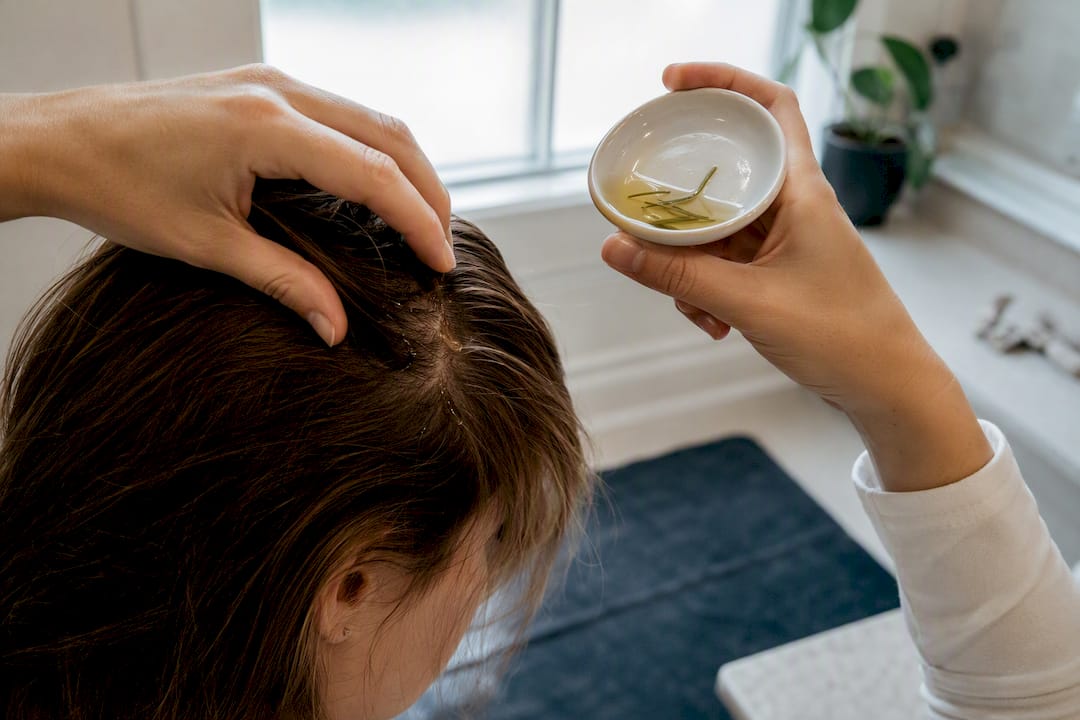
Rosemary oil can support hair growth in early-stage thinning for some people, though it is not a guaranteed cure. The best-quality evidence comes from a randomised trial showing measurable change after six months, alongside the natural hair cycle and typical hair growth rates that mean nothing changes overnight. The practical next step is a properly diluted regimen tracked for six months, ideally combined with LLLT for stronger, more consistent results.
TL;DR:
- The 2015 trial suggests rosemary oil may match minoxidil’s effectiveness after six months, but it relies on limited and not fully replicated research.
- Rosemary’s compounds may improve scalp health by enhancing blood flow and reducing inflammation, supporting early-stage hair thinning over months of consistent use.
- Proper dilution (1% to 3%) and scalp contact are crucial to avoid irritation, with patch testing recommended before full application.
- Combining rosemary oil with low-level laser therapy and nutritional supplements can improve results, especially in more advanced cases or when initial efforts plateau.
- If no visible improvement occurs after six months of diligent treatment, consulting a dermatologist is advisable to rule out underlying causes.
Does rosemary oil grow hair? What the research shows
The honest answer is: it can, but the evidence is thinner than most product pages let on. The trial that everyone in this space points to is a 2015 randomised, double-blind study by Panahi and colleagues, which compared a rosemary oil lotion (marketed as Rosmagain™) against 2% minoxidil in 100 men with androgenetic alopecia. At three months, neither group showed a measurable change in hair count. By six months, both groups had improved, and the rosemary arm was not significantly different from the minoxidil arm.
That last point gets repeated a lot online, often stripped of context. It is genuinely interesting that a plant oil performed comparably to a licensed treatment in this one study. But “no significant difference from minoxidil” in a single 100-person trial is not the same as “as effective as minoxidil.” The study lacked a true placebo-oil arm for direct statistical comparison against rosemary specifically, and it has not been widely replicated at scale.
What the six-month data actually shows: Panahi’s trial recorded no measurable hair-count increase at the three-month mark, with the change becoming apparent only at six months, matching what dermatologists say about hair growth timelines generally.
Broader reviews of the rosemary literature back up this cautious reading. A review examining the evidence base notes that human trials remain few in number, sample sizes stay small, and independent replication is scarce. That does not mean rosemary oil does nothing. It means the confidence you can place in the claim is moderate, not absolute, and anyone telling you the science is “settled” is overselling it.
Cleveland Clinic’s dermatology team takes a similarly measured stance. Dr Shilpi Khetarpal, a dermatologist there, points out that rosemary oil’s antioxidant, anti-inflammatory and antimicrobial properties could plausibly support hair growth by improving scalp health and microcapillary perfusion, but she is careful to frame it as a supporting player rather than a standalone fix, one best suited to early thinning rather than advanced hair loss.
What the current evidence base actually includes:
- Panahi et al. (2015): 100 men with androgenetic alopecia, rosemary lotion versus 2% minoxidil versus placebo, six-month endpoint, no significant difference between rosemary and minoxidil.
- Systematic and narrative reviews: consistently flag small sample sizes and limited independent replication as the field’s main weakness.
- Dermatological commentary: supports rosemary oil as a reasonable adjunct for early-stage shedding, not a substitute for medically diagnosed hair loss treatment.
If you are weighing rosemary oil against a prescription option, this is the honest summary: one trial suggests parity with minoxidil under specific conditions, but you are relying on a single study, not a body of confirmatory research.
How rosemary oil may work for hair and scalp health
Rosemary oil is not a single active ingredient. It is a mixture of compounds, and three tend to get most of the credit for its effects on hair and scalp: 1,8-cineole, rosmarinic acid, and carnosic acid. Each does something slightly different.
- 1,8-cineole has documented antimicrobial and penetration-enhancing properties, which may help other beneficial compounds reach the follicle more effectively.
- Rosmarinic acid is a potent antioxidant that helps neutralise oxidative stress around the hair follicle, a factor increasingly linked to premature follicle miniaturisation.
- Carnosic acid has anti-inflammatory activity, and chronic low-grade scalp inflammation is thought to disrupt the healthy functioning of hair follicles over time.
Put together, these compounds are thought to support what Cleveland Clinic describes as improved microcapillary perfusion: better blood flow to the tiny vessels feeding the follicle. Hair follicles are metabolically demanding structures. They need a steady supply of oxygen and nutrients to stay in the active growth phase, and anything that calms inflammation or improves local circulation gives them a slightly better working environment.
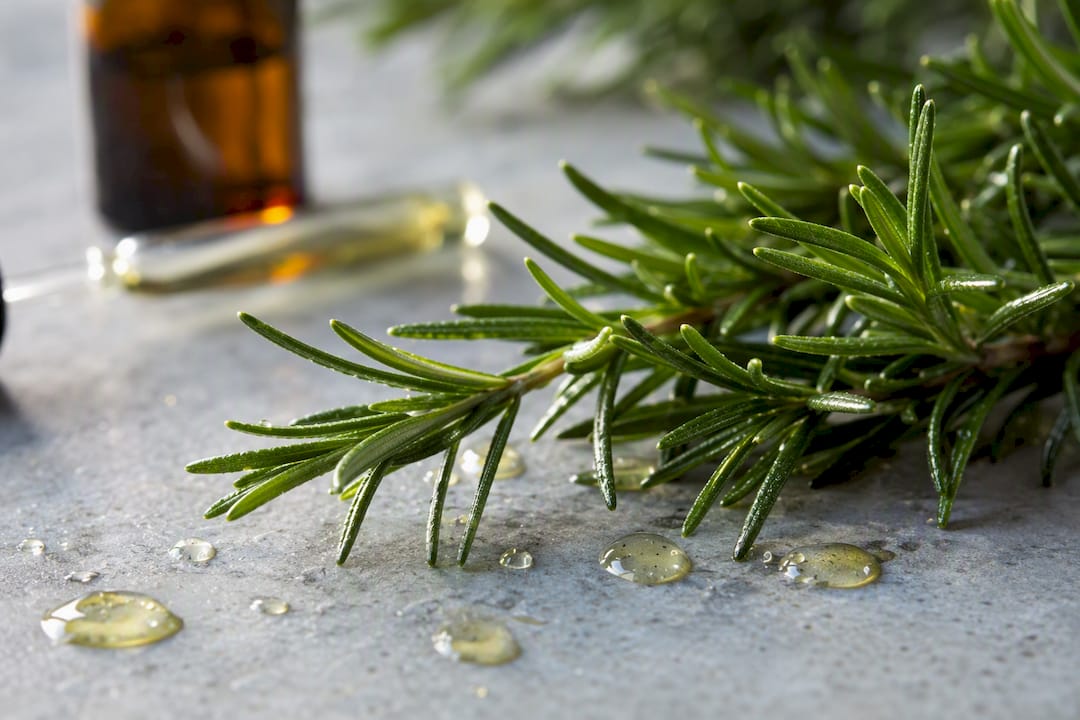
None of this happens quickly. Hair follicles cycle through growth, transition, and rest phases that span months, not days, which is exactly why sustained use over a period of months, not a single application, is what the mechanism actually implies. Not all rosemary oil is identical, either. Clinical and consumer guidance points to cineole-type rosemary as the variety most commonly used in trials, and it is the one worth seeking out if you want your routine to resemble what was actually studied.
How to use rosemary oil for hair growth safely
Getting the dilution wrong is the single most common mistake people make with rosemary oil, and it is also the easiest thing to fix. Essential oil should never touch your scalp neat. Clinical protocols and consumer guidance both point to a working range of roughly 1% to 3% rosemary essential oil in a carrier oil, which translates to about 1 to 3 drops per teaspoon of carrier.
1. Choose your carrier oil. Jojoba oil is a popular choice because its composition closely resembles natural sebum, so it absorbs well without leaving hair greasy. Fractionated coconut oil is another good option, particularly for finer hair, because it stays liquid and spreads easily.
2. Mix your dilution. For a standard scalp treatment, combine 3 to 6 drops of rosemary essential oil with one tablespoon (roughly 15ml) of carrier oil.
3. Apply to the scalp, not just the hair. This detail trips up a lot of people. The benefit comes from contact with scalp skin, where the follicles live, not from coating the hair shaft. Section your hair and apply the diluted oil directly to the scalp using a dropper or applicator bottle.
4. Massage for two to five minutes. Use your fingertips, not your nails, in small circular motions across the whole scalp. This is thought to aid absorption and support local circulation.
5. Leave on or rinse out, depending on your routine. An overnight treatment (covered with a shower cap) allows maximum contact time. A pre-shampoo mask left on for 30 to 60 minutes before washing is a lower-commitment alternative.
6. Patch test before your first full application. Apply a small diluted amount to your inner forearm and wait 24 to 48 hours, checking for redness, itching, or irritation.
If a full oil treatment feels like too much fuss for a weekday, you can add rosemary oil to your shampoo instead: roughly 3 to 5 drops per ounce of shampoo, mixed in just before use rather than stored pre-mixed, since essential oils can degrade some formulations over time. A rosemary shampoo for hair growth or a ready-made rosemary conditioner with saw palmetto gives you a lower-effort, lower-mess way to build rosemary into a daily wash routine without measuring drops every time.
Pro Tip: Keep your rosemary oil bottle next to your shampoo, not in a cupboard. The single biggest reason people give up on scalp oils isn’t that they don’t work, it’s that they forget to use them consistently.
What results to expect and how to track hair growth progress
Patience is the least glamorous part of this whole conversation, and also the most important. Scalp hair grows at an average rate of around half an inch per month, and every follicle cycles through growth, transition, and resting phases independently, which means visible density changes lag well behind whatever is happening at the cellular level.
This is precisely what the Panahi trial found: no measurable hair-count change at three months, with the difference only becoming apparent at six months. If you stop at week eight because “nothing’s happening,” you are stopping before the biology has had time to show up.
To track progress reliably:
- Take standardised photos under the same lighting, at the same distance, on the same day each month.
- Focus on one small marked region (roughly a two-inch square) rather than judging your whole head at once.
- Count loose hairs on your brush or pillow over a few days each month as a rough shedding indicator, not a precise measurement.
- Reassess at the three-month mark, but don’t expect visible change until closer to six months.
If you see no change whatsoever by six months of consistent use, that is a reasonable point to escalate, whether that means adding a clinically supported device or speaking to a dermatologist about underlying causes.
Rosemary oil side effects and who should avoid it
Rosemary oil has a strong safety reputation, but “natural” does not mean “risk-free,” and essential oils are concentrated enough to cause real irritation if used carelessly.
The non-negotiable rule is dilution plus a patch test, every time you try a new blend or a new bottle. Dermatological guidance is consistent on this point: apply a small diluted amount to your inner arm, wait 24 to 48 hours, and only proceed to your scalp if there’s no redness, itching, or stinging.
A few groups need extra caution:
- Pregnant or breastfeeding women should avoid rosemary essential oil, or use it only after checking with a doctor, since safety data in pregnancy is limited.
- Anyone with sensitive skin, eczema, psoriasis, or an existing scalp condition should patch test more conservatively and consider starting at the lower end of the 1% dilution range.
- Anyone noticing sudden, heavy shedding rather than gradual thinning should not assume rosemary oil is the fix. Sudden shedding often points to an underlying issue such as telogen effluvium, thyroid imbalance, or iron deficiency, and rosemary oil will not resolve those causes.
Pro Tip: If your scalp feels tight, itchy, or flaky after applying diluted rosemary oil, you’ve likely gone too concentrated. Dilute further before giving up on it entirely.
If shedding continues or worsens over eight to twelve weeks despite consistent use, that is the signal to see a clinician rather than increasing your dose or frequency.
Why rosemary oil works best alongside LLLT and supplements
Rosemary oil, on its own, is targeting one piece of a much larger puzzle. It supports the scalp environment: circulation, inflammation, microbial balance. But hair follicles respond to multiple inputs, and combining topical botanicals with an established non-invasive technology like low-level laser therapy is increasingly the approach professionals recommend for early-stage thinning, because each element addresses a different driver of follicle health.

LLLT works through a different mechanism entirely. Rather than acting on the scalp surface, red and near-infrared light at wavelengths such as 650nm is thought to stimulate mitochondrial activity within the follicle cells themselves, encouraging more of them into an active growth phase. Nutritional support, meanwhile, addresses a third variable: whether your follicles have the raw materials, including biotin, B5, and other cofactors, to actually build hair once stimulated.
A sensible starter regimen looks like this:
- Morning or evening scalp massage with a diluted rosemary oil or a rosemary hair oil with saw palmetto, three to five times a week.
- LLLT sessions using a laser hair growth cap with 650nm medical-grade lasers, following the recommended weekly schedule.
- Daily supplementation with biotin gummies or a hair growth vitamin formulated for scalp and follicle support.
- Washing with a caffeine shampoo or biotin-enriched formula on non-oil days to keep the scalp clean without stripping treatment residue prematurely.
Livdor’s rosemary hair growth range is built around the same cineole-type formulation principles that clinical trials use, which makes it a reasonable, trial-informed starting point if you would rather not measure drops yourself.
A pragmatic path for readers
If your thinning is mild and recent, start with rosemary oil alone and give it a genuine six-month trial, tracked with photos, not guesswork. If you’re already seeing meaningful density loss, or six months of consistent topical use hasn’t moved the needle, that’s when pairing it with LLLT earns its place, since it works through a different biological route entirely. See a dermatologist if shedding is sudden, patchy, or accompanied by scalp pain or scaling. What I’d push back on is the framing that this has to be an either/or choice. The people who get the best outcomes tend to be the ones who treat rosemary oil as one input in a small, sustained system, not a silver bullet they can judge after three weeks.
— Adam Bond
How Livdor helps you build a complete hair growth routine
Livdor exists because rosemary oil alone asks a lot of patience for a partial answer, and pairing it with a clinically supported laser device gets you a stronger, more predictable result without needles, prescriptions, or a dermatologist’s waiting room.

The centrepiece is the laser hair growth cap, built with 272 medical-grade lasers at the 650nm wavelength shown to support follicle activity, designed for use at home in short daily sessions. Around it, Livdor’s premium natural range covers the rest of the picture: a rosemary conditioner with saw palmetto, a biotin conditioner, a hair growth serum combining biotin, caffeine and Pro-Vitamin B5, and biotin gummies for nutritional support from the inside. Each product is formulated without harsh chemicals or pharmaceuticals, so it slots into a daily routine without the side-effect trade-offs some prescription options carry.
If you want the full system in one place rather than building it product by product, the hair growth starter kit bundles the laser cap with supporting topicals, giving you everything needed to run a proper six-month trial from day one. Browse the complete laser hair growth product range to find the combination that fits your routine, and start your first session this week.
Sources
- Rosemary oil for your hair: How it works
- Rosmagain™ as a Natural Therapeutic for Hair Regrowth and Scalp Health: A Double-Blind, Randomized, Three-Armed, Placebo-Controlled Clinical Trial
- Rosemary oil: what to know
- ncbi review article
FAQ
Does rosemary oil really help hair growth?
For some people with early-stage thinning, yes. A randomised trial found measurable hair-count increases at six months, comparable to 2% minoxidil, though the evidence base remains limited and needs more replication.
How many days does it take for rosemary oil to grow hair?
Don’t expect changes in days or even weeks. Trial data shows no measurable difference at three months, with visible improvement typically appearing around the six-month mark.
Why does my hair fall out after using rosemary oil?
Rosemary oil itself is not a common cause of increased shedding when properly diluted, but sudden or heavy shedding usually points to an unrelated cause, such as telogen effluvium or a thyroid issue, and warrants a check with a clinician rather than stopping treatment alone.


Leave a comment
This site is protected by hCaptcha and the hCaptcha Privacy Policy and Terms of Service apply.