

For early-stage thinning, use an at-home LLLT laser cap 3 to 7 times a week, for 6 to 20 minutes per session, depending on your device’s specific protocol. There’s no single universal number because output power varies between caps, and manufacturers calibrate session length to match their laser density and wavelength.
- Follow your device’s manual exactly rather than copying a schedule from a different brand.
- Reduced shedding is typically noticeable within 4 to 8 weeks.
- Visible regrowth tends to appear between 16 and 26 weeks of consistent use.
- Consistency across the recommended weeks matters more than any single session.
Livdor’s own laser hair growth cap uses a 650 nm protocol designed around exactly this kind of evidence-based schedule, which the sections below unpack in more detail.
Key Takeaways
Consistent LLLT use, 3 to 7 sessions weekly at the manufacturer’s specified duration, paired with topical and nutritional support, produces measurable density gains within 16 to 26 weeks.
| Point | Details |
|---|---|
| Follow device timing exactly | Session length ranges from 6 to 25 minutes depending on device; never exceed manufacturer instructions. |
| Expect gradual results | Reduced shedding appears in 4 to 8 weeks; visible regrowth typically follows by 16 to 26 weeks. |
| Wavelength matters | Look for devices in the 650 to 675 nm red light band, the range most studied in trials. |
| Stack for better outcomes | Combining LLLT with topical rosemary, saw palmetto, and biotin support outperforms laser use alone. |
| Livdor’s approach | Livdor’s 650 nm laser cap, paired with its serum, shampoo, and biotin gummies, mirrors trial-backed protocols in one drug-free routine. |
This article is general information, not a substitute for advice from a qualified doctor. Consult a qualified healthcare professional about your own circumstances before acting on anything here.
Recommended red light therapy frequency, according to clinical trials
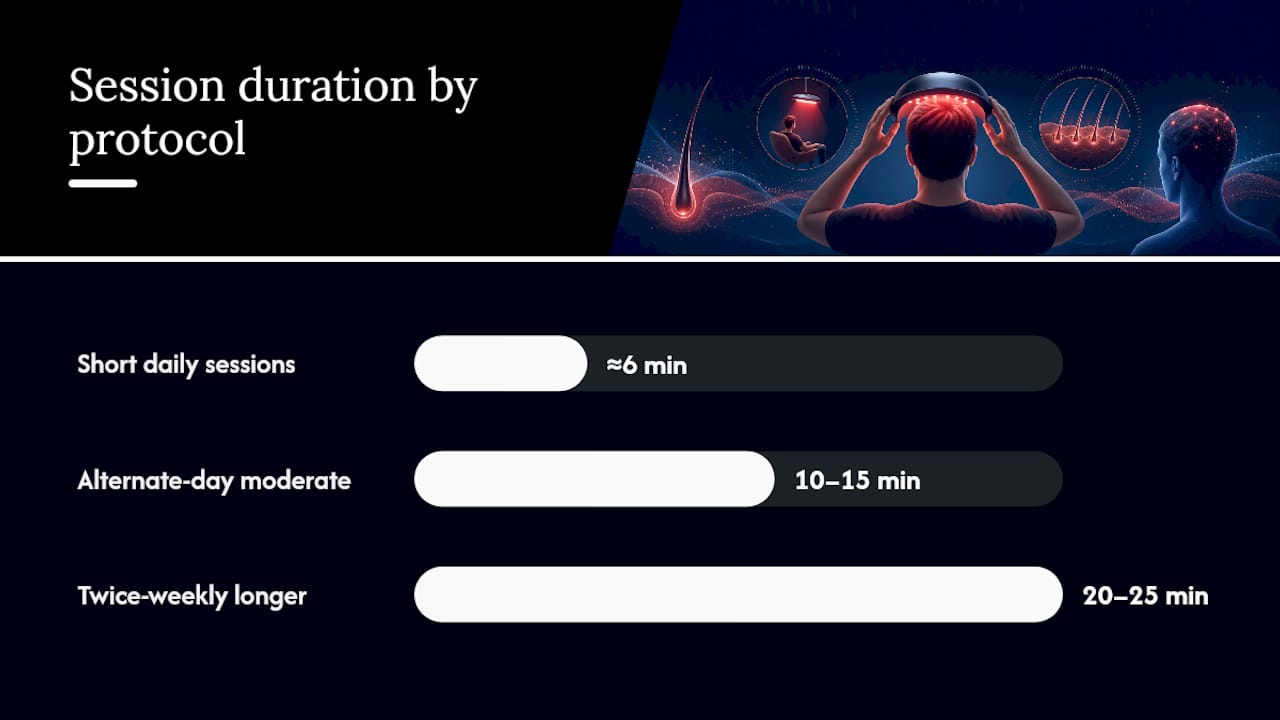
Clinical trials don’t agree on one perfect schedule, but they cluster around a few workable patterns. A randomised controlled trial using a LaserComb delivered treatment twice weekly for roughly 11 minutes per session over 12 weeks, combined with topical 5% minoxidil, and reported measurable improvement over minoxidil alone. Other devices, particularly full-coverage caps, run daily sessions of around 6 minutes, while helmet-style devices are often set for 20 to 25 minutes, two to three times weekly.
Three protocol patterns show up repeatedly in the literature:
- Short daily sessions (roughly 6 minutes), used by higher-diode-density caps that deliver more coverage per minute.
- Alternate-day moderate sessions (10 to 15 minutes), a middle ground favoured by mid-range devices.
- Twice-weekly longer sessions (20 to 25 minutes), the pattern used in several trial-grade helmets and combs.
A pooled analysis across 37 studies and 3,298 patients found LLLT produced a mean hair density increase of 18.56 hairs per square centimetre and a shaft thickness gain of 10.62 micrometres versus sham treatment, with combination LLLT-plus-minoxidil regimens adding a further 11.75 hairs per square centimetre on top of that.
The wavelength band matters as much as the frequency. Most trial-backed devices, and Livdor’s cap, sit in the 630 to 700 nanometre red light range, with 650 to 675 nm being the most commonly studied window for stimulating follicles without excess heat. Medical-grade lasers at this wavelength penetrate the scalp more consistently than cheaper LED-only alternatives, which is why the diode quality inside a cap matters more than marketing claims about “laser count” alone.
One clinical rule holds across every device type: never exceed the manufacturer’s recommended session timing. Running a cap for longer than instructed doesn’t accelerate results. Some clinical summaries suggest a lower total weekly dose, under 60 minutes a week, produces outcomes that are just as good, sometimes better, than longer weekly exposure.
How do I fit LLLT sessions into a weekly routine?
The best schedule is the one you’ll actually stick with for months, not the theoretically optimal one you abandon after three weeks. Here’s how the three main templates compare for real routines:
- Daily micro-sessions (6 minutes): Suits people who already have a fixed morning or evening routine, such as brushing teeth or having coffee. Low time cost per day, but easy to forget without a trigger habit.
- Alternate-day sessions (10 to 15 minutes): A middle ground for people who travel occasionally or have variable schedules. Requires a bit more planning to track which days you’ve done.
- Twice-weekly longer sessions (20 to 25 minutes): Works well for people who prefer batching tasks, such as combining it with a set weekend or midweek self-care slot.
Manufacturer protocols genuinely vary this much: some devices call for 6 minutes daily, others 20 minutes twice weekly, others 25 minutes every other day. Always default to what your specific cap’s manual says rather than a generic online schedule.
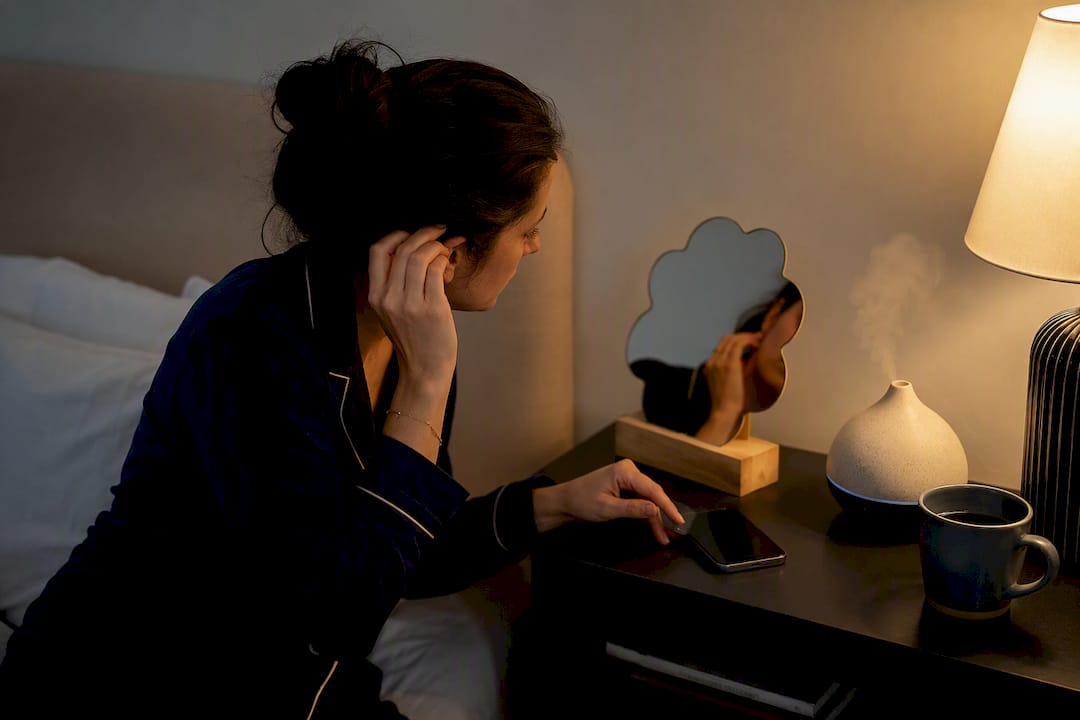
Pro Tip: Anchor your session to something you already do daily, like watching the news or scrolling your phone before bed. Pair it with a monthly photo taken in the same lighting and angle so you can track density changes objectively rather than relying on memory.
When will you see results from consistent LLLT use?
Reduced shedding is usually the first sign, typically appearing within 4 to 8 weeks of consistent use. Visible regrowth, meaning finer new hairs becoming noticeable at the hairline or crown, generally follows between 16 and 26 weeks.
On the density side, the pooled trial data gives a useful benchmark: an average gain of 18.56 hairs per square centimetre and 10.62 micrometres of shaft thickness compared with sham devices over the study periods. Individual results vary a great deal depending on the stage and pattern of thinning you’re treating.
- Reduced shedding: weeks 4 to 8
- Early regrowth (fine, short hairs): weeks 12 to 16
- Measurable density change: weeks 16 to 26
- Best candidates: early-to-moderate androgenetic alopecia, not advanced or long-established baldness
If you’re past the early-to-moderate stage, LLLT alone is less likely to deliver the density gains seen in these trials, and it’s worth discussing realistic expectations with a specialist before investing in a device.
Is red light therapy for hair safe to use daily?
LLLT caps have a strong safety record for typical use, but a few precautions genuinely matter.
- Mild, transient effects include slightly increased shedding in the first two to three weeks (a normal cycling response) and occasional scalp itchiness.
- Rare concerns include scalp warmth or redness if a device is used beyond its rated time.
- Stop and consult a doctor if you notice persistent irritation, blistering, or unusual pain.
- Speak to a doctor before starting if you’re on photosensitising medication, have an active scalp infection, open wounds, or recent scalp surgery.
- Never run a session longer than the manufacturer specifies. Overuse doesn’t speed up results and can, per clinical summaries, actually work against the benefit rather than enhance it.
Certain devices carry FDA Class II clearance specifically for pattern hair loss within defined Norwood and Ludwig categories, which is worth checking when comparing devices, as clearance boundaries reflect the population the device was actually tested on.
What actually happens inside the follicle during LLLT?
Low-level laser therapy works by encouraging miniaturised follicles stuck in the resting (telogen) phase to re-enter the active growth phase (anagen) sooner. Photons at red and near-infrared wavelengths are absorbed by mitochondria in follicle cells, which appears to support increased cellular energy production and, over repeated sessions, thicker hair shafts.
- Wavelength, device power, and cumulative weekly dose all influence how much stimulation the follicle actually receives.
- Trials measure success using specific endpoints: hair density (hairs per square centimetre) and shaft thickness, not vague “looks fuller” impressions.
- This is why session frequency and duration aren’t arbitrary. Trial protocols were designed to hit a therapeutic dose without overexposure.
Because the biological response builds gradually across weeks of cycling, no single session produces visible change. It’s the accumulated, consistent dose over months that maps to the density gains discussed earlier.
Getting better results by stacking LLLT with topical and nutritional support
Trial data consistently favours combination approaches over any single treatment used alone. The meta-analysis referenced earlier found that pairing laser treatment with topical agents produced larger density gains than lasers used by themselves, and practitioners increasingly favour stacking LLLT with natural topical supports such as rosemary and saw palmetto to address scalp health alongside follicle stimulation.
A simple routine that respects this evidence:
- Use your LLLT cap on your chosen schedule (daily, alternate-day, or twice weekly).
- Apply a hair growth serum with biotin, caffeine, and pro-vitamin B5 after your session, while the scalp is warm and receptive.
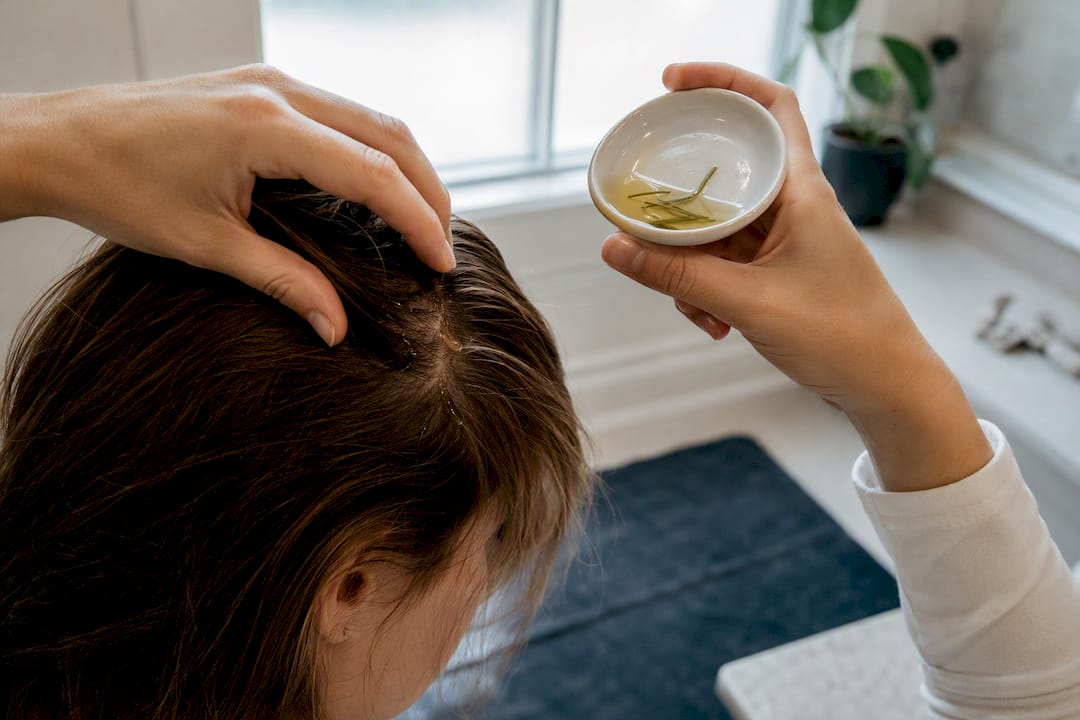
- Wash with a rosemary shampoo with saw palmetto on non-laser days to support scalp condition without interfering with serum absorption.
- Follow with a rosemary conditioner with saw palmetto to lock in moisture.
- Take biotin gummies daily as ongoing nutritional support for keratin production, independent of your laser schedule.
Each category earns its place for a different reason: the rosemary hair oil and rosemary shampoo target scalp circulation and follicle environment, the serum delivers targeted caffeine and biotin directly to thinning zones, and the gummies address nutritional gaps that can quietly limit growth regardless of how consistent your laser sessions are. Readers wanting broader context on non-laser options can also review drug-free hair treatment approaches and this overview of hair loss treatment options for a wider picture before committing to a stack.
A personal note on patience and when to see a specialist
Consistency beats intensity here. Sticking to your device’s actual schedule for the full 16 to 26 week window matters more than pushing extra sessions in week two. If you notice sudden patchy loss, rapid shedding beyond the normal early adjustment phase, or scalp inflammation, see a trichologist or dermatologist rather than persisting alone. LLLT works well for early thinning, not as a diagnostic tool for unexplained hair loss.
— Adam Bond
Why Livdor’s laser cap fits the protocol this article describes
Livdor’s laser hair growth cap is built around a 650 nm medical-grade laser array, sitting squarely in the wavelength band clinical trials actually used to measure density and thickness gains.
The cap’s timing is pre-set to match trial-informed protocols, so you’re not left guessing between six minutes and twenty. Pair it with Livdor’s rosemary shampoo with saw palmetto, a nightly hair growth serum with biotin, caffeine and pro-vitamin B5, and daily biotin gummies for a genuinely complete, drug-free stack rather than a single isolated device. Every product ships with fast delivery and a warranty, and readers who want the full stack in one order can start with the hair growth starter kit or browse the complete laser hair growth product range to build a routine that matches the schedule outlined above.
Sources
- Lasers and Energy-Based Devices in the Treatment of Androgenetic Alopecia: A Systematic Review and Meta-Analysis
- Efficacy of Low-Level Laser Therapy in Androgenetic Alopecia – A Randomized Controlled Trial
- Lasers, lights, and leds - Clinical Tree
FAQ
How many times a week should I use red light therapy for hair?
Most protocols recommend 3 to 7 sessions weekly depending on your specific device, with session length ranging from 6 to 25 minutes. Always follow your device’s manual rather than a generic schedule.
How long until red light therapy shows results for hair loss?
Reduced shedding is typically noticeable within 4 to 8 weeks, with visible regrowth generally appearing between 16 and 26 weeks of consistent use.
Can I use LLLT every day?
Some caps are designed for daily 6-minute sessions, while others use less frequent, longer sessions. Daily use is safe only when your specific device’s protocol calls for it.
Does combining LLLT with other products improve results?
Yes. Trial data shows combination approaches, such as LLLT paired with topical treatments, produce larger density gains than laser treatment alone, which is why pairing a device like Livdor’s laser cap with a serum, rosemary shampoo, and biotin gummies is worth considering.
Is LLLT suitable for all stages of hair loss?
LLLT shows the clearest benefit for early-to-moderate androgenetic alopecia. Advanced or long-established baldness responds less predictably, and a specialist opinion is worth seeking in those cases.


Leave a comment
This site is protected by hCaptcha and the hCaptcha Privacy Policy and Terms of Service apply.