
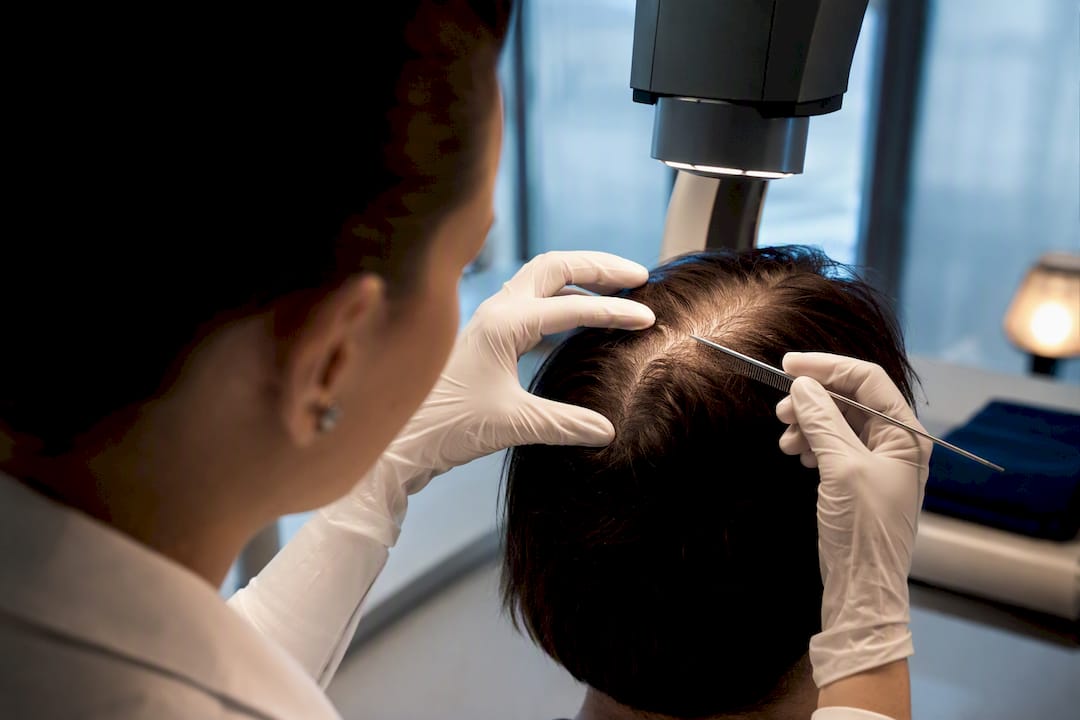
Saw palmetto is generally well tolerated when used for hair thinning, with trial data showing mostly mild effects and no serious adverse events reported. Topical formulations tend to cause local scalp reactions such as itching or mild irritation, while oral capsules occasionally cause digestive upset or sexual side effects. The main precautions are clear: avoid it in pregnancy or while breastfeeding, tell your surgeon or GP before any operation or PSA test, and check with a clinician first if you take blood thinners or hormonal medication.
TL;DR:
- Saw palmetto shows promising effects in reducing hair fall within a 16-week trial, but existing studies are small and require confirmation from larger research.
- Oral saw palmetto commonly causes gastrointestinal issues, while topical formulations may lead to scalp irritation or allergic reactions, making patch testing advisable.
- The supplement can interact with blood thinners and interfere with PSA testing, requiring disclosure to healthcare providers before procedures or medication adjustments.
- It is unsafe for pregnant or breastfeeding women, children, and individuals scheduled for surgery or on anticoagulants, due to potential hormonal or bleeding risks.
- A consistent, layered regimen combining topical saw palmetto, nutritional support, and low-level laser therapy can support hair growth with minimal systemic exposure.
What does the clinical evidence say about saw palmetto for hair loss?
The strongest data point comes from a 16 week, double blind, placebo controlled trial testing both oral and topical standardised saw palmetto oil in 80 men and women aged 18 to 50 with androgenetic alopecia. The results were measured objectively using phototrichogram imaging, not just participant self reports, which matters because hair trials are notoriously prone to placebo effects and biased subjective ratings.
The numbers were encouraging. Crucially, the study reported no serious adverse events across either delivery method.
A broader look at the evidence tells a more cautious story. A systematic review of saw palmetto in alopecia concluded the ingredient was well tolerated and not linked to serious harm, but flagged that most trials are small, with study cohorts often numbering in the dozens rather than hundreds. That is not a reason to dismiss the ingredient. It is a reason to treat the effect sizes as promising rather than proven, and to keep expectations realistic.
Ongoing registry entries, such as those tracked on Clinicaltrials, show researchers are still refining formulations and dosing protocols for hair loss specifically. That heterogeneity, different extraction methods, different concentrations, different trial lengths, explains why you’ll see slightly different numbers quoted across sources.
What the evidence base actually supports:
- A single well designed 16 week trial shows measurable reductions in hair fall for both oral and topical saw palmetto, with no serious adverse events.
- Systematic review data confirms tolerability across smaller alopecia studies but calls for larger, longer trials before firmer conclusions can be drawn.
- Safety monitoring in these trials relies on adverse event surveillance during the study period, not long-term post-market tracking, so effects beyond 16 weeks are less well documented.
- Saw palmetto is sold as a dietary supplement, not an FDA-approved medicine, so formulation strength and purity vary between brands.
What are the common side effects of oral and topical saw palmetto?
The side effect profile splits fairly neatly along delivery method, and knowing which one you’re dealing with helps you know what to watch for.
Oral saw palmetto most commonly causes gastrointestinal symptoms: nausea, diarrhoea, or occasionally constipation. Headache, mild dizziness, and fatigue also appear in the tolerability data reviewed by the NCCIH. These effects typically show up in the first week or two of use and often settle as your body adjusts. If they don’t ease within a fortnight, that’s worth flagging to a pharmacist or GP rather than pushing through.
Topical saw palmetto behaves differently because the exposure is local rather than systemic. Expect the possibility of scalp irritation, itching, a mild burning sensation on application, or occasional breakouts along the forehead where product runs down. Allergic contact dermatitis is rare but has been reported, which is why a patch test before full use is sensible rather than optional.
Practical steps that reduce the odds of trouble:
- Take oral capsules with food; this is one of the simplest ways to cut the incidence of digestive side effects.
- Patch test any new topical product on a small area of scalp or forearm 48 hours before your first full application.
- Start topical use every other day for the first one to two weeks, then increase frequency once you know how your scalp responds.
- Reduce the oral dose if GI symptoms persist beyond two weeks rather than stopping abruptly, unless symptoms are severe.
Incidence rates for these effects tend to be low across the trials that report them, though the sample sizes involved (often under 100 participants) mean those percentages should be read as indicative rather than definitive.
Pro Tip: If you’re trying a topical saw palmetto product for the first time, apply it at night rather than in the morning. Any mild irritation has hours to settle before you’re out in the sun or under styling heat, and you’ll know by morning whether the product suits your scalp.
Can saw palmetto interact with medication or cause serious harm?
Serious reactions to saw palmetto are uncommon, but a handful of interactions deserve real attention because the consequences, if missed, are more significant than an upset stomach.
Bleeding risk. Saw palmetto has a mild antiplatelet effect, which means it can theoretically increase bleeding tendency. Clinical guidance generally recommends stopping supplements with this profile in the run up to surgery, so mention any saw palmetto use to your surgical team well before a procedure date, not the morning of.
Blood thinner interactions. If you take warfarin, clopidogrel, or even regular aspirin, combining these with saw palmetto raises the theoretical risk of excessive bleeding or bruising. This isn’t a reason for panic, but it is a reason to have a five minute conversation with a GP or pharmacist before starting, rather than assuming a “natural” supplement is automatically compatible with your prescription.
Overlap with finasteride. Saw palmetto is thought to work partly by inhibiting the same 5 alpha reductase enzyme pathway that finasteride blocks. Stacking the two without medical supervision doesn’t necessarily double the benefit. It can compound side effects related to hormone shifts, so this combination should only happen under a clinician’s guidance, not as a DIY stack.
Finasteride is FDA-indicated for men only. Women who are or may become pregnant must not handle crushed or broken finasteride tablets, due to the risk of harm to a male fetus. It can also cause sexual side effects (reduced libido, erectile dysfunction) in a minority of men, which usually resolve after stopping treatment. Discuss these risks with a physician before starting.
PSA test interference. This is the one most men overlook. Saw palmetto can lower prostate specific antigen readings, which means it has the potential to mask early signs of prostate disease during routine screening. Any man using saw palmetto for hair should tell his doctor before a PSA test, full stop.
Rare case reports add a small amount of further caution. The Merck Manual’s professional reference notes isolated instances of liver injury and pancreatitis linked to saw palmetto use, alongside more common headache and diarrhoea. These cases are uncommon enough that they haven’t changed the overall “well tolerated” classification, but they’re a reminder that “natural” doesn’t mean risk-free for everyone.
Where the caution is sharpest:
- Anyone on anticoagulant or antiplatelet medication should get clinician sign-off first.
- Anyone scheduled for surgery should disclose use and expect to pause it beforehand.
- Anyone combining saw palmetto with finasteride should do so only with medical oversight.
- Any man due a PSA test should mention supplement use to whoever orders the test.
Who should avoid or pause saw palmetto for hair loss?
Certain groups carry enough uncertainty, or enough known risk, that saw palmetto isn’t the right call without professional input first.
- Pregnant or breastfeeding women should avoid saw palmetto entirely. Its mild hormonal activity and the absence of reliable safety data in this group make it a supplement to skip until after breastfeeding ends.
- Children and adolescents shouldn’t use it either. There’s simply not enough evidence in younger age groups to establish a safe dose or confirm long-term effects.
- Anyone with planned surgery, or currently taking anticoagulant therapy, should stop use and speak with their prescriber first, given the bleeding risk profile outlined above.
- Men with existing prostate concerns, or anyone noticing unexplained changes in libido or sexual function, should raise this with a clinician and mention saw palmetto use openly, since the hormonal pathway it affects overlaps directly with these symptoms.
None of this means saw palmetto is a dangerous ingredient. It means it behaves like a mild hormonal modulator, and mild hormonal modulators deserve the same respect you’d give any substance that touches those pathways, supplement or not.
How do you trial saw palmetto safely for hair thinning?
Getting a fair trial of saw palmetto without unnecessary risk comes down to formulation choice, realistic timelines, and knowing what “stop” looks like.
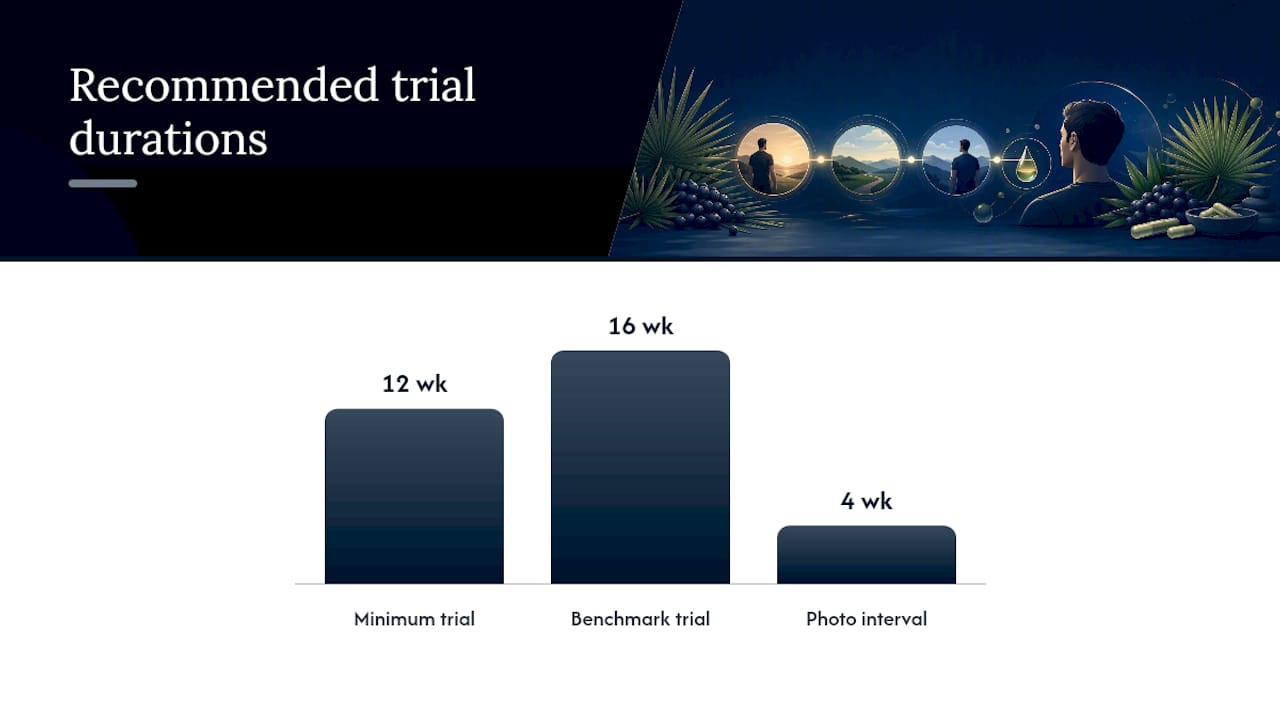
The 16 week protocol used in the key clinical trial is a sensible benchmark for how long to commit before judging results. Hair growth cycles move slowly. Anything shorter than 12 weeks rarely tells you much, because you’re often just watching normal shedding fluctuation rather than a genuine treatment response.
- Choose a standardised formulation. Because saw palmetto is regulated as a dietary supplement rather than a medicine, potency and purity vary between brands. Favour products that state their extract concentration clearly rather than vague “proprietary blends”.
- Start with one formulation, not both at once. Trial either oral or topical first so you can attribute any side effect (or benefit) to the right source. Layering both from day one muddies the picture if something goes wrong.
- Take oral capsules with food to reduce the odds of digestive upset, and introduce topical products every other day initially.
- Commit to a minimum 12 to 16 week window before judging effectiveness, tracking shedding and density with monthly photos taken in consistent lighting.
- Keep a simple symptom diary. Note any GI complaints, scalp reactions, mood or libido changes, and the date they started. This makes it far easier to spot a genuine pattern versus a one off bad day.
- Review medications with a pharmacist before starting, particularly anticoagulants, hormonal contraception, or finasteride.
- Disclose use before any PSA test or surgical procedure, and stop the supplement in line with your clinician’s advice ahead of an operation.
- Know your stop rules: persistent GI symptoms beyond two weeks, any sign of allergic reaction (swelling, rash spreading beyond the application site, breathing difficulty), or unexplained bruising are all reasons to pause and seek medical advice.
For readers who want to limit systemic exposure altogether, pairing a topical saw palmetto product, such as a rosemary and saw palmetto shampoo, with nutrient support and consistent low level laser therapy tends to deliver a more rounded result than relying on oral supplementation alone, since you’re addressing follicle health through multiple non-drug channels rather than one.
Pro Tip: Photograph your parting and hairline under the same light, at the same time of day, once a month. Memory is a poor judge of gradual change, and consistent photos are the only honest way to see whether a 16 week trial is actually working.
Why pairing saw palmetto with LLLT makes sense
Livdor’s position on saw palmetto has always been straightforward: it’s a genuinely useful natural ingredient with a reasonable safety record, but it works best as part of a layered, drug-free regimen rather than a stand-alone fix. The clinical data backing topical and oral saw palmetto is real, and the tolerability profile across systematic reviews is reassuring, but no single ingredient addresses every driver of thinning hair.
That’s why combining a topical saw palmetto product with nutritional support, such as biotin, and regular sessions with a low level laser therapy (LLLT) device tends to produce steadier results than any one element alone. LLLT works through a different mechanism entirely, stimulating follicle activity with red light at the cellular level, so it complements rather than duplicates what saw palmetto does hormonally. Because the laser cap approach carries no systemic exposure, it also sidesteps the interaction concerns that come with oral supplements, which matters for anyone already managing medication or bleeding risk.
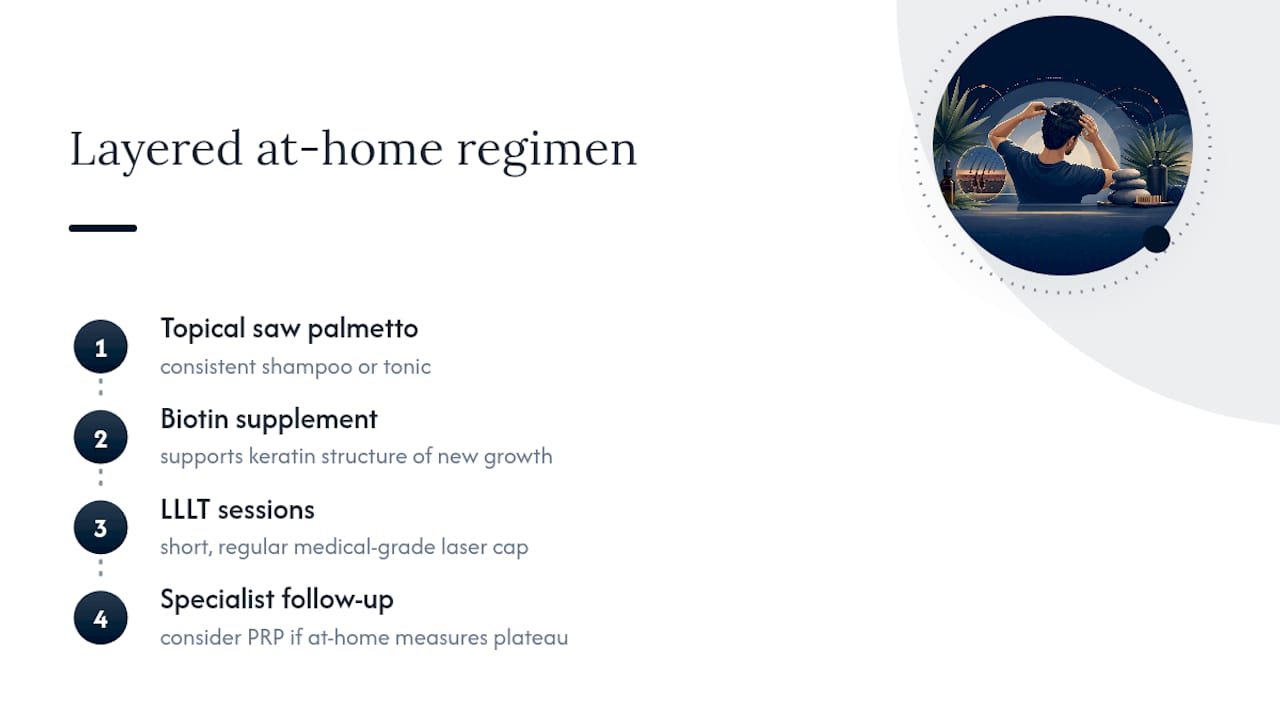
A practical, non-prescriptive starting regimen looks like this: a saw palmetto infused topical shampoo or tonic used consistently, a biotin supplement to support the keratin structure of new growth, and short, regular sessions under a medical-grade laser cap. None of this replaces medical advice for anyone with underlying prostate concerns, bleeding disorders, or pregnancy, but for the average person noticing early thinning, it’s a coherent, evidence-informed way to stack modest gains without adding systemic risk. For readers weighing more advanced clinical options, PRP therapy remains worth discussing with a specialist if at-home measures plateau.
An honest read on where saw palmetto actually fits
The conventional wisdom online treats saw palmetto as either a miracle DHT blocker or a waste of money, and both extremes miss what the data actually shows: a modest, genuinely useful ingredient with a good safety margin, not a dramatic one.
Where most advice falls short is timeline honesty. People quit at six weeks because nothing visible has happened, then conclude the ingredient “doesn’t work.” Hair biology doesn’t move that fast for anyone, saw palmetto included.
What should come first is the safety conversation, not the hype: check your medications, disclose use before a PSA test, and give it the full 16 weeks before judging. After that, the smartest move is pairing it with something working through a different mechanism entirely, which is exactly where a laser cap earns its place alongside the supplement rather than instead of it.
— Adam Bond
Building a drug-free hair routine that actually stacks up
If you’ve read this far, you already know saw palmetto alone gets you modest, evidence-backed gains, not a transformation. Livdor built its product range around exactly that gap: real ingredients that work through different mechanisms, layered together, without a single pharmaceutical among them.
The core of that approach is the laser hair growth cap, fitted with 272 medical-grade lasers at the 650nm wavelength shown to stimulate follicle activity, used for short sessions several times a week. Around it sits a set of natural, premium supports: a rosemary conditioner with saw palmetto to calm the scalp and reduce shedding, a biotin conditioner and biotin gummies to feed keratin production from within, a caffeine shampoo to energise sluggish follicles, and a hair growth serum combining biotin, caffeine, and Pro-Vitamin B5 for daily topical support between laser sessions. Most people using the cap consistently alongside these supports start noticing visible change from around three months, in line with the same 16 week window the clinical trial data points to.
None of this requires a prescription, a clinic visit, or a leap of faith. Read through the full breakdown of how it works, then browse the laser hair growth product range to build a routine that fits your hair, your schedule, and your comfort with ingredients you can actually pronounce.
Where to read the original research
- The 16 week randomised controlled trial on oral and topical saw palmetto oil is the primary efficacy and safety data source referenced throughout this article.
- The systematic review of saw palmetto in alopecia offers the broader tolerability picture across smaller studies.
- The NCCIH’s saw palmetto summary is a reliable, plain-English overview of common side effects and who should avoid it.
- The FDA’s dietary supplements page explains how supplements like saw palmetto are regulated differently from medicines.
- The Merck Manual’s professional reference covers rare case reports worth knowing about before starting.
This article is general information, not a substitute for advice from a qualified doctor. Consult a qualified healthcare professional about your own circumstances before acting on anything here.
Sources
- Oral and topical administration of a standardized saw palmetto oil reduces hair fall and improves hair growth in androgenetic alopecia – 16-week randomized placebo-controlled study
- Natural hair supplement: friend or foe? Saw palmetto, a systematic review in alopecia
- National Center for Complementary and Integrative Health (NCCIH): Saw palmetto
- FDA: Dietary supplements
FAQ
Can saw palmetto cause new hair growth?
Trial data shows saw palmetto can reduce hair fall and modestly increase hair density (up to 7.61% with topical use in one 16 week study), but it works more by slowing loss and supporting existing follicles than by generating entirely new growth on its own.
Which is better for hair loss, pumpkin seed oil or saw palmetto?
Both work through similar hormonal pathways with modest, comparable evidence bases, and neither has been shown to clearly outperform the other in head-to-head hair loss trials; saw palmetto has the stronger recent trial data specifically for hair density and fall reduction.
How long does it take for saw palmetto to stop hair loss?
Most of the meaningful clinical evidence comes from a 16 week trial period, so a realistic trial length is 12 to 16 weeks before judging whether it’s working, with steadier results likely if paired with non-pharmaceutical tools such as LLLT.
What should you avoid while taking saw palmetto?
Avoid combining it unsupervised with blood thinners, hormonal contraception, or finasteride, avoid it entirely during pregnancy or breastfeeding, and always disclose use before a PSA test or surgery.


Leave a comment
This site is protected by hCaptcha and the hCaptcha Privacy Policy and Terms of Service apply.