

If you have noticed a small white tip at the root end of a shed hair, you are looking at a telogen bulb, the keratinised, club-shaped end of a hair that has completed its natural resting phase. The good news is that a white bulb usually means the follicle is structurally intact and capable of producing new hair. It does not mean the root has been pulled out permanently.
That said, if you are shedding noticeably more than usual, it is worth paying attention. Here is what to do right now:
- Count roughly. Losing a normal, relatively small amount of hairs per day is within the typical range. If handfuls are coming out on the pillow or in the shower, note the volume.
- Check your timeline. Think back 2–4 months. A significant stressor, illness, or hormonal change around that time is often the trigger.
- Do a quick self-check. Gently pull a small section of hair (the pull test is described in full below). More than four hairs in one gentle tug suggests increased shedding.
- Seek GP review if red flags are present. Patchy bald spots, scalp pain, or rapid widespread loss all warrant prompt attention.
Reassurance: Most white-bulb shedding is caused by telogen effluvium, a temporary, reactive condition. The majority of cases resolve on their own once the underlying trigger is addressed.
What a telogen (white/club) bulb actually is
The term “telogen bulb” refers to the distinctive end of a hair that has been resting in the follicle during the telogen phase. Clinicians also call it a club hair. Its defining features are easy to spot once you know what to look for.
| Feature | Telogen (club) bulb | Anagen (growing) bulb |
|---|---|---|
| Shape | Club-shaped, rounded tip | Tapered, elongated root |
| Colour | White or pale (depigmented) | Pigmented, often darker |
| Sheath | No gelatinous inner root sheath | Gelatinous epithelial sheath present |
| What it means | Hair completed resting phase | Hair was actively growing when shed |
The white colour comes from keratinisation: as the follicle enters telogen, it stops producing pigment and the root hardens into that pale, club-shaped structure. According to StatPearls on NCBI, the telogen hair is depigmented and lacks the gelatinous sheath that surrounds an actively growing anagen hair. Specialists confirm this distinction using a trichogram, where club-shaped, depigmented bulbs are clearly distinguishable from anagen hairs under magnification.
Pro Tip: Hold the shed hair up to a bright light or use a basic magnifier. A telogen bulb looks like a tiny white matchstick head. An anagen hair pulled prematurely looks translucent and slightly sticky at the root.
Understanding the hair follicle biology basics behind these differences helps you interpret what you are seeing with much more confidence.
How the hair growth cycle works and why bulbs appear
Hair does not grow continuously. Every follicle cycles through four phases, and telogen bulbs are a natural product of that process.
| Phase | Duration | What happens |
|---|---|---|
| Anagen (growth) | 2–7 years | Active hair production; follicle fully engaged |
| Catagen (transition) | 2–3 weeks | Growth stops; follicle shrinks |
| Telogen (resting) | 2–4 months | Club hair forms; follicle rests |
| Exogen (shedding) | Days to weeks | Club hair released; new anagen begins |
At any given moment, roughly 85–90% of scalp hairs are in anagen, with the remainder in telogen. That ratio, approximately 12–14 anagen hairs for every telogen hair, keeps daily shedding within the normal range of 100–150 hairs. When a significant stressor pushes a large proportion of follicles into telogen simultaneously, shedding spikes noticeably two to four months later, which is the hallmark of telogen effluvium.
Statistic: Normal daily hair shedding is 100–150 hairs. Shedding consistently above this range, particularly with white bulbs on most shed strands, suggests a higher-than-usual proportion of follicles have entered telogen at the same time.
Common triggers that push hairs into telogen at once
Telogen effluvium happens when the body redirects resources away from hair growth in response to a stressor. The follicle cycle is sensitive to metabolic and hormonal signals, and a wide range of events can tip the balance.
Common triggers include:
- Illness or infection (including high fever, COVID-19, or other systemic illness)
- Surgery or general anaesthesia
- Major psychological stress
- Childbirth and postpartum hormonal shifts
- Rapid weight loss or crash dieting
- New medications (including beta-blockers, anticoagulants, retinoids, and some antidepressants)
- Thyroid disease (both overactive and underactive)
- Iron deficiency or low ferritin
- Vitamin D deficiency
The critical timing detail: shedding typically peaks 2–4 months after the trigger, not immediately. Many people cannot connect the dots because the stressor feels like ancient history by the time the hair loss becomes visible. Harvard Health confirms this lag and notes that most cases are self-limited once the cause is resolved.
Pro Tip: Before your GP appointment, write a timeline of the past six months: any illness, surgery, dietary changes, new medications, or major life events. This single step makes the consultation far more productive and helps your doctor identify the likely trigger quickly.
Nutritional deficiencies are a particularly common and correctable cause. The link between nutritional deficiencies and hair loss is well established, with low ferritin being one of the most frequently missed culprits in women.
How to tell normal shedding from telogen effluvium
Seeing white bulbs on shed hairs alone is not cause for alarm. The question is whether the volume and pattern of shedding has changed.
Telogen effluvium typically presents as diffuse thinning across the whole scalp rather than a defined bald patch. You might notice more hair on your pillow in the morning, clumps in the shower drain, or a noticeably fuller brush after styling. The parting may look wider, but the hairline usually stays intact.
The pull test is a simple self-check you can do at home. Take a clean, dry section of about 40–60 hairs between your thumb and forefinger. Apply gentle, even traction from root to tip without yanking. Open your hand and count the hairs. Cleveland Clinic guidance notes that more than four hairs on a single gentle pull suggests shedding above the normal rate. Repeat in two or three areas of the scalp for a more reliable picture.
Red flags that need prompt medical review:
- Patchy or circular bald spots appearing suddenly
- Scalp tenderness, burning, or itching
- Visible scarring or shiny skin on the scalp
- Eyebrow or eyelash loss alongside scalp shedding
- Systemic symptoms such as fatigue, weight change, or joint pain
If any of these are present, book a GP appointment rather than waiting.
Pro Tip: Take weekly photos of your parting under the same lighting. A visual record over 4–8 weeks is far more useful to a clinician than a verbal description, and it helps you track whether shedding is stabilising.
What happens at a GP appointment: tests and next steps
A good GP assessment for suspected telogen effluvium covers several areas. Knowing what to expect helps you prepare and advocate for the right tests.
What to mention at your appointment:
- Exact timing of when shedding increased
- Any illness, surgery, or major stress in the preceding 6 months
- Current medications and any recent changes
- Diet and any recent weight changes
- Family history of hair loss
Common blood tests ordered:
| Test | Why it matters |
|---|---|
| Serum ferritin | Low iron stores are a leading correctable cause of TE |
| Full blood count | Checks for anaemia and systemic illness |
| Thyroid function (TSH, T4) | Both hypo- and hyperthyroidism trigger TE |
| Vitamin D | Deficiency is associated with hair cycle disruption |
| Pregnancy test | Postpartum TE is common; rules out ongoing hormonal change |
| Medication review | Some drugs directly induce telogen shift |
Specialists may also perform a trichogram, a microscopic examination of plucked hairs, to confirm the proportion of telogen versus anagen hairs with precision. This is more commonly done in a dermatology or trichology clinic than in primary care.
When a referral makes sense: If shedding is severe, patchy, or accompanied by scalp changes, your GP may refer you to a NHS dermatologist. Alternatively, a private trichologist can often be seen more quickly and will typically perform a detailed scalp analysis including dermoscopy.
How telogen effluvium is managed in practice
There is no single drug that cures active telogen effluvium. The ScienceDirect review confirms that most interventions have limited direct high-quality evidence, and the mainstay of treatment remains identifying and correcting the underlying cause.
Practical management steps:
- Topical minoxidil — Clinicians sometimes recommend it in selected cases to support the telogen-to-anagen transition, though evidence specific to TE is limited.
Evidence note: Most acute telogen effluvium resolves within 6–9 months once the trigger is removed. Chronic TE, lasting more than six months, is less common and warrants further investigation for ongoing systemic causes.
Supportive therapies and the evidence behind them
Once the underlying cause is being addressed, supportive therapies can help create the best possible environment for follicles to re-enter anagen. The evidence varies by therapy, so it is worth understanding what each one actually offers.
Low-level laser therapy (LLLT): Clinical trials published in PMC show that LLLT can increase hair counts and promote the telogen-to-anagen transition through mechanisms including stem cell stimulation and improved follicular circulation. Results typically become visible after several months of consistent use. A high-quality LLLT cap operating at 650 nm wavelength is the most practical at-home format, and devices from reputable suppliers such as Livdor use medical-grade lasers rather than LEDs, which matters for depth of penetration.
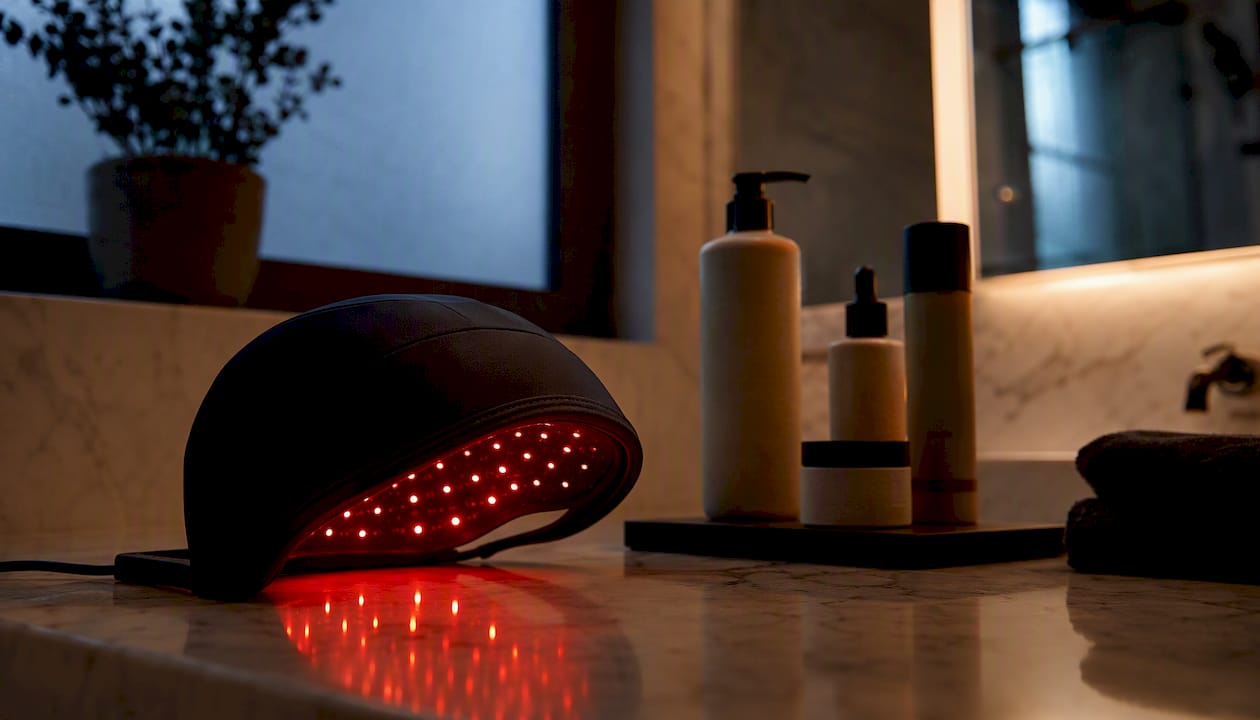
Topical minoxidil: Widely used and reasonably well evidenced for androgenetic alopecia; its role in TE is supportive rather than curative. Available over the counter in the UK.
Biotin and targeted nutrients: Biotin deficiency is rare but real; supplementation is most useful when a deficiency is confirmed or suspected. Broader nutrient support, including zinc, vitamin D, and iron, addresses the deficiencies that commonly underlie TE.
PRP (platelet-rich plasma): Clinic-based treatment with emerging evidence; not widely available on the NHS and not necessary for most acute TE cases.
Practical usage notes:
- Allow at least 3–6 months before judging whether any supportive therapy is working.
- LLLT is safe for most adults; avoid use over areas of active infection or open wounds.
- Caffeine shampoos and rosemary-based topicals (including saw palmetto conditioners) support scalp circulation and have a reasonable tolerability profile for daily use.
- Combining LLLT with a hair growth serum containing biotin, caffeine, and Pro-Vitamin B5 targets the follicle from multiple angles simultaneously.
Pro Tip: The combination approach tends to outperform any single therapy used in isolation. Think of LLLT as the primary driver, with targeted topicals and supplements filling in the nutritional and circulatory gaps. Consistency over months, not weeks, is what produces visible results.
For a broader overview of non-pharmaceutical hair thinning remedies that complement this approach, Livdor’s resource library covers the evidence in accessible detail.
When to see a GP or dermatologist
Most white-bulb shedding does not require urgent care, but some situations do. Book a GP appointment if:
- Shedding has been heavy for more than 3 months with no obvious trigger
- You notice patchy or circular bald spots rather than diffuse thinning
- The scalp looks red, scaly, or scarred
- You have systemic symptoms (fatigue, weight change, joint pain, temperature sensitivity)
- Hair loss is accompanied by eyebrow or eyelash thinning
- You are concerned that white nodules on the hair shaft (rather than at the root) may be present, as this can indicate white piedra, a fungal infection rather than telogen shedding
What to bring to your appointment:
- A written timeline of events over the past 6 months
- Your current medication list
- Scalp photos taken over recent weeks
- An estimate of daily hair count if you have been tracking it
For private referral, a trichologist or consultant dermatologist can usually be seen within 1–2 weeks and will typically offer dermoscopy and a trichogram alongside blood test review. The ScienceDirect review of telogen effluvium notes that trichogram analysis remains the clinical standard for distinguishing true telogen shedding from other causes.
Key takeaways
Telogen bulbs are a sign that hair completed its resting phase, not that the follicle is permanently lost, and most cases of increased white-bulb shedding resolve within 6–12 months once the underlying trigger is addressed.
| Point | Details |
|---|---|
| White bulbs are not permanent loss | A telogen (club) bulb means the follicle rested and shed normally; the root remains intact. |
| Timing is the key diagnostic clue | Shedding peaks 2–4 months after the trigger; trace back your timeline to identify the cause. |
| Blood tests matter | Ferritin, thyroid function, and vitamin D are the most commonly correctable causes found in clinic. |
| Most acute TE resolves in 6–12 months | Once the trigger is removed, regrowth typically begins within 3–6 months. |
| Livdor’s LLLT cap supports recovery | A 650 nm medical-grade laser cap used consistently alongside targeted supplements offers a drug-free way to support the telogen-to-anagen transition at home. |
A realistic perspective on white-bulb shedding
The most common mistake people make when they notice white bulbs on shed hairs is to assume the worst immediately. In clinical practice, the picture is almost always more reassuring than the internet suggests.
What tends to get overlooked is the distinction between a follicle that is resting and one that is damaged. A telogen bulb is evidence of the former. The follicle has cycled correctly, the hair has shed cleanly, and the structure beneath the skin is, in most cases, ready to begin anagen again. The real question is not “am I losing my hair permanently?” but “what pushed so many follicles into telogen at the same time, and is that cause still active?”
Where I see people go wrong is in chasing treatments before they have addressed the basics: ferritin levels, thyroid function, sleep, and diet. No laser cap or supplement will compensate for a ferritin level of 12 µg/L. Get the blood tests, correct what needs correcting, and then layer in supportive therapies. That sequence matters.
The other thing worth saying plainly: some people have an underlying androgenetic tendency that the TE episode has unmasked. If regrowth is slower than expected or the pattern of thinning looks different from what you started with, that is worth discussing with a dermatologist. It does not mean the TE was not real; it means two things were happening at once, which is more common than most guides acknowledge.
At-home support worth considering alongside medical care
This section describes supportive, drug-free options. They are not a substitute for medical advice. If you have red flags, see your GP first.

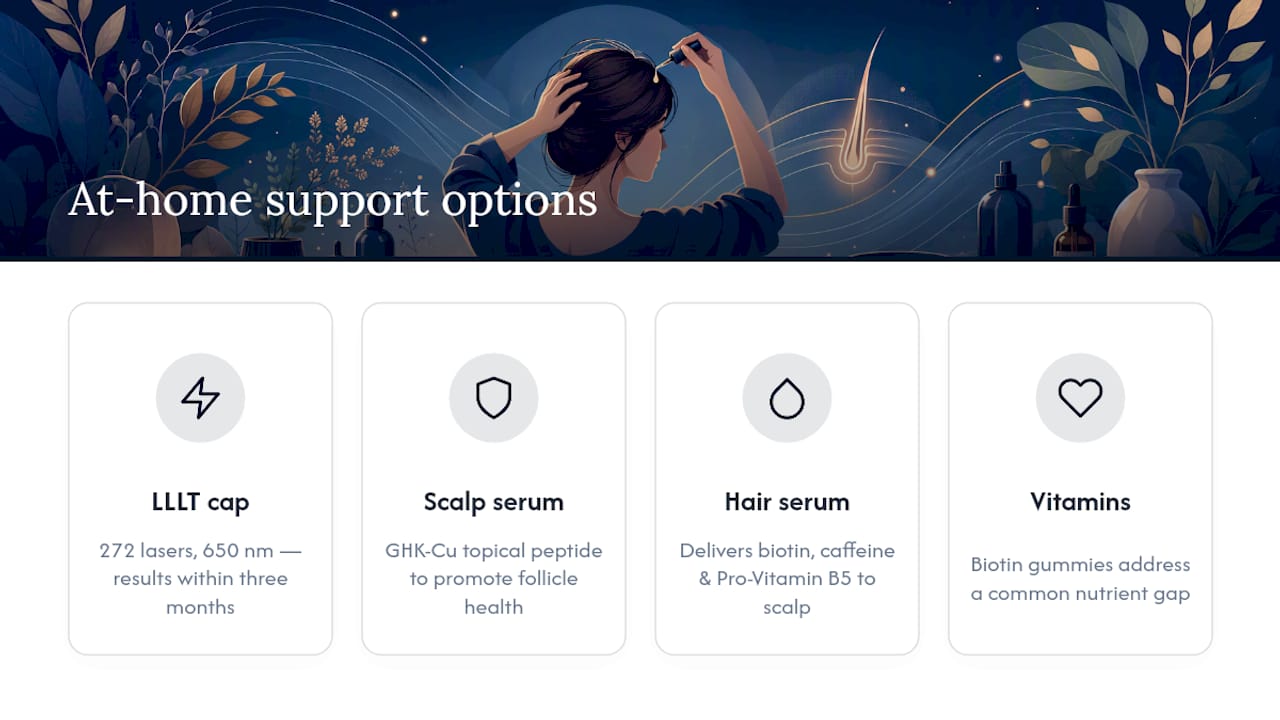
Once you have ruled out or begun treating any underlying cause, supporting your follicles at home makes genuine sense using adjunct topical peptides like the scalp serum (GHK‑Cu) designed to promote follicle health. Livdor’s medical-grade LLLT laser cap uses 272 lasers at a 650 nm wavelength, the clinically studied frequency shown to promote the telogen-to-anagen transition. Used for the recommended sessions per week, most people begin to notice a difference within three months of consistent use.
The strongest results tend to come from combining the cap with targeted topical and nutritional support. Livdor’s hair growth vitamins include biotin gummies that address one of the most common nutritional gaps. A caffeine shampoo and Rosemary Conditioner with Saw Palmetto support scalp circulation and follicle health with every wash. The Hair Growth Serum with biotin, caffeine, and Pro-Vitamin B5 delivers active ingredients directly to the scalp between sessions.
All products are drug-free, made in the UK, and designed for daily use alongside whatever medical treatment your GP recommends. View the full hair growth product range to find the combination that fits your routine, or go straight to the LLLT laser cap page to see how the device works and what to expect.
Useful sources
- Telogen Effluvium - StatPearls - NCBI Bookshelf - NIH
- Integrative and mechanistic approach to the hair growth cycle and hair loss - PMC
- Telogen effluvium — Cleveland Clinic
- Telogen effluvium - Harvard Health
- Invited review article: Telogen effluvium – a review of the science and current obstacles (ScienceDirect)
- Low‑level light therapy and hair growth - PMC
- White Piedra: An Uncommon Superficial Fungal Infection of Hair - PMC
- Why is my hair shedding with a white bulb at the end? — Drugs.com
This article provides general information only and is not a substitute for professional medical advice. Confirm current guidance and your individual situation with your GP or a qualified dermatologist.
FAQ
What is a telogen bulb?
A telogen bulb is the white, club-shaped root end of a hair that has completed the resting (telogen) phase of the hair cycle. It is keratinised and depigmented, which is why it appears white, and its presence usually indicates normal or reactive shedding rather than permanent follicle loss.
What are the white balls coming out of hair follicles?
Those small white tips are telogen bulbs, the hardened root end of a resting hair. They are not the follicle itself; the follicle remains in the scalp and can produce new hair once it re-enters the anagen (growth) phase.
Does hair falling with a white bulb mean it will grow back?
In most cases, yes. A white bulb confirms the follicle completed its resting cycle correctly and is structurally intact. Harvard Health notes that most acute telogen effluvium resolves within 6–9 months once the underlying trigger is addressed, with visible regrowth typically beginning within 3–6 months.
What is the difference between a telogen and an anagen hair bulb?
A telogen bulb is white, club-shaped, and lacks a gelatinous sheath, indicating the hair was resting. An anagen bulb is pigmented, tapered, and surrounded by an epithelial sheath, indicating the hair was actively growing when shed. Clinicians use this distinction, confirmed by trichogram if needed, to assess what type of shedding is occurring.
Could white nodules on my hair shaft be something other than a telogen bulb?
Yes. If the white material appears as nodules along the hair shaft rather than at the root tip, it may indicate white piedra, a superficial fungal infection caused by Trichosporon species. This is uncommon but worth ruling out with a GP if the appearance does not match the classic club-shaped root bulb.



Leave a comment
This site is protected by hCaptcha and the hCaptcha Privacy Policy and Terms of Service apply.