
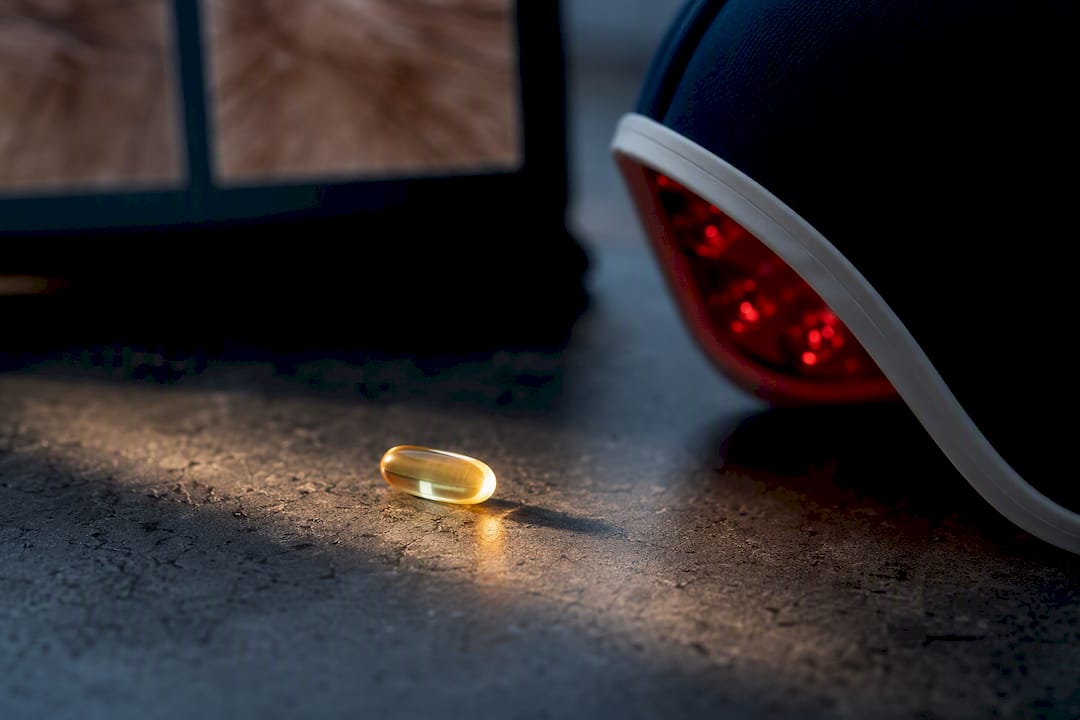
Biotin corrects hair loss caused by a genuine biotin deficiency, but no robust trial shows it makes hair grow thicker or faster in someone who isn’t deficient. Systematic reviews and clinical reference sources agree on this point. If your hair is thinning and your diet and blood work are otherwise normal, ask a clinician about deficiency testing before assuming a bottle of biotin will fix it.
TL;DR:
- Biotin benefits only those with diagnosed biotin deficiency, such as inherited metabolic disorders or absorption issues, and does not promote thicker or faster hair growth in healthy adults.
- Most over-the-counter biotin supplements contain doses far exceeding the daily requirement, providing no proven advantage and increasing the risk of misleading blood test results.
- Routine use of biotin for hair growth in well-nourished adults lacks strong clinical support, and supplements are often marketed beyond what current research justifies.
- Combining treatments like low-level laser therapy with topical or nutritional support appears more promising for early thinning than relying solely on biotin.
- Prioritize testing and addressing underlying causes of hair loss with medical guidance before investing in high-dose biotin or similar products.
What does the science say about biotin and hair growth?
The honest summary is this: the evidence for biotin helping hair grow is strong in one narrow case, and thin everywhere else. A widely cited review on biotin for hair loss found no convincing data that biotin monotherapy improves hair growth in healthy adults, with meaningful benefit confined to people who have a diagnosed deficiency or specific paediatric metabolic disorders affecting biotin processing.
That’s not the same as saying biotin does nothing. It’s saying the research hasn’t proven the broad claim most supplement bottles imply.
The studies behind biotin’s reputation fall into a few categories, and each has real limits:
- Case series and case reports. These describe individual patients, often with confirmed deficiency, who saw hair regrowth after supplementation. Useful for understanding mechanism, but they can’t tell you what happens in someone without deficiency.
- Small randomised trials. A 2024 crossover trial compared topical 5% minoxidil, oral biotin, and the combination in men, and found a short-term increase in hair growth rate only in the combination group over 14 days. The trial involved just 10 participants, which makes the finding suggestive rather than conclusive.
- Polytherapy studies. Many “biotin works” headlines actually come from trials testing biotin alongside other ingredients (zinc, collagen peptides, minoxidil), so isolating biotin’s individual contribution is difficult.
- Observational and survey data. These capture what people believe and report, not what a controlled comparison shows.
Low-dose oral minoxidil requires medical supervision: it can cause fluid retention, a faster heart rate, and lowered blood pressure, so clinicians typically monitor blood pressure and ask about heart conditions before prescribing. It is not recommended during pregnancy or breastfeeding. Discuss these risks with a physician before starting.
Here’s the part that rarely makes it into marketing copy: biotin supplement use in the US has increased more than 30-fold since 1999, yet true dietary biotin deficiency remains rare in well-nourished adults. Millions of people are taking a vitamin for a deficiency they almost certainly don’t have. The StatPearls clinical reference on biotin reinforces the same point: indications for supplementation are well defined clinically, and routine use for hair growth in healthy adults isn’t supported by strong trial data.
None of this means biotin is worthless. It means the story is more specific than “take it and watch your hair grow.”
Who actually benefits from biotin supplementation?
Biotin supplementation makes a measurable difference mainly in people who fall into a defined risk group, not the general population chasing thicker hair.
The clearer candidates for benefit include:
- People with inborn biotinidase or holocarboxylase deficiency, rare inherited conditions that prevent the body recycling biotin properly.
- Patients on long-term parenteral (intravenous) nutrition, where biotin isn’t reliably delivered through normal feeding.
- Those who’ve had extensive bowel resection, which can impair nutrient absorption generally.
- Certain medication contexts, including long-term use of drugs like valproic acid, which can affect biotin metabolism.
Clinical signs that point towards deficiency include brittle nails, a characteristic scaly red rash around the eyes, nose, and mouth, and hair thinning or loss, according to the StatPearls biotin entry. These signs cluster together in true deficiency, so hair thinning alone, without the other markers, is weak evidence of a biotin problem.
For everyone else, and that’s the overwhelming majority of adults with hair concerns, true deficiency is uncommon even though supplement shelves suggest otherwise.
How does biotin work, and what dose actually matters?
Biotin (vitamin B7) acts as a cofactor for enzymes involved in keratin synthesis, the structural protein that makes up hair, skin, and nails. That’s the biological rationale for why deficiency causes brittle, thinning hair, and why correcting it can restore normal structure.
The gap between marketed doses and clinically studied doses is where things get interesting.
A closer look at the numbers: many over-the-counter hair gummies and capsules contain 5,000 to 10,000 micrograms of biotin per serving, while the recommended dietary intake for most adults sits at around 30 micrograms a day. The clinical trial testing biotin against minoxidil used a comparatively modest 5 milligrams, still far below many “hair growth” formulations on the market.
Practical points worth knowing:
- There’s no evidence that megadoses (far above nutritional need) add extra benefit for someone without deficiency.
- High-dose biotin can interfere with common clinical immunoassays, including thyroid and troponin tests, sometimes producing misleading results.
- If you’re taking biotin at any meaningful dose, tell your doctor or lab technician before bloodwork, particularly ahead of thyroid panels or cardiac enzyme tests.
The practical recommendation is straightforward: avoid megadosing unless a clinician has specifically directed it for a diagnosed condition. More isn’t better here. It’s mostly just more.
What are the risks and side effects of taking biotin?
Biotin has a good general safety profile, and reported side effects at typical supplement doses are rare. The real risk isn’t to your body directly. It’s to the accuracy of your next blood test.
- Reported adverse effects are uncommon and usually mild (occasional digestive upset, skin reactions in sensitive individuals).
- The clinically significant issue is laboratory interference, which can cause falsely elevated or falsely lowered results depending on the assay design.
- Tests known to be affected include certain thyroid function panels and cardiac troponin assays, where a false reading could delay correct diagnosis of a real problem.
- Stop supplementation and seek clinical review if you notice unusual symptoms, or simply pause biotin for the period your lab recommends before any critical blood test.
Pro Tip: Keep a simple note on your phone listing every supplement and dose you take, and show it to any clinician ordering bloodwork. It takes ten seconds and can prevent a confusing, and sometimes costly, misdiagnosis.
The same caution applies whether you’re taking a standard multivitamin dose or a concentrated hair-growth formula. Disclosure before testing matters at both ends of the dosage range.
How long does it take to see results from biotin?
Hair grows in cycles, moving through growth, transition, and resting phases, and a single strand can spend months in each stage. That’s why meaningful, visible change from any intervention, biotin included, typically needs three to four months of continuous use before it’s fair to judge results.
Useful markers to track over that window include reduced breakage when brushing, hair feeling thicker between finger and thumb, and fewer strands left on the pillow. Photograph the same section of scalp under the same light every few weeks rather than relying on memory.
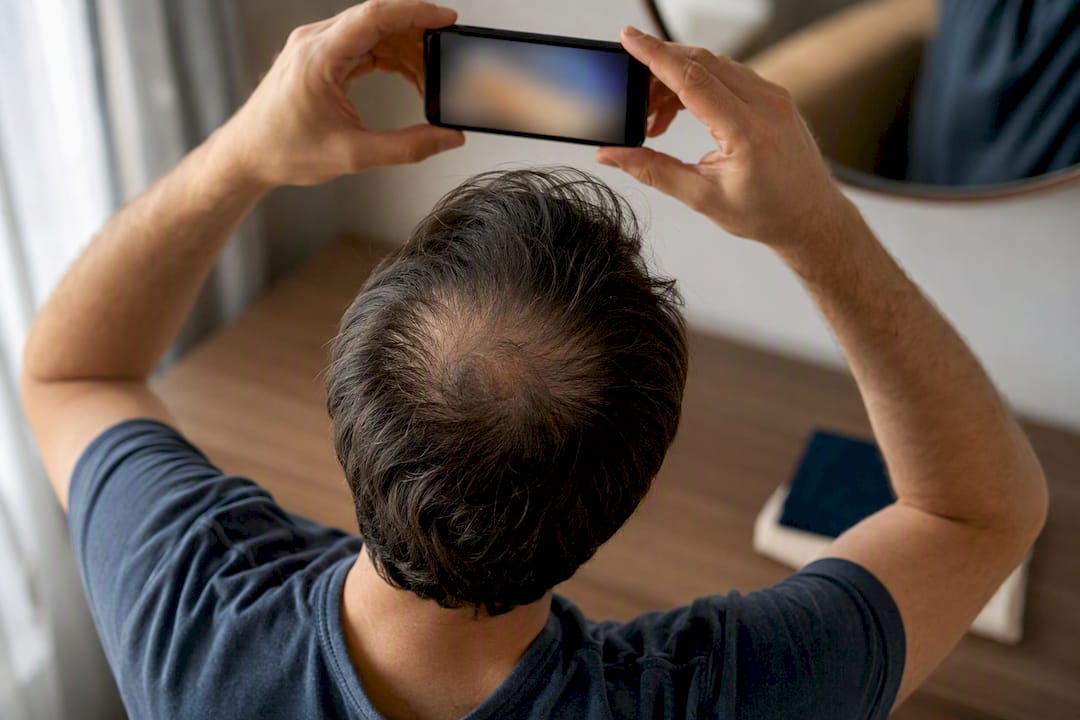
Be wary of dramatic before-and-after claims after two or three weeks. Hair biology doesn’t move that fast, and much of what gets reported as a quick win is placebo effect layered onto small, uncontrolled anecdotes.
Does combining biotin with LLLT and topical treatments work better?
The strongest mechanistic case isn’t for biotin alone. It’s for combining approaches that work through different pathways at once.
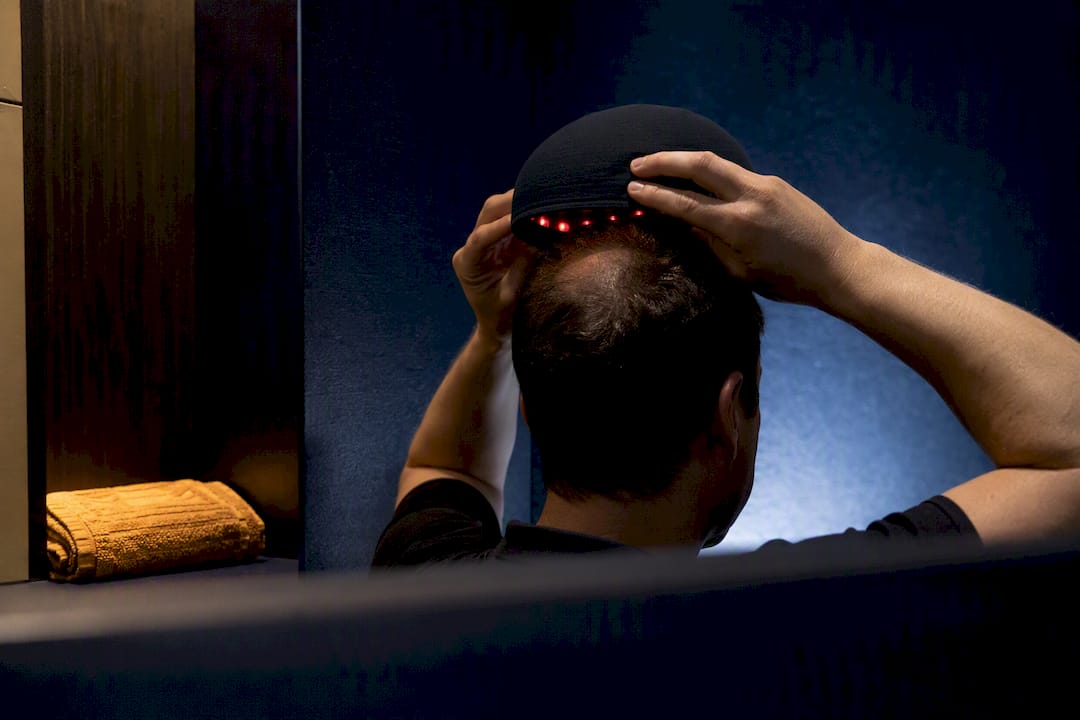
Low-level laser therapy (LLLT) works on a different mechanism entirely from biotin. Rather than supplying a nutritional cofactor, LLLT at wavelengths around 650nm is understood to stimulate follicle activity directly, encouraging follicles sitting in a resting phase to re-enter active growth. Pairing a mechanism that acts on the follicle with nutritional support that acts on hair’s structural building blocks gives you two independent points of leverage rather than one.
The 2024 crossover trial mentioned earlier hints at this same logic from a different angle: combining oral biotin with topical minoxidil outperformed either treatment alone, even over a short 14-day window. That’s a small, short study, but the underlying principle, that hair health is multifactorial and rarely solved by a single lever, holds up across the wider research.
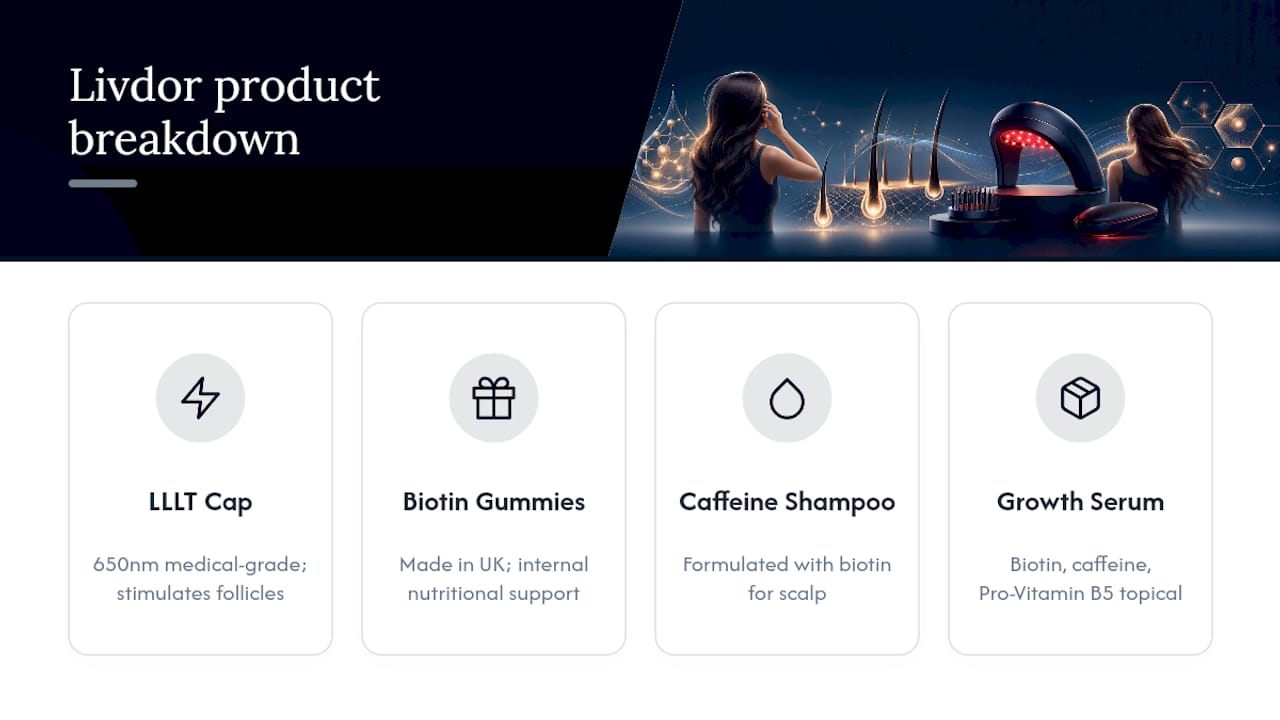
This is the thinking behind Livdor’s approach to hair support: a 650nm medical-grade LLLT laser cap paired with targeted topicals and nutritional products such as biotin gummies, a caffeine shampoo, and a Rosemary Conditioner with Saw Palmetto. Each addresses a different part of the picture rather than asking one ingredient to do all the work.
A few practical habits make multimodal routines actually work:
- Use LLLT consistently, on the schedule the manufacturer specifies, rather than sporadically when you remember.
- Pair device use with a supportive shampoo and conditioner rather than one in isolation.
- Track progress over months, not days. Adherence matters more than intensity.
Pro Tip: Set a recurring reminder on your phone for laser cap sessions. Consistency, not occasional heavy use, is what separates people who see change at the three to four month mark from those who give up at week three.
None of this is a guarantee. It’s a reasonable, evidence-aligned strategy for early thinning, built on mechanisms that have some data behind them rather than a single ingredient asked to carry the whole result.
What should you do next if you’re worried about hair thinning?
Before spending money on supplements or devices, get a clearer picture of what’s actually driving your hair loss.
- Ask your GP about ruling out other causes first. Direct biotin blood testing is uncommon in routine practice; clinicians more often check thyroid function, iron levels, and general nutrition, since these overlap heavily with biotin-deficiency symptoms.
- Ask sellers direct questions before buying. Does the product disclose lab interference risk? What evidence backs the specific formulation? Is there a warranty or return window if it doesn’t suit you?
- Check manufacturing and labelling standards. Transparent ingredient lists, clear dosing, and evidence of quality manufacturing (rather than vague “clinically proven” claims with no source) separate credible products from noise.
- Choose a device on evidence, not marketing. For LLLT specifically, look at wavelength (650nm is well studied), coverage, and whether the manufacturer explains how the device works rather than just promising results.
The gap between what biotin promises and what the evidence supports
Biotin’s popularity has outpaced its evidence base by a wide margin, and I think that mismatch deserves more attention than it gets. Reviewing the research pool for this piece, what struck me wasn’t that biotin doesn’t work. It’s that it works precisely for a narrow group, and the marketing rarely admits that narrowness.
The honest position is unglamorous: correct a real deficiency if one exists, don’t chase megadoses on the assumption that more vitamin equals more hair, and treat lab interference as a genuine practical risk rather than fine print. Where I’d push back on conventional wisdom is the idea that any single supplement, biotin or otherwise, should be the whole strategy. The trial data on combination approaches, thin as it is, points the same direction as basic biology: hair loss usually has multiple contributing factors, so addressing it through multiple, independent mechanisms (nutritional support alongside follicle-level stimulation like LLLT) makes more sense than betting everything on one pill.
— Adam Bond
Livdor’s approach to a drug-free hair growth routine
If you’re building a routine rather than searching for one magic ingredient, that’s exactly where Livdor’s product range is designed to sit. The centrepiece is the 650nm medical-grade LLLT laser cap, built around a mechanism with a genuinely different rationale from biotin: direct stimulation of follicles rather than nutritional supplementation alone.
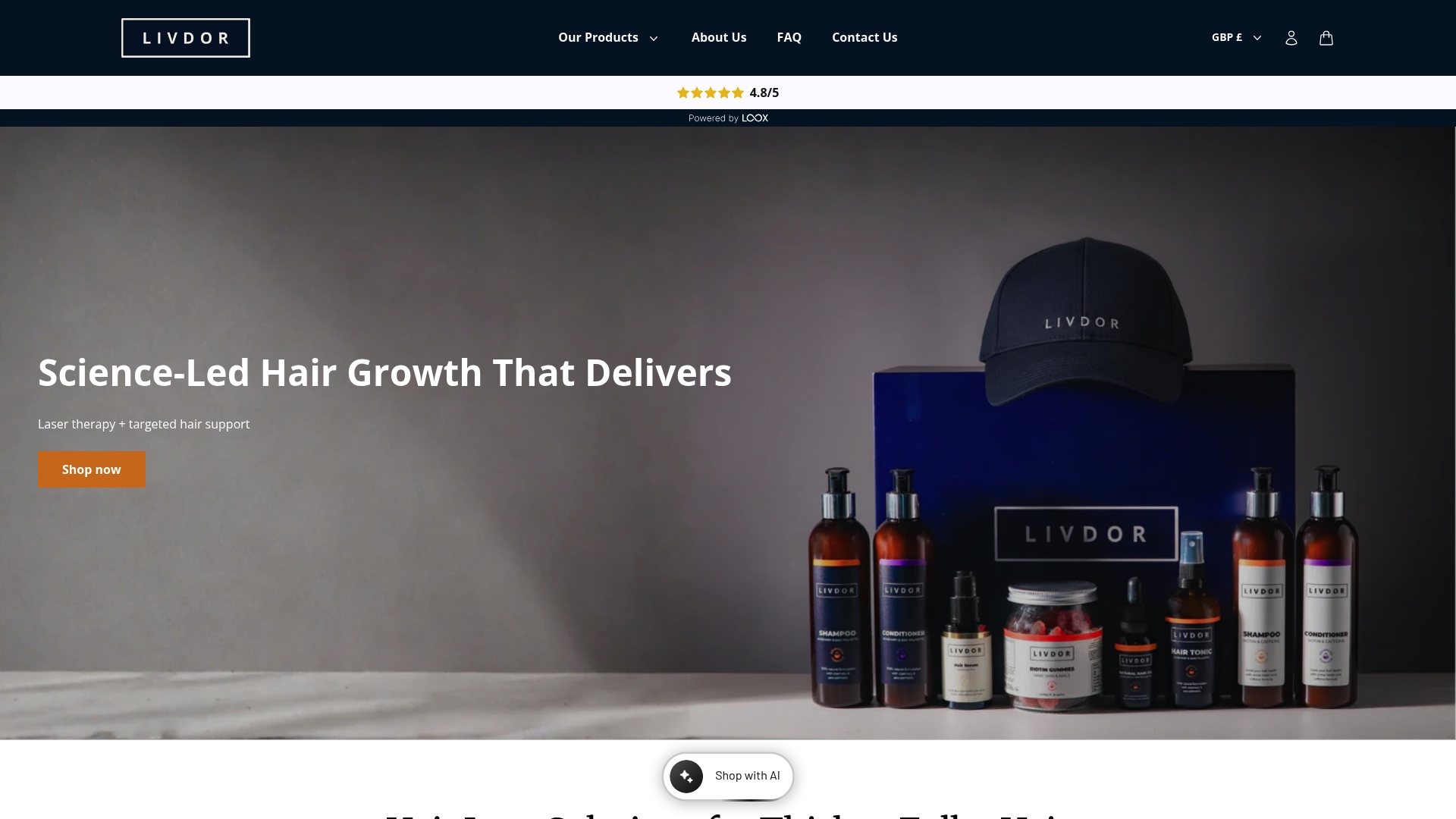
Alongside the cap, Livdor’s range covers the nutritional and topical side of a multimodal routine: biotin gummies made in the UK, a caffeine shampoo formulated with biotin, and a Rosemary Conditioner with Saw Palmetto for scalp support. A Hair Growth Serum combining biotin, caffeine, and Pro-Vitamin B5 rounds out the topical layer, giving you nutritional support at the follicle surface as well as internally. For those exploring clinical evidence standards around beauty products generally, this guide to clinical studies in beauty is a useful primer on separating substantiated claims from marketing noise.
Livdor’s laser cap ships with a warranty and a defined trial period, so you can commit to the three to four month window the evidence points to without guessing whether the device is faulty or the timeline is simply doing what hair biology always does. If you want to see the full device and product range together, the laser hair growth products collection is the place to start.
This article is general information, not a substitute for advice from a qualified doctor. Consult a qualified healthcare professional about your own circumstances before acting on anything here.
Sources
- Biotin for Hair Loss: Teasing Out the Evidence.
- Efficacy of 5% topical minoxidil versus 5 mg oral biotin versus topical minoxidil and oral biotin on hair growth in men: randomized, crossover, clinical trial
- Biotin supplements: Helpful or hype? | UCLA Health
- Biotin - StatPearls - NCBI Bookshelf
FAQ
Does biotin really help hair grow?
Biotin helps hair grow when someone has a diagnosed biotin deficiency, but current reviews find no strong evidence it improves hair growth in healthy adults without deficiency.
Why shouldn’t you take biotin every day at high doses?
Daily high-dose biotin hasn’t been shown to add extra benefit for non-deficient people, and it can interfere with common lab tests, including thyroid and troponin assays, risking misleading results.
Is biotin a good vitamin for hair growth?
It’s a genuinely necessary nutrient for keratin production, but its role as a standalone “hair growth vitamin” is overstated for people without deficiency. Combining it with follicle-level approaches like LLLT has a stronger evidence rationale.
Is 10,000 micrograms of biotin too much for hair growth?
That dose is far above the typical daily requirement of around 30 micrograms, and no trial data shows extra benefit at that level for healthy adults. It also raises the risk of lab test interference, so disclose it before any bloodwork.


Leave a comment
This site is protected by hCaptcha and the hCaptcha Privacy Policy and Terms of Service apply.