
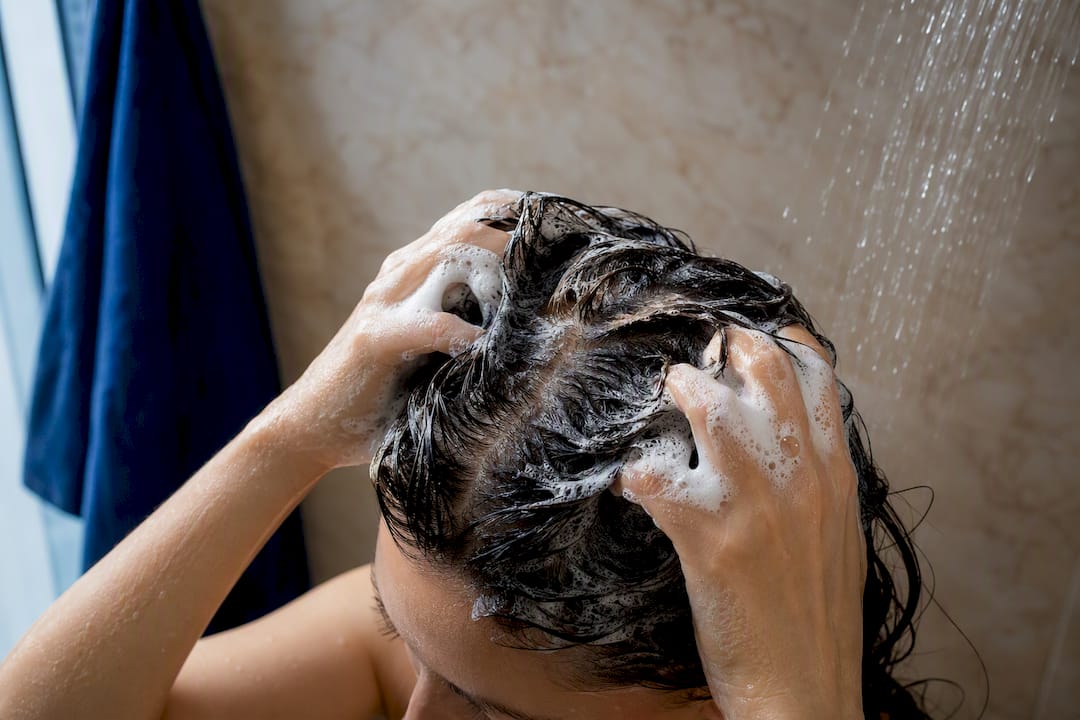
Biotin shampoo can genuinely improve how hair looks and feels, giving strands a thicker texture, more shine, and less breakage during styling. What it cannot reliably do, according to the strongest available evidence, is regrow hair or reverse follicle-level thinning in people without a true biotin deficiency. Biotin, keratin, and the broader science behind topical versus oral delivery explain why, and the best outcomes tend to come from combining a good shampoo with LLLT and targeted serums, something a reputable product range is built around.
TL;DR:
- Biotin shampoo primarily provides surface cosmetic improvements like shine and fullness, but does not significantly promote hair regrowth in non-deficient individuals.
- Most shampoos contain biotin alongside conditioners and supporting agents like panthenol and caffeine, which improve hair texture and manageability rather than follicle stimulation.
- Clinical evidence indicates that topical biotin can improve hair feel and reduce shedding in cases of biotin deficiency, but it lacks strong proof for reversing pattern thinning or androgenetic alopecia.
- For genuine hair regrowth, strategies like medical evaluation, oral biotin correction, and low-level laser therapy are necessary, with shampoos serving as a supportive maintenance step.
- Expect noticeable cosmetic benefits within a few washes, but avoid relying on biotin shampoo alone for addressing significant hair loss or thinning.
What is biotin and why does it appear in shampoo?
Biotin, also called vitamin B7, is a water-soluble vitamin your body uses to build keratin, the structural protein that makes up roughly 95% of each hair strand. Genuine biotin deficiency is uncommon, but when it happens, hair can become brittle and prone to shedding, which is exactly why the vitamin got tied to hair health in the first place.
The catch is that a rinse-off shampoo cannot penetrate deeply enough to feed follicles the way dietary biotin can. Manufacturers still include it because it pairs well with conditioning agents and lets brands make a defensible, science-adjacent claim on the bottle. Some newer formulations use encapsulation techniques to improve how much biotin actually stays in contact with the scalp during washing.
Most biotin shampoos also lean on supporting ingredients that do measurable cosmetic work:
- Panthenol (pro-vitamin B5), which draws moisture into the hair shaft and reduces frizz
- Hydrolysed proteins, which temporarily patch damaged cuticle and reduce split ends
- Caffeine, associated with improved microcirculation at the scalp surface
- Botanical extracts such as rosemary, often included for scalp comfort and shine
How biotin shampoo works on hair, and where its limits are
The visible “thickening” effect from a biotin shampoo mostly comes from film-forming agents that coat each strand and swell it slightly, plus conditioning polymers that smooth the cuticle so light reflects more evenly. That is a real, noticeable change. It is a surface effect, not a follicular one.
The reason is straightforward biology. A shampoo sits on the scalp for perhaps one to two minutes before it is rinsed away, and the skin barrier is not designed to let large water-soluble molecules through in that window. Biotin needs sustained, systemic exposure, delivered through the bloodstream, to reach the base of the follicle where hair is actually produced. That is why researchers have started experimenting with microencapsulated or water-soluble biotin formulations designed to improve topical bioavailability, though this remains an early area of study rather than settled practice.
What this means in practice:
- Expect smoother, glossier hair within a handful of washes
- Expect a fuller-feeling texture as the cuticle lies flatter
- Do not expect new follicle activity or reversal of pattern thinning from shampoo alone
Pro Tip: Check the ingredients list, not just the front-of-bottle claim. A shampoo with biotin low down the list but panthenol and hydrolysed proteins near the top will usually outperform a “biotin-first” product with a thin conditioning base.
What does the clinical evidence actually say?
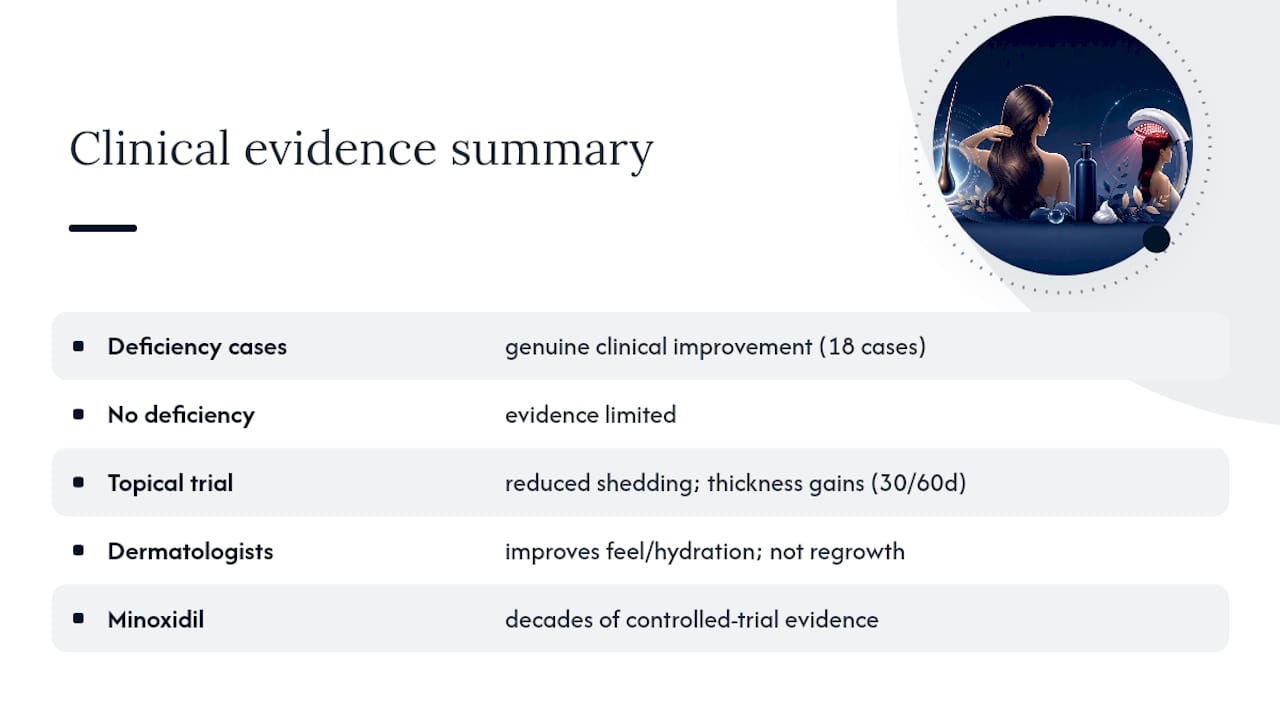
The most cited piece of research here is a systematic review by Patel and colleagues, which looked across case reports and controlled trials and found genuine clinical improvement mainly in the 18 documented cases involving people with an underlying biotin deficiency or related pathology. Evidence of benefit in healthy people with no deficiency was described as limited. That single distinction, deficiency versus no deficiency, is arguably the most important fact in this entire topic.
Topical research tells a more specific but narrower story. A three-month trial of a WS Biotin formulation reported substantial reductions in pulled hairs alongside modest gains in measured hair thickness.
Reported results: hair thickness increased at day 30 and day 60 in the trial cohort, alongside the shedding reductions noted above.
Those numbers look impressive, but the study used a small cohort and a specific topical delivery method, not a standard supermarket shampoo. It demonstrates that better-engineered topical delivery can move the needle, not that any biotin shampoo on a shelf will replicate the result.
Dermatologists interviewed in consumer health coverage generally land in the same place: topical biotin can improve hair feel and scalp hydration but lacks strong evidence for regrowth in non-deficient people. Set against minoxidil, which has decades of controlled trial data behind it for androgenetic alopecia, biotin shampoo sits in a different evidence tier entirely. It is a supportive cosmetic tool, not a replacement for treatments with a stronger clinical track record.
The realistic benefits of biotin shampoo
Separating cosmetic wins from actual regrowth claims matters, because most disappointment with these products comes from expecting the wrong outcome. Here is what a reasonable, evidence-aligned expectation looks like:
- Smoother hair shafts and more shine, usually noticeable within two to three washes as conditioning agents coat the cuticle.
- A thicker feel to individual strands, driven by film-formers swelling the hair shaft rather than by new hair growth.
- Reduced breakage over several weeks, particularly for hair that is chemically treated, heat-styled, or otherwise overprocessed and fragile.
- Easier detangling and better manageability, which indirectly reduces mechanical hair loss from brushing and styling.
What it will not do is act as a primary treatment for androgenetic alopecia or autoimmune-driven shedding such as alopecia areata. Those conditions need a diagnosis and, often, a prescription-grade or device-based intervention, not a change of shampoo.
Who benefits most, and when to see a specialist
Biotin shampoo tends to help two groups the most: people with genuinely fragile, overprocessed hair looking for better handling, and the rare individual with a confirmed biotin deficiency, often linked to certain medications, pregnancy, or malabsorption conditions. For everyone else, it is a nice-to-have cosmetic layer rather than a fix.
Some signs point toward something that needs proper medical attention rather than a shampoo swap:
- Sudden, rapid shedding over a few weeks rather than gradual thinning
- Visible bald patches with a smooth, non-scarred scalp
- Scalp redness, scaling, or pain alongside the hair loss
- Thinning that runs in a clear hereditary pattern
If your hair is simply feeling weaker or drier, supportive care and a formulation upgrade make sense. If you are seeing patchy loss or unusually fast shedding, a dermatology referral and blood work belong ahead of any product decision.
How to choose and use a biotin shampoo properly
Getting real value from a biotin shampoo comes down to formulation choice and application habit, more than the marketing on the bottle.
- Judge the whole ingredient panel, not the biotin claim, prioritising gentle sulphate-free surfactants alongside conditioning actives.
- Massage the shampoo into the scalp for thirty to sixty seconds before rinsing, giving conditioning agents time to work rather than sluicing straight off.
- Follow with a matching conditioner or leave-in serum to lock in the smoothing effect.
- Give it a genuine eight to twelve week trial, tracking hair-tie shedding counts and how strands feel, before judging whether it is working.
Pro Tip: If you also colour or heat-style your hair, look for a shampoo that pairs a caffeine and Pro-Vitamin B5 blend with biotin. That combination tends to address both cosmetic thickness and the dryness that comes from repeated processing.
Building a fuller plan: shampoo, serums, and LLLT together
A biotin shampoo stabilises the hair you already have. It cleans, conditions, and reduces mechanical breakage, which matters, but it stops there because it cannot reach the follicle in any meaningful way. Getting closer to actual follicle stimulation means adding tools built for that job.
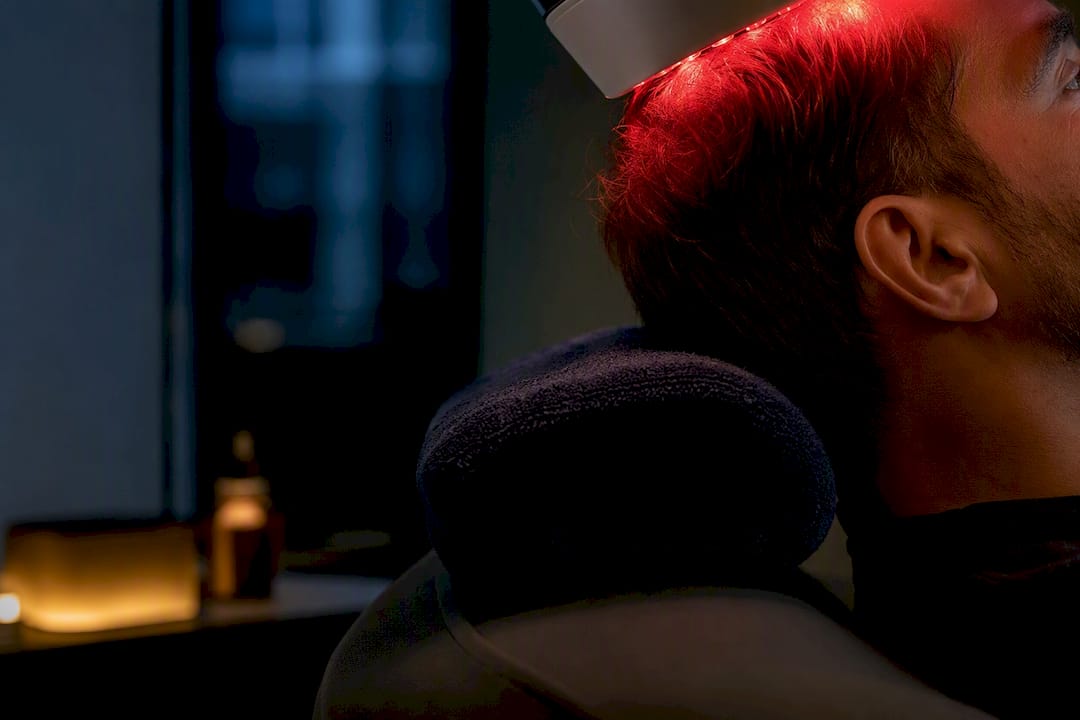
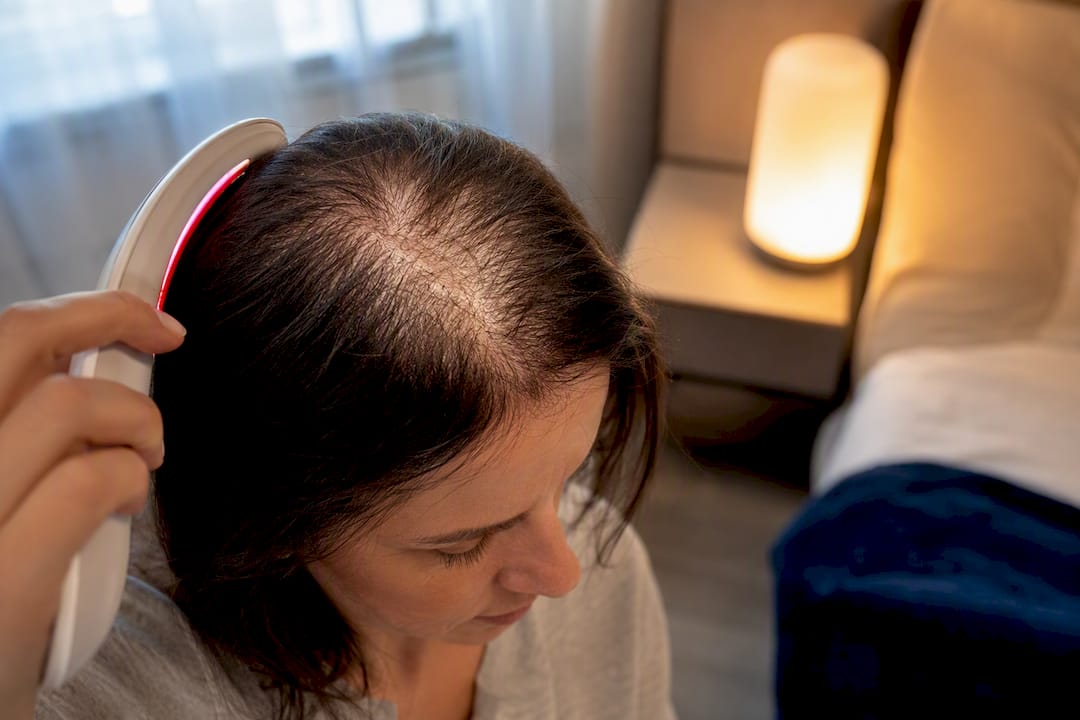
If a blood test confirms a real deficiency, oral correction under medical guidance addresses the root cause directly, something no shampoo can do from the outside. Beyond that, low-level laser therapy (LLLT) works through a different mechanism entirely: red and near-infrared light at wavelengths such as 650nm is absorbed by cells in the follicle, which is thought to support cellular energy production and encourage follicles to stay longer in their growth phase. Pairing that with a hair growth serum containing biotin, caffeine, and Pro-Vitamin B5 gives the scalp both light-based stimulation and topical support at once.
A sensible combined routine for early-stage thinning looks like this:
- A gentle, nutrient-rich shampoo (biotin or caffeine-based) for daily cleansing and cuticle support
- A targeted serum applied to thinning areas for extra topical delivery
- Regular LLLT sessions with a medical-grade device to work on the follicles directly
- Biotin gummies or oral supplements if diet or blood work suggests a genuine gap
None of this claims to outperform prescription treatment for advanced hair loss. For early, mild thinning, though, it is a coherent, drug-free stack rather than a single product hoping to do everything.
What actually moves the needle, and what does not
Most of the marketing around biotin shampoo oversells a cosmetic ingredient as a regrowth solution, and that is the single biggest source of reader disappointment. The honest position is less exciting but more useful: shampoo is the maintenance layer, not the growth engine. Anyone expecting a bottle of shampoo to reverse genuine thinning is going to be let down within a month, no matter how good the formulation is.
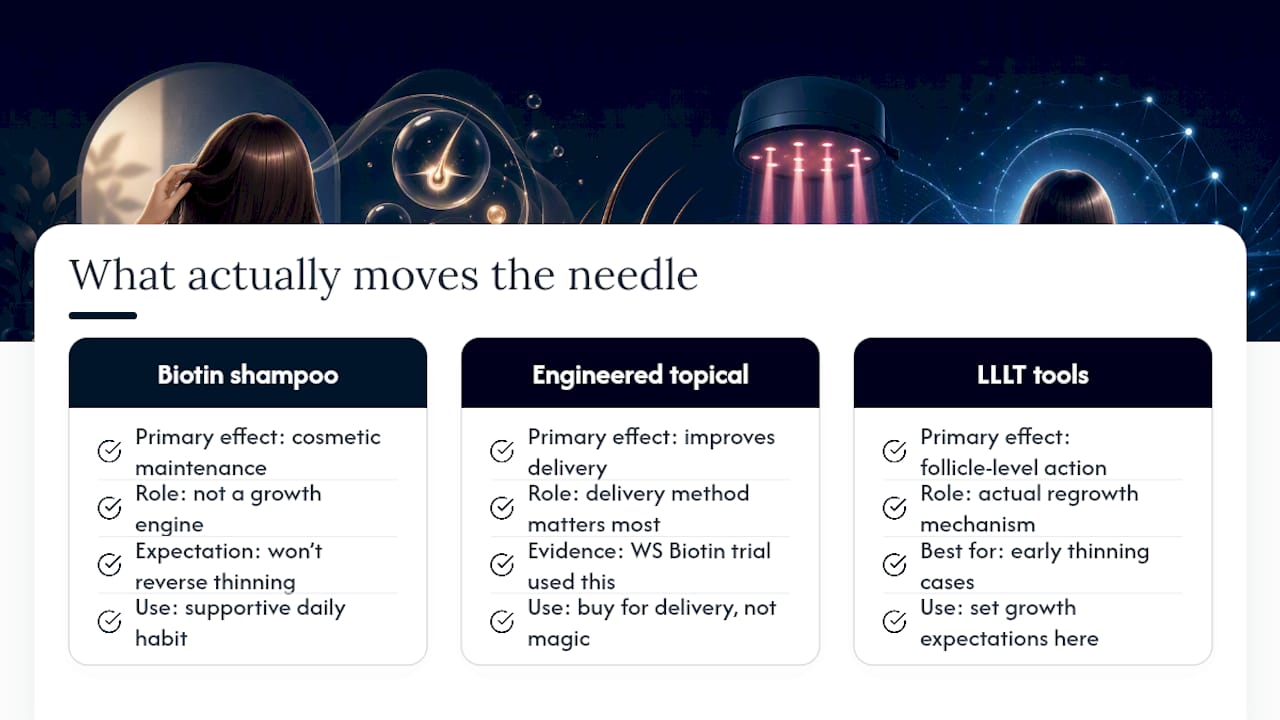
Where I think the industry gets it backwards is treating biotin as the headline ingredient when the real story is delivery method. The WS Biotin trial data is interesting precisely because it used an engineered topical format, not because biotin itself suddenly became more potent. That distinction should shape what you buy and expect.
My practical advice: use a biotin shampoo for what it is, a supportive daily habit, and put your actual growth expectations on tools with follicle-level mechanisms. For readers dealing with early thinning who want to understand where LLLT fits into that picture, Livdor’s breakdown of biotin research and when laser therapy helps is worth reading before you spend money on any single product hoping it will do the whole job alone.
— Adam Bond
A combined regimen for early thinning
If you are seeing early signs of thinning, pairing a laser cap with the right topicals gives you a more complete answer than shampoo alone ever could. A LLLT laser hair growth cap with 650nm medical-grade lasers can work directly on the follicle, the piece of the puzzle a rinse-off product simply cannot reach.
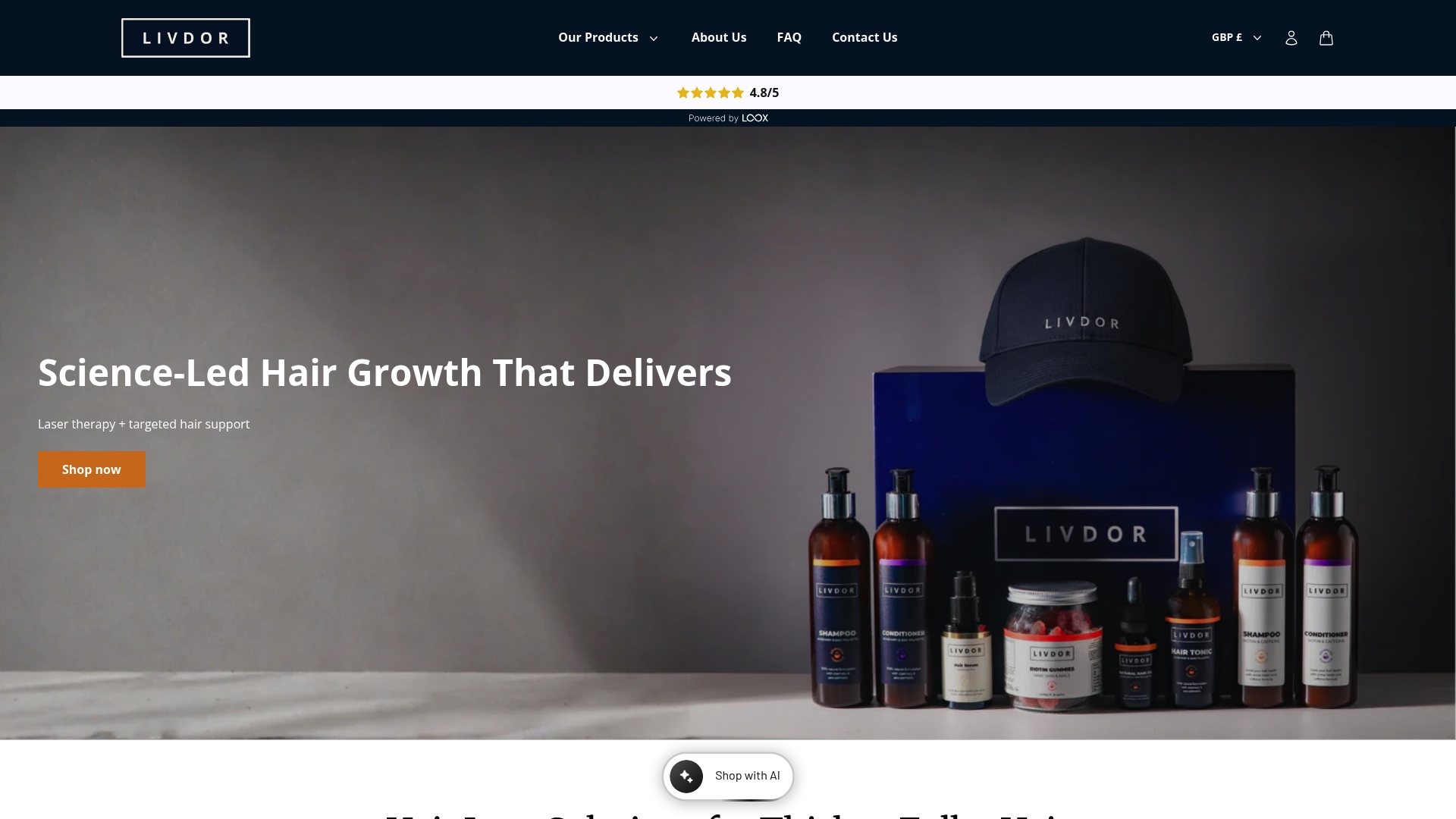
A biotin shampoo and conditioner bundle formulated with panthenol and protein-supporting actives alongside biotin handles the cosmetic layer properly rather than relying on biotin as a headline claim with little conditioning behind it. For scalp comfort during heavier use, a compatible sensitive-skin routine such as the guidance from Iron Bull Naturals on skin-friendly formulas is a useful cross-check if your scalp reacts easily. Some users pair the laser cap with rosemary and saw palmetto conditioner and biotin gummies for a fuller nutritional base.
Visible changes from consistent LLLT use are typically reported from around three months onward, according to Livdor’s product materials, which lines up with the medium-term timelines seen in topical trial data. If you want to see the full combined range, from the laser cap to serums and vitamins, the laser hair growth product collection is the place to start building a routine that actually targets the follicle, not just the strand.
Sources
FAQ
Does biotin shampoo actually work?
It works for cosmetic goals such as shine, thickness feel, and reduced breakage, but current evidence does not support it regrowing hair in people without a true biotin deficiency.
What are the benefits of using biotin shampoo?
Expect smoother hair shafts, better shine, improved manageability, and reduced breakage over several weeks, particularly for damaged or overprocessed hair.
Is it safe to use biotin shampoo every day?
Daily use is generally safe for most people since biotin has a low irritation profile, though anyone with sensitive skin should patch-test a new formula first.
What does biotin do for hair?
Biotin supports keratin production, the structural protein hair is built from, but oral or blood-level correction matters far more than a topical rinse-off product when addressing an actual deficiency.

Leave a comment
This site is protected by hCaptcha and the hCaptcha Privacy Policy and Terms of Service apply.