
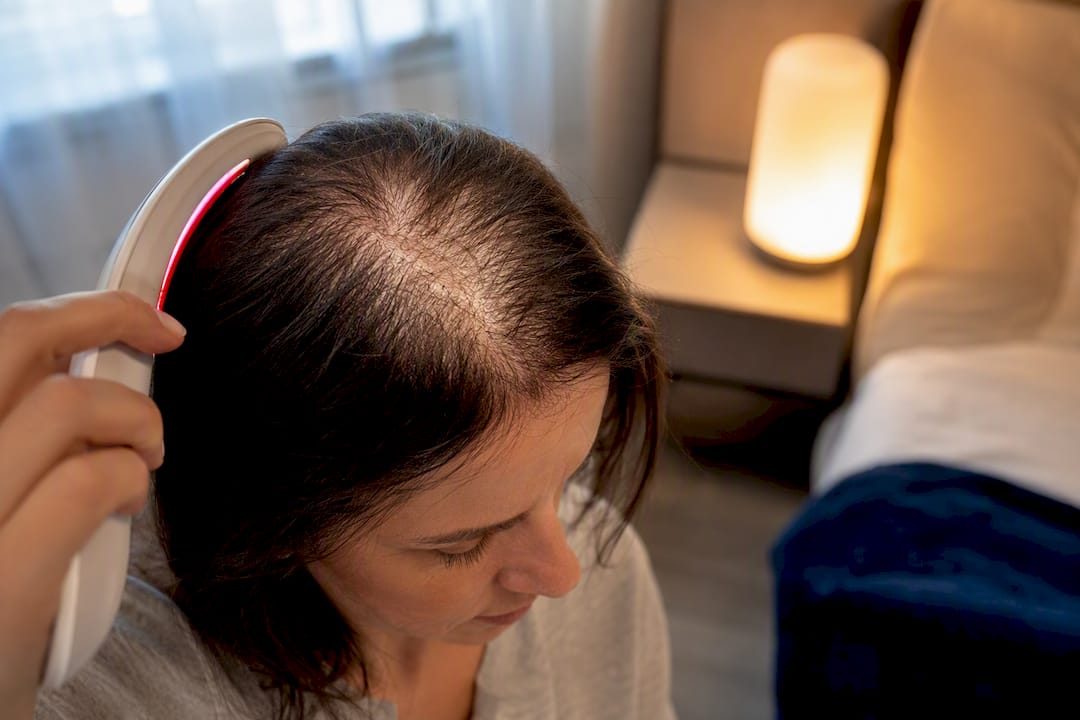
Telogen effluvium usually resolves on its own once the trigger is gone, but you can speed visible recovery with a focused routine: correct low ferritin, protein, vitamin D or zinc, calm the stress response, keep scalp care gentle, and add consistent low-level laser therapy at 650 nm. If shedding hasn’t slowed within six months of appropriate self-care, book a GP or dermatology appointment.
TL;DR:
- Correcting nutrient deficiencies, especially ferritin, zinc, and vitamin D, is more effective for telogen effluvium recovery than most topical or supplement products.
- Blood tests should include ferritin, TSH, full blood count, vitamin D, zinc, and fasting glucose to identify underlying triggers.
- Consistent use of low-level laser therapy at 650 nm, along with a gentle scalp routine and lifestyle management, supports hair regrowth over several months.
- Avoid rapid weight loss, harsh styling, and self-stopping treatments to prevent setbacks and facilitate natural recovery within three to six months.
- Photographic monitoring and patience are essential, as full cosmetic recovery can take up to a year or more, with no quick fixes for active shedding.
What to do first if you’re losing hair
The first fortnight matters more than most people realise, because telogen effluvium is driven by whatever happened two to four months ago, not what you’re doing right now. Your job is to stop adding fuel to the fire while your body catches up.
- Stop any crash diet immediately. Rapid weight loss and very low calorie intake are classic triggers. Aim for adequate protein intake as a practical target, typically around the recommended daily allowance for healthy hair.
- Switch to gentle grooming. Skip tight ponytails, braids, and buns for now, cut back on heat styling and chemical treatments, and keep washing at your normal frequency. Skipping washes to “save” hair usually just causes clumping in the shower and more visible loss.
- Fix your sleep and stress routine. Chronic stress is one of the most common telogen effluvium triggers. Aim for sufficient sleep, regular daily movement, and incorporate short mindfulness or breathing practices to help manage stress.
- Review medications with your prescriber, don’t self-stop. Certain drugs (retinoids, some beta blockers, anticonvulsants) are linked to shedding, but stopping them abruptly without medical guidance can cause its own problems.
Pro Tip: Take one well-lit photo of your part line and hairline this week, from the same angle and light, before you change anything. You’ll want this baseline in eight to twelve weeks, because week-to-week shedding is nearly impossible to judge by eye alone.
What treatments actually work for telogen effluvium?
Correcting a nutrient deficiency does more for telogen effluvium than almost anything sold as a “hair growth” product, and the evidence backs that ranking clearly.
Nutrition sits at the top of the list. StatPearls identifies removing the underlying trigger, which frequently includes correcting hormonal or dietary imbalances, as the central management step. A retrospective study on vitamin and mineral deficiencies in telogen effluvium patients flags ferritin, not standard serum iron, as the marker most worth tracking, alongside zinc and vitamin D.
Topical minoxidil comes next, with a caveat. It shortens the resting (telogen) phase and extends the growth (anagen) phase, but it doesn’t stop an active shed overnight. Many users notice a temporary increase in shedding during the first four to eight weeks, often called the “dread shed,” as synchronised follicles cycle back into growth together. One practical guide on telogen effluvium home treatment makes this expectation explicit so people don’t quit early. Oral minoxidil is prescription-only and needs medical supervision, unlike the topical version.
Low-dose oral minoxidil requires medical supervision: it can cause fluid retention, a faster heart rate, and lowered blood pressure, so clinicians typically monitor blood pressure and ask about heart conditions before prescribing. It is not recommended during pregnancy or breastfeeding. Discuss these risks with a physician before starting.
LLLT at 650 nm has genuine trial-level support. A literature review on low-level laser therapy for hair restoration found measurable hair-count improvements with consistent use over several months, positioning it as a pragmatic non-invasive adjunct rather than a miracle fix.
Statistic callout: Clinical device studies show LLLT produces measurable increases in hair counts when applied consistently over months, according to research on low-level laser therapy’s clinical efficacy for hair loss, which is precisely why protocol consistency matters more than any single session.
- Biotin, rosemary oil, saw palmetto, and caffeine shampoos have plausible mechanisms and small supportive trials, though telogen-specific randomised data remains limited.
- A 2015 randomised trial found rosemary oil produced hair count increases comparable to 2% minoxidil in androgenetic alopecia, in a small sample, worth noting as encouraging rather than definitive.
- Daily scalp massage, four minutes, showed increased hair thickness after 24 weeks in one interventional study, a low-risk habit worth adopting regardless.
How long does telogen effluvium last?
Nobody wants to hear “it takes months,” but understanding the actual timeline is what stops people from panicking and making things worse.
There’s a built-in lag of two to four months between whatever triggered the shed (illness, childbirth, a new medication, extreme stress) and the shedding you actually notice. That gap catches almost everyone off guard, because by the time hair is falling out, the trigger has often already resolved.
| Timeframe | What’s happening | What to expect |
|---|---|---|
| Months 1–2 | Trigger identification, bloodwork, starting routine | Shedding may still be active or peaking |
| Months 3–5 | Early regrowth phase begins | Shorter, finer regrowth hairs (baby hairs) at the hairline |
| Months 9+ | Full cosmetic recovery | Hair density and length return to pre-shed baseline |
Most acute telogen effluvium resolves within three to six months once the trigger is removed, per StatPearls, though full cosmetic recovery, meaning hair back to its previous length and density, can genuinely take up to a year or eighteen months. If you start minoxidil or increase LLLT sessions during this window, don’t be alarmed by a short-term uptick in shedding; it’s often a sign follicles are resetting, not failing.
What blood tests should you ask for?
A useful GP appointment starts with the right paperwork. Bring your photos, a rough timeline of when shedding started, and a list of any recent illness, surgery, medication changes, or major stress.
- Full blood count (CBC), to rule out anaemia or systemic illness.
- Ferritin, the single most useful iron marker for hair health, more informative than serum iron alone.
- TSH, since both an underactive and overactive thyroid can trigger diffuse shedding.
- Vitamin D (25-OH), commonly low in people with telogen effluvium.
- Zinc, another deficiency linked to diffuse hair loss.
- Fasting glucose, useful context given metabolic conditions can contribute to hair cycle disruption.
Seek urgent review if you notice patchy (rather than diffuse) loss, scarring or scalp inflammation, sudden onset alongside fever or weight loss, or simply no improvement after six months of consistent, appropriate self-care.
Building a daily LLLT and supplement routine
A consistent routine beats an intense one. LLLT devices reward patience, not intensity, and layering the right supportive products around them is where most people either get results or waste money.
- Run your laser cap 3 to 5 times per week, for 15 to 30 minutes per session, following a practical LLLT protocol that pairs consistent short sessions with progress photos every four to eight weeks. Livdor’s guidance on how often to use red light therapy for hair regrowth covers this in more detail if you want a session planner.
- Apply a hair growth serum containing biotin, caffeine, and Pro-Vitamin B5, after washing, while hair is still slightly damp, so the scalp absorbs it rather than your hair shafts.
- Use a rosemary and saw palmetto conditioner two to three times a week to support scalp health without stripping natural oils.
- Take biotin gummies daily as nutritional support, particularly useful if bloodwork confirms you’re running low.
- Photograph your part line monthly, same lighting, same angle, and give the full routine at least three to four months before judging it. Livdor’s explanation of how the technology works is worth reading if you want the mechanism behind the lasers before committing.
Pro Tip: Don’t judge LLLT progress at the six-week mark. Follicle cycles move slowly, and most people see their earliest visible improvements around three months of consistent use, not before.
Mistakes that slow recovery and safer scalp habits
A surprising number of setbacks come from good intentions applied badly. High-dose vitamin A or selenium supplementation, taken “just in case,” can actually worsen shedding, since both are toxic to hair follicles in excess. Panic-stopping a treatment the moment shedding ticks up, particularly during the expected dread shed window, is another common error that erases weeks of progress.
- Choose a gentle biotin, caffeine, or zinc-pyrithione shampoo rather than anything with harsh sulphates.
- Dilute rosemary essential oil properly in a carrier oil before scalp application; using it neat risks irritation.
- Skip tight styles and excessive heat until your baseline photos show clear improvement.
- If you try at-home microneedling, keep needle depth modest and sterilise the device every single use, since telogen effluvium responds far better to non-invasive support than to skin trauma.
For hands-on scalp technique, a guide to scalp massage for braided and protective styles offers useful pointers on massaging without tension, particularly if you wear braids or twists regularly.
Pro Tip: If a product stings, tingles uncomfortably, or leaves your scalp red for more than an hour, stop using it. Genuine hair support shouldn’t feel like punishment.
A realistic note on recovery

Telogen effluvium is frightening precisely because it feels uncontrollable, but the underlying biology is reassuringly benign. Most cases correct themselves once the trigger is gone; your job is nutrition, patience, and consistency, not panic.
Track your photos monthly, and if nothing has shifted by six months, go back to your GP and revisit the diagnosis rather than assuming you’ve simply failed.
— Adam Bond
A non-invasive option worth adding to your routine
A non-invasive option to consider for telogen effluvium recovery is a device used consistently with a 650 nm protocol, as referenced throughout clinical LLLT research, rather than relying on multiple supplements.

The Laser Hair Growth Cap uses 272 medical-grade lasers at 650 nm, the same wavelength studied in the hair restoration literature above, and pairs naturally with the supportive routine this article has walked through. When comparing laser caps from any supplier, check three things: confirmed 650 nm wavelength, medical-grade laser count, and a genuine warranty or trial policy, since underpowered devices are common in this category. Livdor’s hair growth serum range with biotin, caffeine, and Pro-Vitamin B5, alongside its rosemary and saw palmetto shampoo, are designed to layer directly onto the laser cap routine covered in the earlier sections. If you’re also weighing up supplements or prescription-strength minoxidil, that’s a conversation worth having with your GP first, then browse the full range of hair loss solutions to see which combination fits your current routine.
Sources
- Low-level laser therapy for hair restoration: a review of the literature
- Telogen effluvium. StatPearls/National Center for Biotechnology Information
- Telogen effluvium treatment at home: what actually works
This article is general information, not a substitute for advice from a qualified doctor. Consult a qualified healthcare professional about your own circumstances before acting on anything here.
FAQ
What is the fastest way to get rid of telogen effluvium?
There’s no instant fix, but the fastest realistic path is removing the trigger, correcting any deficiency in ferritin, protein, vitamin D or zinc, and starting consistent LLLT sessions, since these address the underlying cause rather than masking symptoms.
What shampoo helps with telogen effluvium?
Gentle formulas containing biotin, caffeine, or zinc-pyrithione support scalp health without stripping natural oils, and a rosemary and saw palmetto shampoo is a reasonable low-risk addition based on small trial evidence.
How long will hair fall out with telogen effluvium?
Most acute cases resolve within three to six months once the trigger is removed, though full cosmetic recovery to your previous density can take up to twelve to eighteen months.
What foods should I eat to help with telogen effluvium?
Prioritise adequate protein, iron-rich foods to support ferritin levels, and sources of zinc and vitamin D, since deficiencies in these are strongly linked to diffuse shedding.


Leave a comment
This site is protected by hCaptcha and the hCaptcha Privacy Policy and Terms of Service apply.