
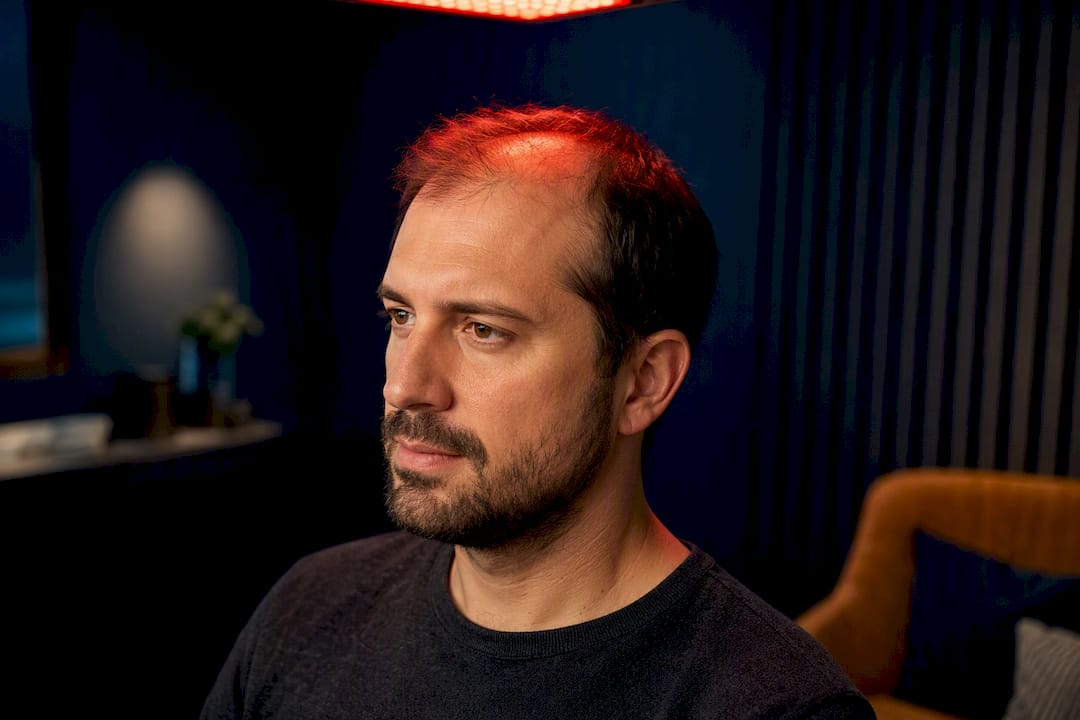
Most stress-related hair loss grows back. The technical name is telogen effluvium, and once the stressor eases, shedding typically slows within three to six months, with fuller density returning over the following year. Start now by lowering whatever pressure you can control, booking a GP check if anything looks unusual, and treating your scalp gently while the cycle resets.
TL;DR:
- Most stress-related hair loss, or telogen effluvium, begins two to three months after a stressful event and typically resolves within three to six months.
- About 95% of acute cases recover naturally once the stressor is removed, but full hair density can take many months due to the hair growth cycle.
- Red flags such as patchy bald spots, scalp pain, or loss continuing past six months indicate the need for medical evaluation and blood tests.
- Combining stress reduction, proper nutrition, and gentle scalp care supports faster recovery, with treatments like minoxidil or low-level laser therapy helping if regrowth stalls.
- Building a routine with consistent therapies and seeking emotional support can help manage the psychological impact while waiting for physical regrowth.
What is stress-related hair loss and which types cause it?
Telogen effluvium is the most common form of stress hair shedding. Hair grows in cycles, and normally only around the typical minority of hairs sit in the resting (telogen) phase at any time. A severe physical or emotional shock can push a much larger share of hairs out of the growth phase all at once. Research on stress and shedding notes that in extreme cases, a large majority of actively growing hair can shift into telogen, which is why the hair loss can feel sudden and alarming rather than gradual.
Two other conditions get confused with it:
- Alopecia areata causes smooth, coin-sized bald patches rather than diffuse thinning, and is autoimmune rather than purely stress-driven.
- Trichotillomania involves compulsive hair pulling, often leaving irregular patches with broken hairs of different lengths.
Harvard researchers have traced a biological mechanism behind stress-driven shedding: chronic stress hormones appear to block a signal called Gas6 from cells at the base of the follicle, which normally tells dormant hair follicle stem cells to wake up and start growing again.
How long does stress hair loss last before regrowth?
Shedding rarely starts immediately. It usually appears two to three months after the triggering event, whether that’s an illness, surgery, bereavement, or a prolonged stretch of work or family pressure. The delay confuses a lot of people, because by the time hair is falling out, the stressful period may already feel like it’s behind them.
Roughly 95% of acute telogen effluvium cases resolve on their own within several months once the underlying stressor is removed, according to research on stress and telogen effluvium. Cleveland Clinic similarly reports that hair typically regrows within a few months without any treatment once the trigger resolves.
Full density can take longer, often many months, because hair only grows around 1 to 1.5cm a month and each follicle needs to complete a fresh growth cycle. To track real progress rather than guessing:
- Do a monthly “pony-tail test”, grabbing the same section of hair and comparing its thickness.
- Take photos from the same angle and lighting every few weeks.
- Look for short, fine “baby hairs” along the hairline and part, a sign new growth has started.
When should you see a doctor about hair loss?
Some patterns need medical attention rather than patience. Watch for:
- Patchy, well-defined bald spots rather than overall thinning.
- Scalp redness, scaling, or pain alongside the shedding.
- Sudden, extreme loss far beyond your normal daily shed.
- Shedding that continues past six months with no sign of slowing.
- Other symptoms such as fatigue, weight change, or irregular periods, which can point to a non-stress cause.
A GP or dermatologist will usually take a history, examine your scalp, and order blood tests covering thyroid function, ferritin (iron stores), and vitamin D, since thyroid disease and iron deficiency are common look-alikes for stress shedding, as clinical overviews of hair disorders point out. A dermatologist may add dermoscopy or, occasionally, a small scalp biopsy if the diagnosis isn’t clear from examination alone. Ruling out these causes matters because treating “stress hair loss” that’s actually a thyroid problem will not fix anything.
What actually helps stress-induced hair loss recover faster?
Recovery is rarely one single fix. It’s a combination of removing the stress load where you can and giving follicles the raw materials and stimulation they need to restart.
- Address the stress itself. Prioritise seven to nine hours of sleep, try short daily breathing or meditation practice, and consider CBT-based counselling if the stressor is ongoing. Moderate, regular exercise (think brisk walking or swimming rather than punishing training) also helps regulate cortisol.
- Check your nutrition. Low ferritin, low vitamin D, and inadequate protein intake are all linked to slower regrowth. Ask your GP for blood tests before adding high-dose supplements, since more isn’t automatically better, and correcting a genuine deficiency matters far more than blanket supplementation.
- Consider topical minoxidil if shedding is prolonged. It’s an over-the-counter option some clinicians recommend as an adjunct, typically needing several months of daily use before results show.
- Ask about PRP or steroid injections only through a dermatologist, and only if recovery genuinely stalls. These are specialist interventions, not first steps.
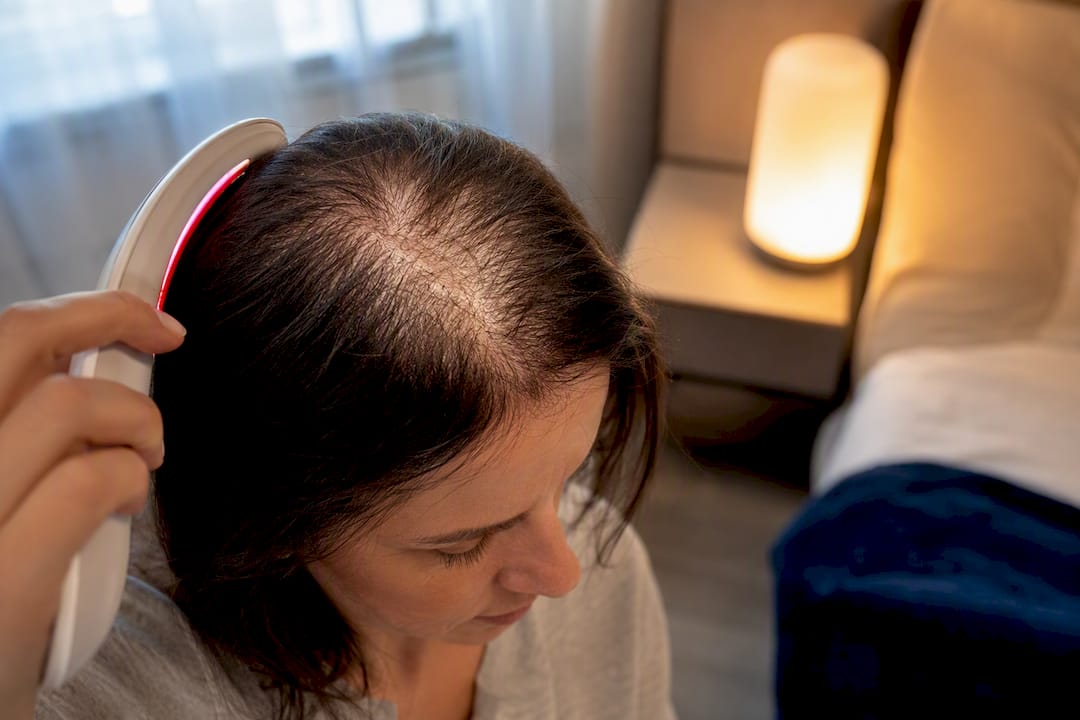
- Add low-level laser therapy (LLLT) for consistent, drug-free follicle stimulation, which the ISHRS notes as a reasonable supportive option alongside nutrition and minoxidil when recovery is slow.
- Practise gentle daily scalp care: mild shampoo, no tight ponytails or braids that pull at the hairline, and less heat styling while follicles are recovering. If you wear protective styles, a low-tension scalp massage routine can reduce added strain during this period.
Pro Tip: Build a simple weekly checklist: three LLLT sessions, one scalp massage, a protein-rich meal plan, and a sleep target. Ticking the same boxes each week does more for follicles than any single “miracle” step.
Combining stress reduction with basic nutritional correction is standard first-line advice from clinics, as Harvard Health notes on supportive care for thinning hair. If work stress is the root cause, structured strategies from a source like MindShift Wellness Center’s guide to managing stress at work can help you tackle the trigger directly rather than only treating the symptom.
Does laser therapy really help with stress-related shedding?
Low-level laser therapy uses red light, usually around the 650nm wavelength, to stimulate cellular activity in the follicle without heat, chemicals, or drugs. Clinical reviews of LLLT for hair growth report small-to-moderate benefits when it’s used consistently, and results typically build over months rather than weeks. That timeline lines up with how telogen effluvium recovers naturally, which is exactly why LLLT works best as a support to the hair cycle rather than a shortcut around it.
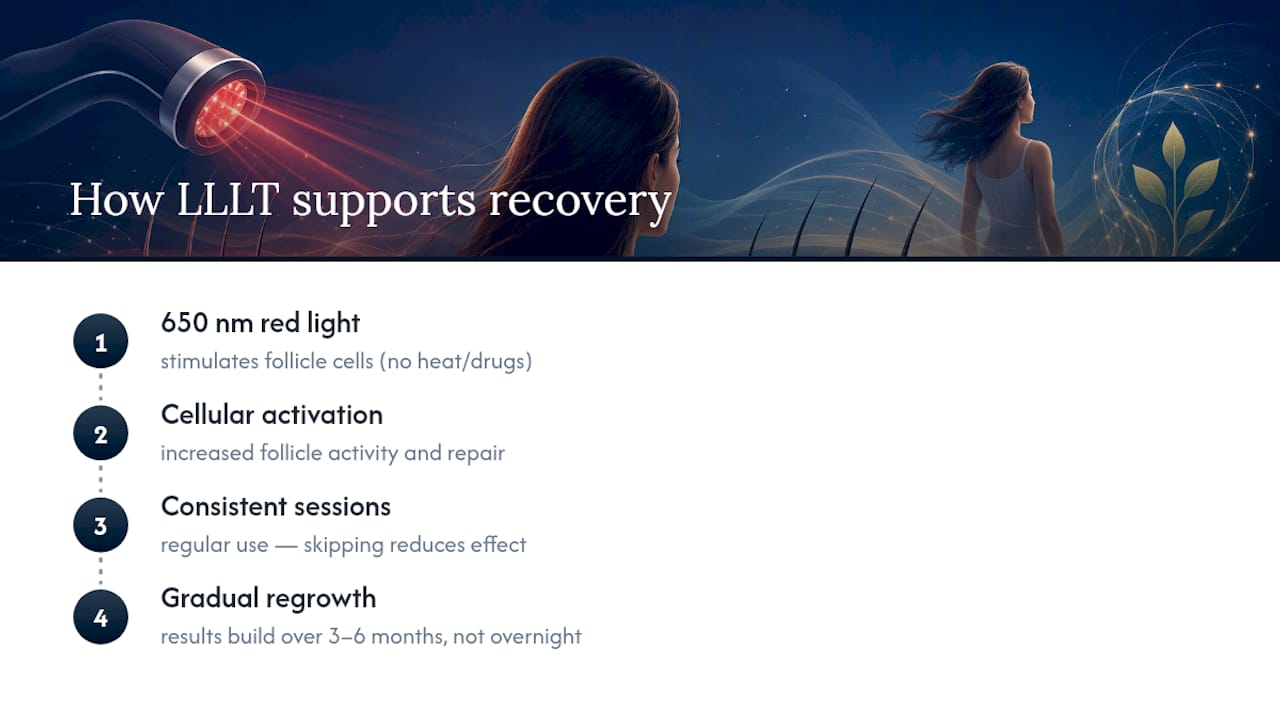
Consistency is the real variable. Skipping sessions or expecting overnight change is the most common reason people give up too early, a pattern worth reading about in more detail in this hair restoration treatment timeline. For readers rebuilding a routine, a clinical-grade device such as Livdor laser cap, paired with a nutrient-focused serum and supplement plan, targets both angles at once: calming the follicle environment and feeding it what it needs to restart growth. Livdor backs its devices with customer support and a warranty, which matters given how many months this process genuinely takes.
Coping emotionally with stress-related hair loss
Watching your hair thin can be its own source of stress, which can quietly extend the very shedding cycle you’re trying to end. It’s a frustrating loop: cortisol contributes to hair loss, and hair loss raises cortisol.
Talking to a therapist or counsellor, even briefly, is not an overreaction. Cognitive behavioural therapy in particular has a track record for helping people manage the anxiety and low mood that often accompany visible hair changes, separate from whatever caused the shedding in the first place. Support groups, whether in person or online, also help simply by confirming that this experience is common and temporary for most people.
Practical steps help too. Talk to a hairstylist about cuts or styles that make thinning less noticeable while you wait for regrowth. Limit the urge to check your hairline in the mirror multiple times a day, since obsessive monitoring rarely reveals anything new and only adds anxiety. If hair loss is affecting your confidence at work or in relationships, say so to people close to you rather than carrying it alone. The emotional side of recovery deserves the same patience and structure as the physical side.
A note on staying patient through the process
Recovery from stress-induced shedding is rarely linear, and that’s normal, not a sign something’s gone wrong. What consistently helps is addressing the stressor itself, feeding the follicle with proper nutrition, and giving the hair cycle enough months to complete its work. See a clinician promptly if you notice patchy loss, scalp changes, or shedding that drags on past six months.
— Adam Bond
Building an at-home recovery routine with Livdor
Livdor gives you a drug-free way to support regrowth from home, built around the same principles clinicians recommend: consistent follicle stimulation plus proper nutrition. The Laser Hair Growth Cap uses 272 medical-grade 650nm lasers to stimulate dormant follicles during exactly the window telogen effluvium recovery needs, typically several months of regular use.

Pair the cap with Livdor’s Hair Growth Serum Range, formulated with biotin, caffeine, and Pro-Vitamin B5 to support the scalp environment between laser sessions. The Rosemary Oil for Hair Growth Range, including the Rosemary Conditioner with Saw Palmetto, offers a natural complement for those wanting a gentler, plant-based addition to daily care. For nutritional gaps that show up on blood tests, Livdor’s Hair Growth Vitamins collection includes biotin gummies designed to support the same recovery window from the inside.
None of these replace a GP visit if red flags appear, and results still depend on consistency and time, not overnight fixes. If you’re ready to build a routine around your recovery, start with the Laser Hair Growth Cap and explore which complementary products suit your current regimen.
Sources
This article draws on clinical guidance from Cleveland Clinic, Harvard HSCI, and the ISHRS. These sources support the general guidance here and don’t replace a personal consultation with your doctor.
This article is general information, not a substitute for advice from a qualified doctor. Consult a qualified healthcare professional about your own circumstances before acting on anything here.
- PMC article on stress and telogen effluvium (PMC7320655)
- Telogen effluvium: Symptoms, causes, treatment (Cleveland Clinic)
- How chronic stress leads to hair loss (Harvard HSCI)
FAQ
Can hair grow back after stress-related hair loss?
Yes. Most cases of telogen effluvium reverse once the triggering stress resolves, with around 95% of acute cases resolving within several months without any treatment.
How long does hair loss last after a stressful event?
Shedding typically starts two to three months after the trigger and lasts three to six months, with fuller density returning over the following year, as full density restoration can take many months.
Why am I losing so much hair all of a sudden?
Sudden, diffuse shedding is often telogen effluvium triggered by illness, surgery, major life stress, or nutritional deficiency, though patchy loss or scalp symptoms warrant a GP check to rule out other causes.
Can scalp tension cause hair loss?
Yes, tight ponytails, braids, and extensions can cause traction alopecia, a separate mechanical form of hair loss, and reducing tension is an easy step alongside any stress management plan.
Does Livdor’s laser cap actually help with stress-related shedding?
Livdor’s laser cap uses 650nm LLLT to stimulate dormant follicles, which clinical reviews suggest supports regrowth when used consistently over several months, making it a reasonable complement to nutrition and stress management rather than a standalone fix.


Leave a comment
This site is protected by hCaptcha and the hCaptcha Privacy Policy and Terms of Service apply.