
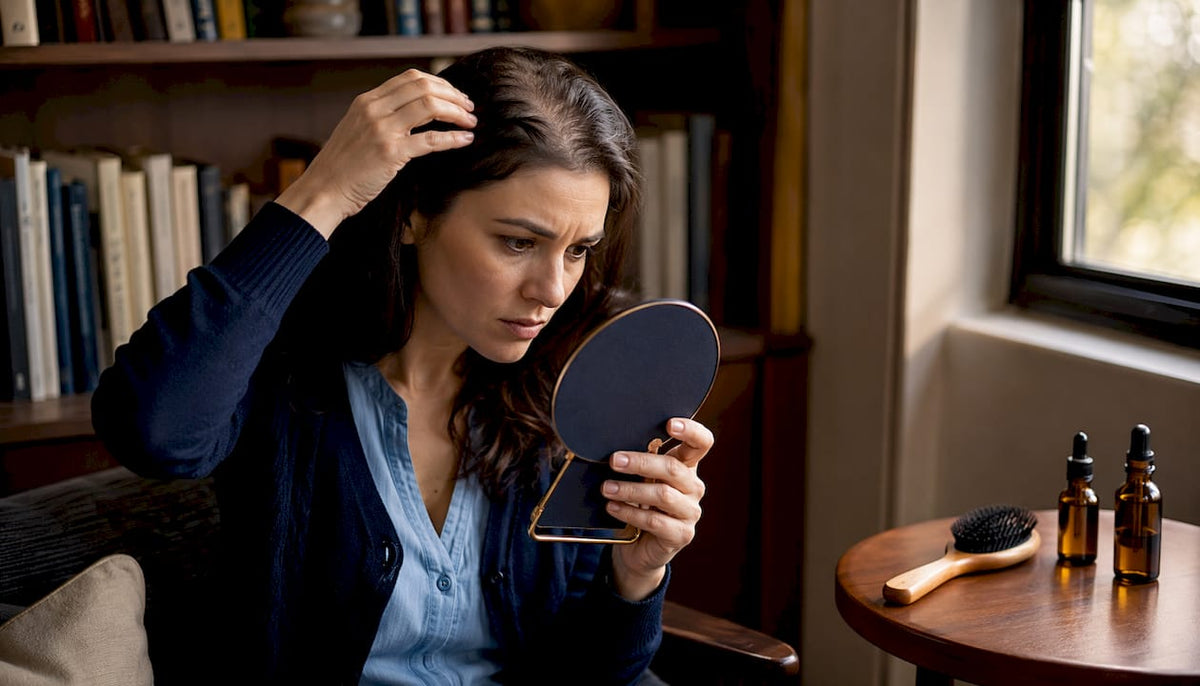
Female pattern hair loss (FPHL), also known as androgenetic alopecia, is the most common cause of hair loss in women. It causes gradual, diffuse thinning across the top of the scalp rather than outright baldness, and while it is progressive, early and consistent treatment genuinely makes a difference to outcomes.
Here is what to do first if you suspect FPHL:
- Self-check: Look for a widening central parting, reduced volume at the crown, or a noticeably thinner ponytail.
- Track it: Take dated photographs in consistent lighting every four to six weeks. This is the most reliable way to spot change over time.
- Book a GP appointment if thinning is noticeable, accelerating, or causing you distress. Early assessment rules out treatable underlying causes.
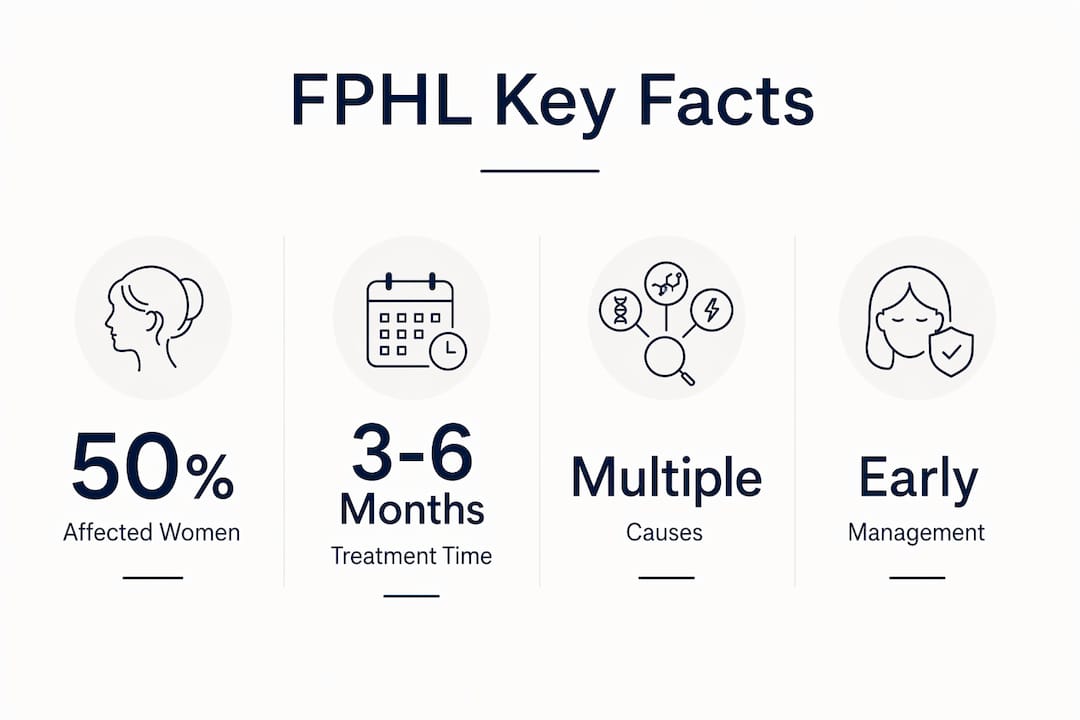
Pro Tip: Treatment for FPHL takes time. Most women need at least three to six months of consistent use before seeing early signs of benefit, and six to twelve months for clearer results. Starting early and sticking with it are the single most important things you can do.
What does female pattern hair loss look like?
FPHL presents as diffuse thinning on the top and crown of the scalp, with a characteristic widening of the central parting. Dermatologists sometimes call this the “Christmas tree pattern” because the widening is broadest at the front and tapers towards the back. Crucially, the frontal hairline is usually preserved, which is one of the clearest visual differences from male pattern hair loss. Progression to complete baldness is uncommon in women.
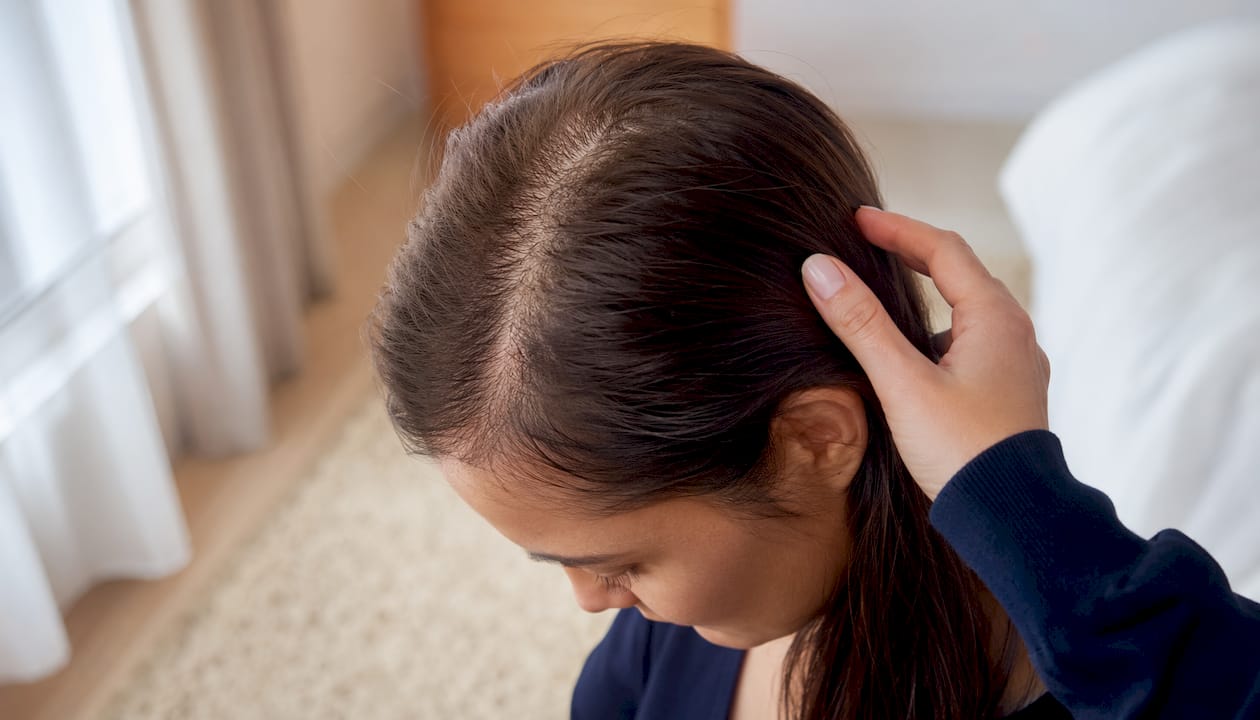
At the follicle level, FPHL involves a process called miniaturisation. Hair follicles gradually shrink, producing finer, shorter, and less pigmented strands. The active growth phase (anagen) shortens with each cycle, so hairs spend less time growing and more time resting or shedding. Over years, this produces the visible reduction in density and volume that women notice.
How FPHL compares to male pattern hair loss:
| Feature | Female pattern hair loss | Male pattern hair loss |
|---|---|---|
| Primary pattern | Diffuse thinning, crown and top | Receding hairline, vertex baldness |
| Frontal hairline | Usually preserved | Often recedes early |
| Complete baldness | Rare | Common in advanced stages |
| Onset | Often post-menopause | Can begin in young adulthood |
| Severity staging | Sinclair scale (1–5) | Norwood-Hamilton scale |
Severity in women is commonly assessed using the Sinclair scale, which grades FPHL from Stage 1 (no visible thinning) through to Stage 5 (extensive thinning). Your GP or dermatologist may use this to document progression and guide treatment decisions. You can also assess your hair loss severity at home using a structured self-assessment before your appointment.
What causes female pattern hair loss?
FPHL is multifactorial. Genetics, hormones, age, and environmental factors all play a role, and no single cause explains every case.
Genetics are the strongest contributor. FPHL is polygenic, meaning multiple genes are involved, and you can inherit the predisposition from either parent. Not every woman with a family history will develop significant thinning, but the risk is meaningfully higher.
The role of androgens is more nuanced than most people expect. Many women with FPHL have entirely normal serum androgen levels; the condition is not simply a sign of hormonal imbalance. Clinicians now distinguish between androgen-dependent FPHL (where follicles are hypersensitive to androgens even at normal levels) and androgen-independent FPHL. This distinction matters when your GP considers whether blood tests for androgens are warranted.
Key risk factors your GP will consider:
- Age and menopause: Oestrogen levels fall significantly around menopause, and this hormonal shift is associated with accelerated thinning. FPHL becomes more common after the age of 50.
- Thyroid disease: Both hypothyroidism and hyperthyroidism can cause diffuse hair shedding and are routinely checked.
- Iron deficiency: Low ferritin is one of the most common and correctable contributors to hair thinning in women.
- Medications: Beta-blockers, anticoagulants, retinoids, and some hormonal contraceptives can trigger or worsen shedding.
- Polycystic ovary syndrome (PCOS): Elevated androgens in PCOS can cause FPHL at younger ages.
- Smoking, chronic stress, and oxidative stress are associated with accelerated follicle ageing, though the evidence is less direct.
Prevalence note: A 2026 narrative review in the American Journal of Clinical Dermatology found androgenetic alopecia affects nearly 50% of women during their lifetime, making it one of the most prevalent dermatological conditions in women globally.
What are the symptoms and how does FPHL progress?
The earliest signs are often subtle and easy to dismiss. Women typically notice one or more of the following before thinning becomes visually obvious:
- Increased shedding: More hairs than usual on the pillow, in the shower, or on a brush. Normal daily loss is roughly 50–100 hairs; noticeably more than this, consistently, warrants attention.
- Widening central parting: The part looks broader, especially at the front of the scalp.
- Reduced ponytail thickness: The circumference of a tied ponytail shrinks over months or years.
- Change in hair texture: Strands feel finer, limper, or less resilient than before.
- Visible scalp at the crown: Under bright light or in photographs, the scalp becomes more visible through the hair.
FPHL does not progress in a straight line. The condition follows an episodic pattern, with periods of accelerated shedding lasting roughly 3–6 months followed by relative stability that can last 6–18 months. This variability is one reason women sometimes believe a treatment has stopped working, when in fact they are in a natural shedding phase.
Treatment response follows its own timeline. Topical minoxidil typically produces early signs of benefit after several months of use, with clearer results developing with continued treatment. Anti-androgens such as spironolactone generally take a similar or slightly longer period. Treatment should be continued for at least six months before assessing benefit, and stopping treatment commonly leads to relapse.
Pro Tip: Take a standardised photograph of your parting under the same lighting conditions every four weeks. A simple hair-shedding scale (counting hairs on a pillowcase or in a shower drain over a set period) adds a second data point. Both together give your GP or dermatologist far more useful information than memory alone.
How is FPHL diagnosed in the UK?
Diagnosis usually begins in primary care. Your GP does not need specialist equipment to make a working diagnosis of FPHL, but they will want to rule out other causes before confirming it.
What your GP will typically do:
- Take a detailed medical history: onset, rate of progression, family history, medications, recent illness, and menstrual or menopausal status.
- Examine the pattern of hair loss and the scalp visually.
- Perform a hair-pull test: gently pulling a small bunch of hairs to assess how many come away (more than six from a pull of around 60 hairs suggests active shedding).
- Order basic blood tests: thyroid function (TSH), ferritin and iron studies, full blood count, and possibly serum androgens if there are clinical signs of hyperandrogenism (acne, irregular periods, hirsutism).
When a dermatology referral is likely:
- Diagnosis is uncertain after initial assessment.
- Trichoscopy (a dermoscopy technique that visualises follicle miniaturisation and hair shaft diameter variation) is needed to confirm FPHL versus chronic telogen effluvium.
- Scalp biopsy is considered when scarring alopecia cannot be excluded.
- The patient has not responded to first-line treatment after 6–12 months.
Red flags that warrant prompt evaluation:
- Rapid or patchy hair loss developing over weeks rather than months.
- Scalp inflammation, pain, or scarring.
- Signs of systemic illness (significant weight change, fatigue, new symptoms).
- Hair loss in a young woman with signs of androgen excess.
What to bring to your GP appointment:
- Dated photographs showing the progression of thinning.
- A written timeline of when you first noticed changes.
- A full list of medications and supplements, including hormonal contraception.
- Family history of hair loss on both sides.
- Any concerns about fertility or pregnancy, as these affect treatment options.
Could it be something else? Key differential diagnoses
FPHL is the most common cause of diffuse hair thinning in women, but it is not the only one. Getting the diagnosis right matters because the treatments differ significantly.
- Chronic telogen effluvium (CTE): Increased shedding without follicle miniaturisation. CTE is often triggered by nutritional deficiency, thyroid disease, or prolonged stress. It can coexist with FPHL, which is a common diagnostic pitfall. Trichoscopy and blood tests help separate the two. A frequent clinical error is treating CTE as FPHL and investing in long-term therapies that do not address the underlying cause.
- Alopecia areata: Patchy, often rapid-onset hair loss caused by an autoimmune process. The patches are typically well-defined and may affect eyebrows or lashes. Urgent dermatology input is appropriate when alopecia areata is suspected.
- Traction alopecia: Hair loss at the hairline and temples caused by repeated tension from tight hairstyles (braids, extensions, high ponytails). The distribution is peripheral rather than central, and early cases are reversible if the cause is removed.
- Scarring alopecias (e.g. lichen planopilaris, frontal fibrosing alopecia): Permanent follicle destruction with scalp inflammation or scarring. Biopsy is often required to confirm the diagnosis, and early treatment is important to limit irreversible loss.
What are the evidence-based medical treatments for FPHL?
Medical treatment aims to slow progression and, in some women, stimulate partial regrowth. No treatment fully reverses established FPHL, but starting early and staying consistent genuinely changes the trajectory.
Key treatments, timelines, and safety notes:
| Treatment | Typical time to response | Evidence strength | Key safety notes |
|---|---|---|---|
| Topical minoxidil (2%/5%) | 3–6 months early signs; 6–12 months fuller benefit | Strong (first-line, approved) | Scalp irritation, initial shedding; avoid in pregnancy |
| Low-dose oral minoxidil | 3–6 months | Emerging; clinician-led | Blood pressure monitoring; oedema; not in pregnancy |
| Spironolactone | 6–12 months | Good (off-label in UK) | Contraindicated in pregnancy; potassium monitoring |
| Finasteride/dutasteride | 6–12 months | Moderate (off-label in women) | Contraindicated in pregnancy; teratogenic |
| Hair transplantation | Results visible at 6–12 months post-procedure | Good for suitable candidates | Requires stable donor area; not suitable for diffuse loss |
| PRP injections | Variable; 3–6 months per course | Emerging; limited RCT data | Generally well tolerated; costly; not NHS-funded |
Topical minoxidil is the only treatment with formal approval for female androgenetic alopecia in the UK. It helps hair grow in roughly 1 in 4–5 women and more commonly slows progression. The 2% solution and 5% foam are both available over the counter. An initial increase in shedding during the first few weeks is normal and does not mean the treatment is failing.
Low-dose oral minoxidil is an emerging option prescribed off-label by dermatologists. It is not a first-line NHS treatment but is increasingly used in secondary care, often combined with spironolactone for women with an androgenic component.
Anti-androgens (spironolactone, finasteride, dutasteride) are used off-label in the UK. They are contraindicated in women who are pregnant or planning pregnancy and require monitoring. Spironolactone is the most commonly used anti-androgen for FPHL in UK dermatology practice.
Hair transplantation is an option for women with well-defined areas of thinning and a stable donor area. It is not appropriate for diffuse scalp-wide loss and carries significant cost (typically several thousand pounds privately). It is not funded by the NHS for FPHL.
PRP injections involve drawing the patient’s own blood, concentrating the platelets, and re-injecting into the scalp. The evidence base is growing but remains limited by small trial sizes. PRP is available privately and is sometimes used alongside other treatments.
This article provides general information, not medical advice. Discuss treatment options, safety, and suitability with your GP or a qualified dermatologist for your own situation.
Cosmetic and supportive options while you wait for treatment to work
Medical treatment takes months to show results. Cosmetic and supportive strategies help you manage appearance and wellbeing in the meantime, and they complement rather than replace clinical care.
- Fibre powders and concealing sprays (such as keratin fibre products) bind electrostatically to existing hair and create the appearance of greater density. They wash out easily and are safe for daily use.
- Scalp-thickening styling products add temporary volume and can make thinning less visible.
- Wigs and hairpieces range from synthetic everyday options to high-quality human hair pieces. Many women find them genuinely liberating rather than a last resort.
- Hairstyling adjustments: Avoid tight styles that pull on the hairline. Use wide-tooth combs, blot rather than rub hair dry, and minimise heat styling.
- Psychological support: The psychosocial impact of FPHL is substantial, with reduced quality of life, effects on self-esteem, and in some cases depression. Talking to your GP about a referral for counselling, or connecting with a support group such as Alopecia UK, is a legitimate and important part of management.
Pro Tip: Start a cosmetic strategy on day one of medical treatment, not after it works. Using a concealing spray or adjusting your parting while minoxidil takes effect means you do not spend six months feeling self-conscious. Confidence during treatment supports consistency.
Diet, supplements, and over-the-counter topicals: what the evidence says
Nutrition matters for hair health, but it is rarely the sole cause of FPHL. The most useful approach is to check for deficiencies rather than supplement blindly.
- Ferritin (stored iron): Low ferritin is one of the most common and correctable contributors to hair shedding in women. A GP blood test will confirm whether your levels are adequate. Supplementing without testing is not recommended, as excess iron carries its own risks.
- Vitamin D: Deficiency is common in the UK and associated with hair shedding. A simple blood test confirms status before supplementation.
- Protein: Hair is almost entirely protein. Chronically low protein intake (common in very restrictive diets) accelerates shedding.
- Biotin: Widely marketed for hair growth, but the evidence for benefit is limited unless you have a confirmed deficiency. Biotin supplementation can also interfere with certain thyroid and cardiac blood tests, so inform your GP if you are taking it.
Over-the-counter topical supports have attracted genuine research interest. Caffeine-based shampoos have been studied for their ability to penetrate the follicle and counteract the effects of DHT (dihydrotestosterone) at the scalp level. Saw palmetto and rosemary formulations show supportive benefit in clinical reviews, with rosemary oil in particular demonstrating comparable effects to low-concentration minoxidil in some small studies. These are not replacements for medical therapy, but they are reasonable adjuncts with good safety profiles.
Safety note: Supplements can interact with medications and affect blood test results. Discuss long-term use of any supplement with your GP or pharmacist, particularly if you are also using prescription treatments for FPHL.
What does the evidence say about LLLT for hair loss?
Low-level laser therapy (LLLT) is one of the most thoroughly studied non-pharmaceutical options for androgenetic alopecia in women. It works by delivering photons of light energy to the scalp at a specific wavelength, typically around 650 nm, which is absorbed by the mitochondria in hair follicle cells. This stimulates cellular metabolism, extends the anagen (growth) phase, and reduces follicle miniaturisation.
A 2026 narrative review in the American Journal of Clinical Dermatology summarised that LLLT devices, when used at appropriate parameters including the ~650 nm wavelength and consistent treatment schedules, produce modest but meaningful improvements in hair density and thickness as adjunctive therapy. The review also reinforced that multimodal care combining LLLT, topical therapies, and targeted nutritional support produces better sustained outcomes than any single intervention.
What the evidence supports for LLLT:
- Adjunctive benefit when combined with topical minoxidil or anti-androgens.
- Improvements in hair shaft diameter and density in multiple controlled studies.
- A strong safety profile: no significant adverse effects reported at therapeutic parameters.
- Device quality matters: wavelength, power output, coverage area, and treatment schedule all affect outcomes.
Several LLLT devices have received regulatory clearance in the US (FDA) and Europe (CE marking) for androgenetic alopecia. At-home laser caps, such as those in Livdor’s laser hair growth cap range, use 272 medical-grade lasers at the clinically studied 650 nm wavelength, making them a credible home-use option within a structured regimen.
Pro Tip: For the best sustained results, combine a high-quality LLLT cap with a topical hair growth serum containing biotin, caffeine, and Pro-Vitamin B5, alongside daily oral vitamins and consistent minoxidil use if prescribed. Consistency across all components, rather than intensity with one, is what the clinical evidence supports.
How to prepare for your GP appointment in the UK
The NHS pathway for FPHL typically begins with your GP. Coming prepared makes the appointment more productive and increases the chance of a useful outcome.
What to bring:
- Dated photographs showing the progression of thinning (at least three to four months apart if possible).
- A written timeline: when you first noticed changes, how quickly it has progressed, and any triggers you can identify.
- A full medication and supplement list, including hormonal contraception and any over-the-counter products.
- Family history of hair loss on both sides.
- Any associated symptoms: fatigue, weight change, irregular periods, acne, or hirsutism.
What your GP will typically do:
- Examine the scalp and hair pattern.
- Order blood tests: TSH (thyroid), ferritin, full blood count, and possibly serum androgens.
- Discuss first-line treatment options, usually topical minoxidil.
- Refer to dermatology if the diagnosis is uncertain, if there are signs of scarring alopecia, or if first-line treatment has not worked after 6–12 months.
NHS access and private options:
Topical minoxidil is available over the counter and is not prescription-only in the UK, making it accessible without a GP visit. Anti-androgens (spironolactone, finasteride) require a prescription and are typically initiated by a dermatologist. NHS dermatology waiting times vary considerably by region; private dermatology consultations typically cost £150–£300 for an initial appointment. Hair transplants and PRP are not funded by the NHS for FPHL and cost several thousand pounds privately. Private LLLT devices represent a one-off cost and can be used at home without clinical supervision, though discussing them with your clinician before combining with prescription treatments is sensible.
Key takeaways
Female pattern hair loss is common, progressive, and manageable with early, consistent, multimodal treatment combining medical therapy, LLLT, and targeted nutritional support.
| Point | Details |
|---|---|
| FPHL affects nearly half of women | A 2026 narrative review found androgenetic alopecia affects nearly 50% of women during their lifetime. |
| Treatment takes time | Allow at least 3–6 months for early signs of benefit and 6–12 months for clearer results before assessing any treatment. |
| Stopping treatment causes relapse | Minoxidil and anti-androgens must be continued to maintain benefit; stopping commonly reverses gains. |
| Multimodal care works best | Combining LLLT, topical serums, oral vitamins, and medical therapy produces better sustained outcomes than any single approach. |
| Livdor’s LLLT cap | Livdor’s 272-laser cap at 650 nm is a clinically informed home-use option designed to integrate with a full supportive regimen. |
The case for starting sooner rather than later
Hair loss in women is still under-discussed and, frankly, under-treated. The most common mistake I see is women waiting years before seeking help, partly because FPHL is gradual and partly because there is a persistent cultural idea that hair loss is something to simply accept. The evidence does not support that passivity.
What the research actually shows is that FPHL responds best to early, sustained, multimodal management. Topical minoxidil slows progression and helps some women regrow hair, but it works better when the follicles are still viable. LLLT at 650 nm adds a layer of cellular stimulation that complements topical therapy without any pharmaceutical load. Targeted nutritional support, including biotin, caffeine, and saw palmetto formulations, addresses the scalp environment that follicles need to function. None of these is a cure. But together, started early and used consistently, they give your follicles the best possible chance.
The psychosocial dimension matters too. Hair loss affects confidence, relationships, and daily wellbeing in ways that are entirely legitimate and deserve clinical attention. Seeking help is not vanity. It is sensible, evidence-based self-care.
Livdor’s approach to at-home hair loss management
If you are looking for a premium, drug-free way to support your hair alongside any medical treatment your GP recommends, Livdor’s range is built specifically for that purpose.

The Livdor Laser Hair Growth Cap uses 272 medical-grade lasers at the clinically studied 650 nm wavelength to deliver LLLT directly to the scalp. It is designed for consistent home use, with a treatment schedule that fits around daily life. Paired with Livdor’s Hair Growth Serum (formulated with biotin, caffeine, and Pro-Vitamin B5), a caffeine or saw palmetto and rosemary shampoo, and biotin gummies for internal support, it forms a complete multimodal regimen that addresses hair health from multiple angles without harsh chemicals or pharmaceuticals.
Visible results typically begin at around three months with consistent use. The full range, including hair growth vitamins and supportive shampoos, is available at Livdor.com. Speak to your GP or dermatologist before combining any at-home device or supplement with prescription treatments, and always follow guidance if you are pregnant or planning a pregnancy.
Useful sources and further reading
The following sources underpin this article and are recommended for further reading. All are peer-reviewed, clinically authoritative, or produced by recognised medical institutions.
| Source | Relevance | Year |
|---|---|---|
| American Journal of Clinical Dermatology — Narrative Review | Comprehensive review of FPHL pathophysiology, prevalence, and treatment including LLLT and multimodal care | 2026 |
| MedlinePlus — Female Pattern Baldness | Clear patient-facing clinical overview; minoxidil evidence and treatment timelines | Current |
| DermNet NZ — Female Pattern Hair Loss | Clinical detail on diagnosis, trichoscopy, differential diagnosis, and episodic progression | Current |
| UpToDate — FPHL Pathogenesis and Diagnosis | Evidence-based clinical reference on androgen-independent FPHL and diagnostic workup | Current |
| Cleveland Clinic — Female Pattern Baldness | Patient-facing overview including Sinclair staging and treatment expectations | Current |
| Harvard Health — Thinning Hair in Women | Accessible overview of causes, medical and cosmetic options from Harvard Medical School | Current |
For UK-specific clinical guidance, the British Association of Dermatologists (BAD) and NICE Clinical Knowledge Summaries (CKS) provide regularly updated evidence-based recommendations for primary care and dermatology. Livdor’s how it works page explains the clinical rationale for LLLT and combination therapy in accessible detail.
FAQ
What is female pattern hair loss and how common is it?
Female pattern hair loss (FPHL) is the most common cause of hair thinning in women, characterised by diffuse thinning at the crown and widening central parting. A 2026 narrative review found it affects nearly 50% of women during their lifetime.
How long does minoxidil take to work for FPHL?
Most women need at least 3–6 months of consistent use to see early signs of benefit, and 6–12 months for clearer results. Stopping treatment typically leads to relapse.
Can FPHL be caused by hormonal imbalance?
Not necessarily. Many women with FPHL have entirely normal serum androgen levels; the condition often reflects follicle sensitivity to androgens rather than excess circulating hormones.
Is LLLT a proven treatment for female hair loss?
LLLT at around 650 nm has evidence supporting modest improvements in hair density as an adjunctive therapy, particularly when combined with topical minoxidil or other treatments. Livdor’s laser cap uses 272 medical-grade lasers at this wavelength for consistent home use.
When should I see my GP about hair thinning?
See your GP if thinning is noticeable, progressing, or causing distress, particularly if it is rapid, patchy, or accompanied by scalp inflammation or systemic symptoms. Early assessment allows treatable causes to be identified and first-line treatment to begin sooner.



Leave a comment
This site is protected by hCaptcha and the hCaptcha Privacy Policy and Terms of Service apply.