

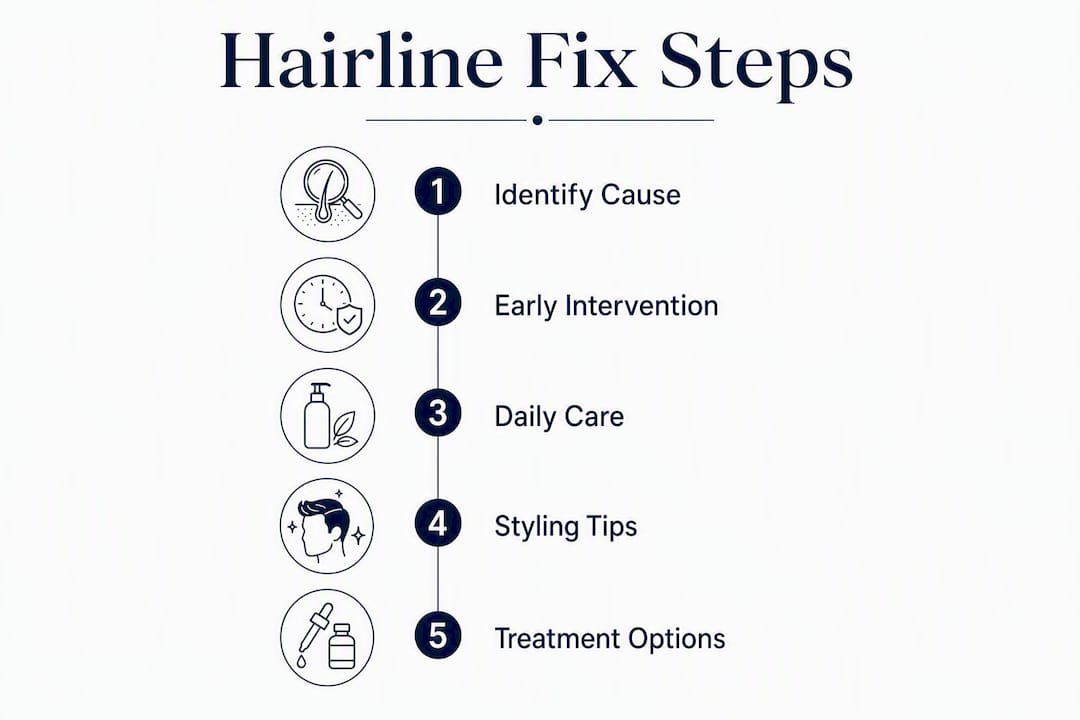
Yes, many messed up hairlines can be improved without surgery. The key is identifying the cause quickly, stopping whatever is making things worse, and giving your follicles the right support before permanent damage sets in.
If your hairline looks uneven, patchy, or has shifted noticeably, here is what to do right now:
- Stop tension immediately. Tight ponytails, braids, and hats are among the most common and reversible causes of a damaged hairline. Remove the source of pulling today.
- Switch to a gentle, supportive wash routine. A caffeine and biotin shampoo cleanses without stripping the scalp and delivers stimulating actives directly to the follicle.
- Take photos now. Date them. You will need a baseline to track whether things are improving or progressing over the next three months.
- See a clinician promptly if you notice sudden patchy shedding, scalp redness or pain, or rapid progression. These are red flags requiring medical review rather than home treatment.
The single most important principle: early intervention preserves follicles that are still active. Once follicles scar, no topical or laser treatment can reliably restore them. Act now, not after another six months of hoping it settles.
What actually causes a hairline to look messed up?
A damaged or irregular hairline rarely has just one explanation. Understanding which cause applies to you determines whether you need a cosmetic fix, a lifestyle change, or a clinical treatment.
- Barber error or bad haircut. An overly aggressive line, uneven shaping, or a clipper set too short can make a natural hairline look harsh or asymmetrical. This is cosmetic and usually resolves as hair grows back.
- Traction alopecia. Repeated mechanical pulling from tight braids, weaves, ponytails, or even heavy headgear puts sustained stress on follicles at the temples and nape. The pattern of loss follows the hairline closely, often with short broken hairs rather than smooth recession.
- Androgenetic (genetic) thinning. Male and female pattern hair loss causes gradual miniaturisation of follicles, typically at the temples and crown. This progresses slowly and responds best to early, consistent treatment.
- Telogen effluvium. Stress, illness, nutritional deficiency, or hormonal shifts (including post-pregnancy) can push a large proportion of hairs into the resting phase simultaneously, causing diffuse shedding across the hairline and scalp.
- Scarring or post-surgical changes. Scarring alopecia, previous procedures, or skin conditions can permanently alter the hairline. These cases usually require clinical assessment.
How the cause changes your next step matters enormously. A bad haircut needs a better barber. Traction alopecia needs the tension removed before anything else. Genetic thinning needs follicle stimulation started early. Telogen effluvium often resolves once the trigger is addressed, though it can take months.
Pro Tip: Traction-related loss tends to appear in a band along the frontal hairline and temples, often with small broken hairs or follicular papules (tiny bumps where the hair used to emerge). If that matches what you are seeing, removing tight styles is your single most effective first step, and it costs nothing.

How do you know if your hairline is actually receding?
The four-finger rule, where you place four fingers above the brow and judge whether your hairline sits above them, is a popular self-check. The problem is that it is entirely subjective and varies with hand size, brow position, and what counts as “normal” for your face shape. Photo comparison over 6–12 months is a far more reliable method.
Home checks you can do today:
- Photo comparison. Pull up a photo from 6–12 months ago taken in similar lighting. Compare the temple corners and frontal hairline. Gradual recession is easier to spot this way than by looking in the mirror daily.
- Hair pull test. Gently grasp a small section of hair near the hairline (about 40–60 strands) and pull with light, even pressure. Losing more than a few hairs consistently may indicate active shedding, though this test is not definitive on its own.
- Pattern of loss. Temples receding symmetrically suggests androgenetic thinning. A band of loss following the hairline suggests traction. Patchy, irregular loss may indicate alopecia areata or scarring.
- Scalp condition. Redness, flaking, tenderness, or visible scarring at the hairline are signs that something beyond simple thinning is happening.
- Sudden shedding. If you have noticed a sharp increase in hair on your pillow, in the shower drain, or on your brush over a few weeks, that is worth investigating sooner rather than later.
When to book a trichologist or dermatologist:
- Rapid or patchy shedding that has not slowed after 8–12 weeks
- Scalp symptoms (pain, itch, visible inflammation or scarring)
- No improvement after 3–6 months of consistent home care
- A strong family history of early hair loss and you are already noticing changes
A qualified UK trichologist registered with the Institute of Trichologists, or a dermatologist via your GP, can perform a trichoscopy and blood panel to identify the cause definitively. Check the GMC register when seeking a medically qualified specialist.
Quick fixes for a bad haircut or uneven hairline
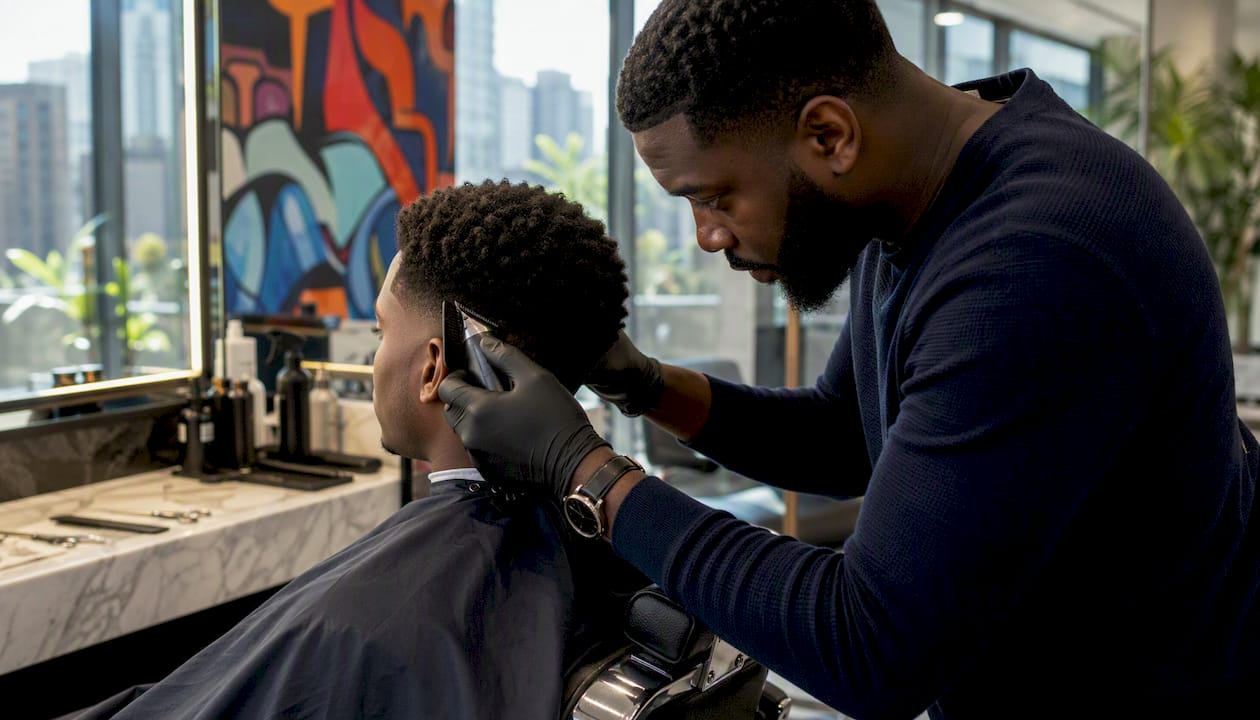
If the problem is a barber error or a hairline that simply looks harsh and uneven, the fastest solution is reducing visual contrast, not trying to recreate hair that is not there yet.
- Ask your barber for a soft fade or textured line. A short textured cut or a gradual fade blends the hairline into the surrounding skin rather than drawing a sharp border that emphasises irregularity.
- Use a scalp camouflage product. Root touch-up powders and scalp shading sprays (available from most UK pharmacies and beauty retailers) can fill in sparse areas temporarily. They wash out and are safe for daily use.
- Consider a clipper buzz. If the line is very uneven, a uniform short cut across the whole head removes the contrast entirely and gives the hairline a clean reset as it grows back.
- Avoid over-plucking or aggressive DIY shaping. Removing hair from the hairline to “even it up” risks damaging follicles and making the problem permanent.
Pro Tip: The fastest visual trick is reducing contrast, not adding hair. A soft fade that blends skin to stubble to hair reads as a natural hairline even when the actual line is imperfect. Your barber can achieve this in a single appointment.
Daily styling and hair-care habits that protect your hairline
Changing what you do every day has a bigger cumulative effect on hairline health than any single product. The goal is to reduce mechanical stress, support the scalp environment, and feed the follicle what it needs.
Styling changes:
- Switch to loose, low-tension styles. Scrunchies rather than tight elastics, loose buns rather than slicked-back ponytails.
- Give your scalp regular breaks from hats, helmets, and headbands, especially if you wear them for hours at a time.
- Avoid sleeping with tight braids or hair ties that pull on the hairline overnight.
Product routine:
A gentle, supportive wash routine makes a real difference over weeks and months. Livdor’s biotin shampoo delivers biotin and caffeine directly to the scalp with each wash, supporting follicle health without harsh sulphates. Pair it with a Rosemary and Saw Palmetto conditioner, which nourishes the scalp and helps maintain a healthy environment for regrowth. A biotin conditioner adds an extra layer of strengthening care for fragile hairline hairs.
For topical treatment between washes, a hair growth serum containing biotin, caffeine, and Pro-Vitamin B5 (panthenol) can be applied directly to the hairline. Caffeine has been studied for its ability to stimulate hair follicles; biotin supports keratin production; and panthenol improves moisture retention and reduces breakage. Patch test any new topical on a small area of skin 24 hours before first use.
Nutrition and lifestyle:
Hair is made of protein, and the follicle is one of the most metabolically active structures in the body. Adequate protein, iron, and vitamin D are particularly relevant for hair health. If your diet is restricted or you have had a recent illness, a blood panel checking ferritin, vitamin D, and thyroid function is worth requesting from your GP. Livdor’s biotin gummies, made in the UK, offer a convenient way to supplement biotin and supporting nutrients as part of a broader plan.
What are the real treatment options for a damaged hairline?
The right treatment depends on the cause and how far things have progressed. Here is a practical comparison of the main non-surgical and surgical pathways.
| Approach | How it works | Typical timeline | Invasiveness | Best suited for |
|---|---|---|---|---|
| Drug-free multimodal care (LLLT + serum + supplements) | Stimulates follicles via light energy, topical actives, and internal nutrients | Visible results often from 3 months; continued improvement to 6–12 months | Non-invasive, at-home | Early to moderate thinning; traction recovery; anyone avoiding medication |
| Topical medicated treatment (minoxidil) | Prolongs the growth phase and widens blood vessels to the follicle | Hair count increases after several months of consistent use | Low; topical application | Androgenetic thinning; suitable for men and women |
| Oral DHT blockers (finasteride) | Reduces DHT, the hormone that miniaturises follicles | 6–12 months for measurable effect | Low invasiveness but systemic; prescription only | Male-pattern hair loss; not licensed for women of childbearing age |
| Surgical restoration (hair transplant) | Relocates donor follicles to thinning areas | Immediate cosmetic change; final result at 12 months | Highly invasive; significant cost | Stable, advanced loss; areas where follicles are permanently gone |
On LLLT specifically: Low-level laser therapy works by delivering photons of light at 650nm to the scalp, which stimulates cellular energy production (ATP) in follicle cells. This supports the transition from the resting phase back into active growth. It does not create new follicles, but it can meaningfully improve the density and thickness of existing ones when they are still viable. The follicle stimulation benefits of LLLT are well-documented, and consistent, moderate sessions outperform sporadic use.
Realistic expectations and side effects by category:
- Drug-free multimodal care: No known systemic side effects. Requires consistency over months. Results vary with cause and follicle state.
- Topical minoxidil: May cause initial shedding in the first 2–4 weeks (a normal response). Scalp irritation in some users. Requires ongoing use; stopping reverses gains.
- Oral DHT blockers: Prescription required in the UK. Potential sexual side effects in a minority of men. Discuss thoroughly with a GP or dermatologist before starting.
- Hair transplant: Surgical risks, recovery time, and significant cost (typically £3,000–£15,000 in the UK depending on graft count). Minoxidil and finasteride can slow loss but do not reliably fill bare temple areas without transplantation.
Always consult a UK-registered clinician before starting any prescription medication for hair loss.
How long does it actually take to see results?
Patience is genuinely the hardest part of hairline recovery. Here is an honest breakdown of what to expect and when.
- Same day to 2 weeks: Cosmetic fixes (haircut, scalp camouflage, shading products) deliver immediate visual improvement.
- 4–12 weeks: Traction-related shedding often slows once the pulling stops. You may notice less breakage and fewer hairs lost in the shower, but visible regrowth takes longer.
- 3 months: The first meaningful checkpoint for LLLT and topical treatments. Visible results often begin around three months with consistent use of a medical-grade laser cap.
- 6 months: A more reliable indicator of whether a treatment is working. Minoxidil studies show measurable hair count increases after several months of consistent application.
- 12 months: The point at which most non-surgical treatments reach their peak effect. If there has been no meaningful change after 12 months of consistent, multimodal care, a clinical review is warranted.
Progress checkpoints to track:
- Week 4: Has shedding slowed? Are you sticking to the routine consistently?
- Month 3: Compare photos to your baseline. Look for reduced shedding, early regrowth, or improved density rather than a dramatic change.
- Month 6: Assess whether the hairline has stabilised. Note any areas of visible regrowth.
- Month 12: Full review. Decide whether to continue, adjust, or seek clinical input.
How to stop your hairline getting worse
Prevention is the most cost-effective strategy available, particularly if you have a genetic predisposition or have already experienced one episode of traction-related loss.
- Eliminate the trigger. If tight styles caused the damage, they cannot be part of the recovery. Low-tension alternatives are non-negotiable.
- Choose sulphate-free, gentle products. Harsh detergents strip the scalp’s natural oils and can worsen inflammation around follicles.
- Limit heat styling. Flat irons and blow-dryers used at high heat weaken the hair shaft and increase breakage at the hairline, where hairs are often finer.
- Protect the scalp from UV exposure. Prolonged sun exposure can damage the scalp skin and affect follicle health, particularly along a receding or thinning hairline.
- Manage stress actively. Elevated cortisol disrupts the hair growth cycle. Regular exercise, adequate sleep (7–9 hours), and stress reduction techniques all support healthier hair cycling.
- Check your diet. Ensure adequate protein (lean meat, eggs, legumes), iron-rich foods (red meat, spinach, lentils), and vitamin D. If you suspect a deficiency, ask your GP for a blood test rather than self-supplementing at high doses.
- Schedule a periodic check if you have a family history of early hair loss. Catching miniaturisation early, before it becomes visible recession, gives you the widest range of treatment options.
Pro Tip: A simple twice-weekly scalp massage of 3–5 minutes, using your fingertips in small circular motions, can improve blood circulation to the follicle. Combine it with a few drops of your hair growth serum for a practical, low-effort weekly ritual that supports scalp condition over time.
Why LLLT works and how the Livdor approach fits together
Low-level laser therapy has a growing body of published clinical evidence behind it. Studies published on PubMed indicate that LLLT can stimulate hair follicle activity and support measurable improvements in hair density when follicles remain active. The mechanism is photobiomodulation: photons at 650nm are absorbed by mitochondria in follicle cells, increasing ATP production and supporting the cellular processes that drive the anagen (growth) phase.
Medical-grade devices matter here. Consumer-grade red light products vary enormously in laser output, wavelength accuracy, and coverage. The Livdor Laser Hair Growth Cap uses 272 medical-grade lasers at the clinically studied 650nm wavelength, delivering consistent, even coverage across the scalp. Consistent, moderate sessions are more effective than sporadic use; the cap is designed for straightforward at-home use with no clinical appointment required.
The Livdor multimodal plan combines the laser cap with:
- Hair Growth Serum (biotin, caffeine, Pro-Vitamin B5): applied to the scalp between sessions to support follicle nutrition topically.
- Biotin Gummies: internal supplementation to support keratin production and overall hair health from within.
- Caffeine and Biotin Shampoo: daily or regular wash to cleanse gently and deliver stimulating actives at the scalp.
- Rosemary and Saw Palmetto Conditioner: conditions and supports a healthy scalp environment, with saw palmetto noted for its potential DHT-moderating properties.
How LLLT works in combination with these supportive products reflects a multimodal philosophy: no single product does everything, but used together consistently, they address the follicle from multiple angles simultaneously. Before-and-after documentation and customer results are available on the Livdor website, and the laser cap comes with a comprehensive warranty and customer support.
Key takeaways
A messed up hairline is often reversible with early, consistent, drug-free care; the most effective approach combines LLLT, topical serums, and internal supplements used together for at least 3–6 months.
| Point | Details |
|---|---|
| Identify the cause first | Traction, genetics, hormones, and barber errors each need a different response; treating the wrong cause wastes time. |
| Stop further damage today | Remove tight styles, switch to gentle sulphate-free products, and take dated baseline photos immediately. |
| LLLT visible results from 3 months | Consistent use of a medical-grade 650nm laser cap often shows first improvements at the three-month mark. |
| Give non-surgical care a fair trial | Patients see better outcomes when non-surgical care runs for at least 3–6 months before judging effectiveness. |
| Livdor multimodal plan | Combining the Livdor laser cap with biotin gummies, hair growth serum, and caffeine/biotin shampoo covers the follicle from every angle, drug-free. |
The part most people get wrong about hairline recovery
There is a pattern worth naming honestly. Most people who come to hairline recovery frustrated have made one of two mistakes: they changed too many products at once and cannot tell what is working, or they stopped a treatment at six weeks because they saw no dramatic change, not realising the follicle cycle simply does not move that fast.
The hair growth cycle runs in phases lasting weeks to months. LLLT and topical serums work by gradually shifting follicles from the resting phase back into active growth. That process cannot be rushed, and it cannot be assessed in a few weeks. Consistency over three to six months is not a marketing claim; it reflects the biology of how follicles actually respond.
The psychological weight of a changing hairline is real, and it is worth acknowledging. Hairline changes affect confidence in ways that feel disproportionate to the physical change itself. That is a normal response, not an overreaction. But it can push people toward expensive or premature surgical decisions before non-surgical care has been given a proper trial.
The measured approach, tracking with photos, sticking to a simple routine, and reviewing at three-month intervals, is not passive. It is the approach that gives follicles the best chance of responding before options narrow. Use the checklist in the diagnosis section, commit to a 12-week baseline, and make decisions based on documented change rather than daily mirror anxiety.
A drug-free at-home plan that actually covers all the bases
If you are ready to take a structured approach rather than piecing together individual products, Livdor’s multimodal set gives you everything in one place.
The recommended starting point is the Livdor Laser Hair Growth Cap, a medical-grade device with 272 lasers at 650nm, designed for consistent at-home use. Pair it with the hair growth serum range (biotin, caffeine, Pro-Vitamin B5), applied directly to the scalp on non-wash days, and support it internally with Livdor’s hair growth vitamins including biotin gummies made in the UK. Complete the routine with the caffeine and biotin shampoo and the Rosemary and Saw Palmetto conditioner for a gentle, stimulating wash.

Use the laser cap as directed (typically a short session several times per week), apply the serum to a clean, dry scalp, and take the gummies daily. The first meaningful checkpoint is three months. The cap comes with a comprehensive warranty and Livdor’s customer support team is available if you have questions along the way.
This is a drug-free plan. If you are considering prescription treatments such as minoxidil or finasteride, discuss those with your GP or a UK dermatologist before starting. The Livdor plan works alongside clinical advice, not instead of it.
Visit Livdor’s laser hair growth products to see the full range and find the right combination for your situation.
Useful sources and further reading
Before making any significant decision about your hairline, it is worth consulting authoritative sources alongside product guidance. Save your dated photos before any clinical appointment; they are the most useful thing you can bring.
- NCBI: Androgenetic alopecia overview — A clinical reference on the causes, diagnosis, and treatment of pattern hair loss, useful for understanding the medical framework.
- NCBI: Telogen effluvium — Explains the stress and nutritional triggers behind diffuse shedding, relevant if your hairline changes followed illness, diet change, or a major life event.
- PubMed: LLLT and hair growth — Published clinical evidence on low-level laser therapy and its effect on hair follicle activity.
- Cleveland Clinic: Stopping hair thinning — Practical, dermatologist-reviewed guidance on nutrition, lifestyle, and treatment options for thinning hair.
- Livdor: Hair thinning stages checklist — A practical guide to spotting early recession and knowing when to act.
- Livdor: Early intervention benefits — Explains why acting at the first sign of thinning preserves the most options.
- Livdor: How LLLT works — A clear explanation of the science behind the Livdor laser cap and the multimodal approach.
This article is general information, not medical advice. For a diagnosis specific to your situation, consult a GP, dermatologist, or registered trichologist.
FAQ
Can you fix a messed up hairline without surgery?
Yes, in many cases. If follicles are still active and not permanently scarred, a combination of LLLT, topical serums, and supportive supplements can improve density and hairline appearance over 3–6 months of consistent use.
What is the four-finger rule for hairlines?
It is a self-check where you place four fingers horizontally above the brow to judge whether your hairline sits too high. It is unreliable because it varies with hand size and facial proportions; photo comparison over 6–12 months is a more accurate way to track true recession.
How do you know if your hairline is genuinely receding?
Compare dated photos taken 6–12 months apart in similar lighting, focusing on the temple corners. Gradual, symmetrical recession at the temples combined with increased shedding is a stronger indicator than any single mirror check.
Does a messed up hairline grow back?
It depends on the cause. Traction-related damage often recovers if the pulling stops early and follicles have not scarred. Genetic thinning does not reverse on its own, but early treatment with LLLT and supportive products can slow progression and improve density in still-active follicles.



Leave a comment
This site is protected by hCaptcha and the hCaptcha Privacy Policy and Terms of Service apply.